Chris Zuhdi’s Nine Black Cats is a thriller with a tremendous amount of style. From the very first frame, the movie is visually arresting. The question then becomes if Zuhdi’s story and characters are up to the same standard. It’s a little sci-fi, a lot pulp fiction, and certainly an adventure.
The premise is classic detective Americana: Joe (portrayed by writer-director Zuhdi) is a disgraced police officer, of course looking for that one break he needs to get himself back on track. He joins forces with a down on her luck waitress named Joan (played by Hannah Brantley) as the two get wrapped up in a murder investigation. They don’t make plotlines more like a classic detective novel than that. And the most impressive thing about Nine Black Cats is how Zuhdi is able to maintain that tone throughout. It’s a very specific style, one that could easily feel gimmicky, but the audience can tell how much love and respect he has for this particular genre.
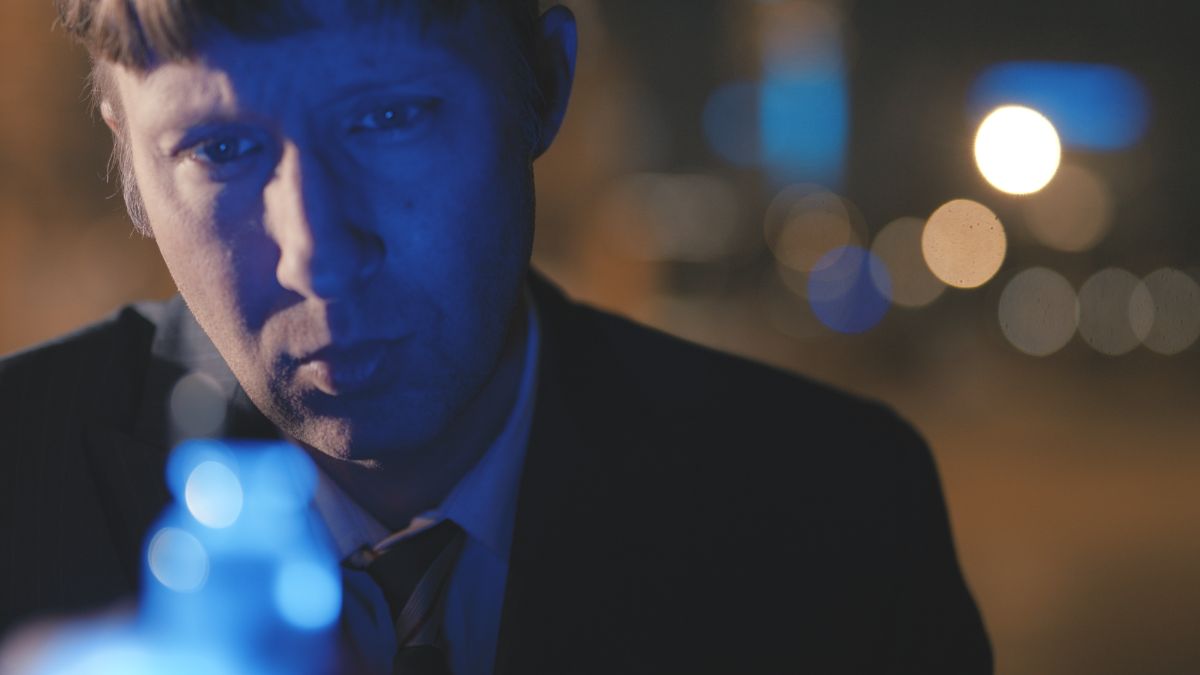
It does take longer than usual to settle into the world of Nine Black Cats because it’s so stylistically different. Viewers have to go through clips of classic movies and even a little bit of French before they can understand where they are and what the parameters are. Movie buffs may even end up getting distracted by appreciating all the unique touches that Zuhdi has put into the film. Colors pop off the screen, which is also a huge help in making sure that the dark scenes don’t look so dark as to be incomprehensible. Most of the camera angles are unconventional. (One of the things that doesn’t work is the use of recurring freeze frames; they pull the audience out of the moment, and give the impression that there’s something technically wrong with the movie.)
But once the viewer adjusts, they notice that Zuhdi has all of the throwback character types down pat. Nine Black Cats has the brilliant but reckless detective, the more cynical partner who’s within a stone’s throw of retirement, the boss who seems completely out of touch, and the pretty waitress who serves as both sidekick and a damsel in distress. The plot takes longer to gel together. There’s too much explaining when it comes to the details of the conspiracy that Jo and Joan are up against, as characters say what has been done or what someone needs to do. In general, the dialogue is clunky, but some of that falls right in line with the idea of the characters being right out of the pages of a dime-store detective novel. They’re not going to open up necessarily, even though there’s a moment or two that would benefit from them doing so, such as when Joe and Joan are in the car together. That’s a perfect opportunity to get to know either one of them better.
The bottom line is that, by the time the credits roll, does the audience feel like they’ve gotten to the end of the case? Is there a sense of some kind of accomplishment, even if the story isn’t fully resolved? And with Nine Black Cats, the answer is yes and no. Without spoiling the specifics of how the movie ends, Joe is clearly not the same character he was at the beginning of the film. But because of the emotional detachment, that doesn’t feel like the accomplishment it should be. The viewer knows it’s good for him, yet they still don’t really know him. Is it possible Zuhdi is setting up for Joe to return in a future project, like some of those iconic detectives? That’s a mystery of its own. Moviegoers will definitely be talking about Nine Black Cats, but maybe not in the way Zuhdi wants. They’ll talk about the visuals, the creative use of different forms of media, and the chance to see a film that preserves that classic detective vibe. But they won’t be talking so much about the characters or the plot, and that’s what matters most.
Photo Credit: Courtesy of Skytrain Films, LLC.
Article content is (c)2020-2026 Brittany Frederick and may not be excerpted or reproduced without express written permission by the author. Follow me on Twitter at @BFTVTwtr and on Instagram at @BFTVGram. For story pitches, contact me at tvbrittanyf@yahoo.com.