SPOILER ALERT: The following contains spoilers for Chicago Med Season 12, Episode 6.
Mallory Sloan just went from Chicago Med‘s most predictable character to one of its most interesting. Introduced as Sharon Goodwin’s replacement in the Season 12 premiere, the hospital bureaucrat played by Rebecca Breeds showed her true colors in Episode 6, “Lessons in Chemistry,” when she proved she actually had a heart. That turn of character means Mallory has a lot more to offer the hospital—and the NBC show as a whole.
On paper, Mallory was established as the character viewers have seen dozens of times before. Every TV medical drama has the antagonist who is focused on the business of medicine, and who butts heads with the doctors as they either talk about profit or how expensive it is to run the hospital. It’s an easy source of tension, because it’s a classic conflict: the idealistic world of doctors and nurses who want to save everyone, versus the reality of the U.S. health care system. But these characters usually appear to crack down on the doctors for a while, then somehow get proven wrong, and promptly disappear—never to be seen or even thought of again.
Not Mallory, apparently.
“Lessons in Chemistry” saw Mallory get an unflinching wake-up call from Dr. Hannah Asher, who stormed into a meeting between Mallory and conniving board member Meredith to tell them exactly what the brutal consequences of discharging Asher’s pregnant patient too early were. It couldn’t have gone much worse for Harper or her baby, and Asher spelled that out in no uncertain terms. The next time viewers saw Mallory, she was visibly upset on the hospital floor, and opened up to Goodwin—of all people—about how much she was feeling. Importantly, what could’ve been a “gotcha” scene was written so thoughtfully by Deanna Shumaker and performed with such grace by Breeds and S. Epatha Merkerson, And it was exactly the scene that both Mallory and Chicago Med needed.
In the first five episodes of Chicago Med Season 12, it was hard to connect with Mallory because she just wasn’t that interesting. Viewers knew her type; they’d seen it several times before just on this series. Most notably, the show had iconic Tony and Grammy Award-winner Heather Headley playing Gwen Garrett, who likewise conflicted with Goodwin but still didn’t quite break out of that mold. Or there was Sasha Roiz as Jack Dayton, who was a wealthy investor instead of a bureaucrat, but still had his own ideas for how everything should go. The most memorable thing about Jack was that Roiz’s casting apparently paved the way for him to reunite with Nick Gehlfuss in this season of CIA. There was no reason to invest in Mallory as a character with that precedent, and when the audience knew she’d end up leaving anyway. She was like the friend of a friend who gets invited to the party and no one quite knows why they’re there.

At least Chicago Med got the absolutely right actor to play the part. Rebecca Breeds deserves credit for playing those early scenes perfectly; she knew the exact degree of antagonism to make the audience share the characters’ dislike and distrust of Mallory, without going over the top and pushing her into a caricature. She could sound just condescending enough to still be human. And she held her own with some very talented and experienced actors in Mallory’s various confrontations—one has to remember that this is the woman who played Clarice Starling in the CBS prequel Clarice. If she can hunt down serial killers, she can handle a ticked-off Dr. Dean Archer.
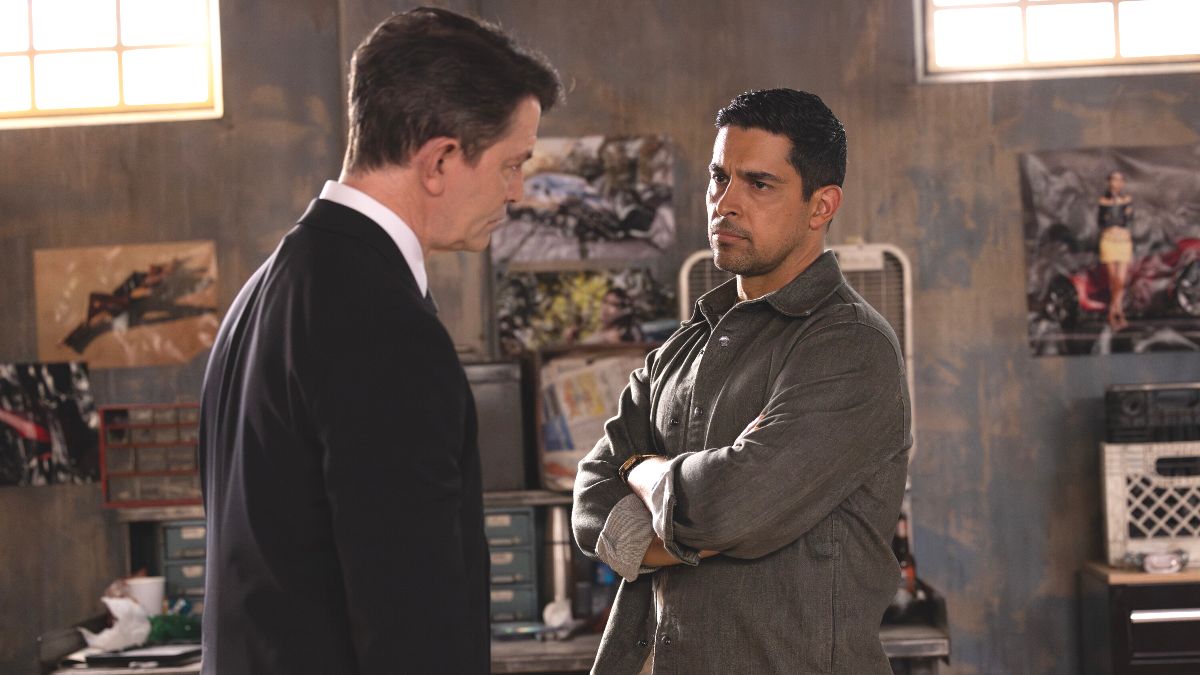
There’s a great second level to Breeds’ performance in “Lessons in Chemistry” where viewers can watch Mallory starting to crack; it’s not a sudden development. It actually starts in the earlier scene where Mallory gets told off by Dr. Mitch Ripley—that scene is a tipping point for him, but not so much for her. She stands her ground and yet the audience can see and hear that conviction starting to waver. She throws in these subtle differences that allow the audience to still dislike Mallory, but start to think something is off.
To understand why this is important, one need only to look at Miranda, who’s been a largely one-dimensional villain since Season 11. There’s no nuance at all to her character—and there’s a place for that. Those types of antagonists are where viewers get the expression “love to hate.” But they’re also nowhere near as intriguing as characters with actual depth, and that’s why it was so refreshing when Shumaker pulled the pin on Mallory and let the audience see an unexpected side of her. Now, Mallory can no longer be easily categorized. Now, she has her own opinion and her own arc, and isn’t just an extension of Miranda. And now, she may be the one to turn the tide in the hospital’s latest battle.

Chicago Med needed something to make the Goodwin vs. Miranda story distinct from its previous internal conflicts and all those other similar plots on medical dramas, and it certainly wasn’t coming from Miranda. Having an antagonist who becomes a sympathetic character—and hopefully an ally—is that difference, in more ways than one. The most obvious is that it gives Mallory as a character other directions to go, which in turn means that Breeds has more to do as an actor and the show benefits from that increased use of her talent. Not to mention the fun of continuing to watch her work opposite her husband Luke Mitchell, if the writers put Mallory and Ripley in additional scenes together (which they should, if only to make up for all the scenes that Colin Donnell and Patti Murin didn’t get when they were on the show at the same time).
But plot-wise, Team Goodwin—or honestly, Team Everyone Who Isn’t Miranda—now has a secret weapon. There’s only one person (at least as has been established on-screen) that has Miranda’s ear and the inside track to what she’s doing. Mallory is the best possible source of information, and not being a doctor or a nurse, she’s going to have access to meetings and files that the main characters don’t. Chicago Med probably won’t have a lot of time to devote to bureaucratic espionage, but now that option’s on the table. There are now other avenues to solve this problem and end Season 12’s ongoing story that aren’t just “the doctors eventually show up the bad guy.” This whole overarching plot should turn out differently, thanks to Mallory.
Most importantly, Mallory’s crisis of conscience represents something that Chicago Med is missing ideologically. Rarely have medical dramas shown the perspective from the other side of the table beyond that natural conflict it creates. CBS’ Code Black was the last series to do that, ironically through the hospital administrator played by Chicago Med alum Jeff Hephner. In the case of Med, Goodwin has always had to deal with those issues, but since she’s a former nurse and the matriarch of the proverbial family, the audience knows what side she’s almost always on. And a lot of what her job entails happens off-screen, unless and until it spills over into the Emergency Department.
It benefits the entire show to have a completely outside perspective in a more realized way, similar to how Med used to have the different perspectives of departments beyond the ED. It makes the narrative more well-rounded if the series can have discussions about budgets and resources that aren’t just arguments or crisis points. It’d be a pleasure to have a character, even if only as long as this story arc lasts, who enables a way into those discussions and gets the audience thinking about that not truly explored corner of the TV medical drama. Maybe Mallory can help come up with solutions instead of generating complaints, and fans can see what she actually contributes. If Chicago Med wants to be really bold (and if Breeds is available), once Miranda gets toppled, it could keep Mallory around on a recurring basis, like hospital lawyer Peter Kalmick. It would be lovely for Goodwin—who should get her old job back—to have an ally in all the things that get dropped on her desk, or maybe even someone she can mentor. And it’d be nice for fans to see someone else on the business end who could become a familiar face, instead of just having an immediate “oh, no, here we go again” reaction. There are plenty of recurring doctors and nurses, but the upper echelon of Gaffney Chicago Medical Center is still largely a mystery.
All of these things are just possibilities, but all of them are possible because Chicago Med chose to develop Mallory Sloan into more than just Miranda’s right-hand woman. The creative team has given a character arc to a player who, on many other shows, wouldn’t even get it. The casting team found the actor who can get the audience to invest in where that character is going next. And now, said audience gets to take a real look at a character they probably didn’t give a second thought to. By taking a chance on Mallory Sloan, Chicago Med has found something that genuinely feels new and kind of fun—and that’s an accomplishment for a show that’s in Season 12.
Chicago Med airs Wednesdays at 8:00 p.m. ET/PT on NBC. Photo Credit: Courtesy of NBC.
Article content is (c)2020-2026 Brittany Frederick and may not be excerpted or reproduced without express written permission by the author. Follow me on Twitter at @BFTVTwtr and on Instagram at @BFTVGram. For story pitches, contact me at tvbrittanyf@yahoo.com.