HISTORY airs one of its most poignant documentaries this week when The Clash of Nations: Joe Louis vs. Max Schmeling premieres. The project takes a deeper look at the iconic battles between the two boxing stars, by going further into the historical context—and their moving commonalities. It’s far more than a rivalry, and this is more than a sports movie.
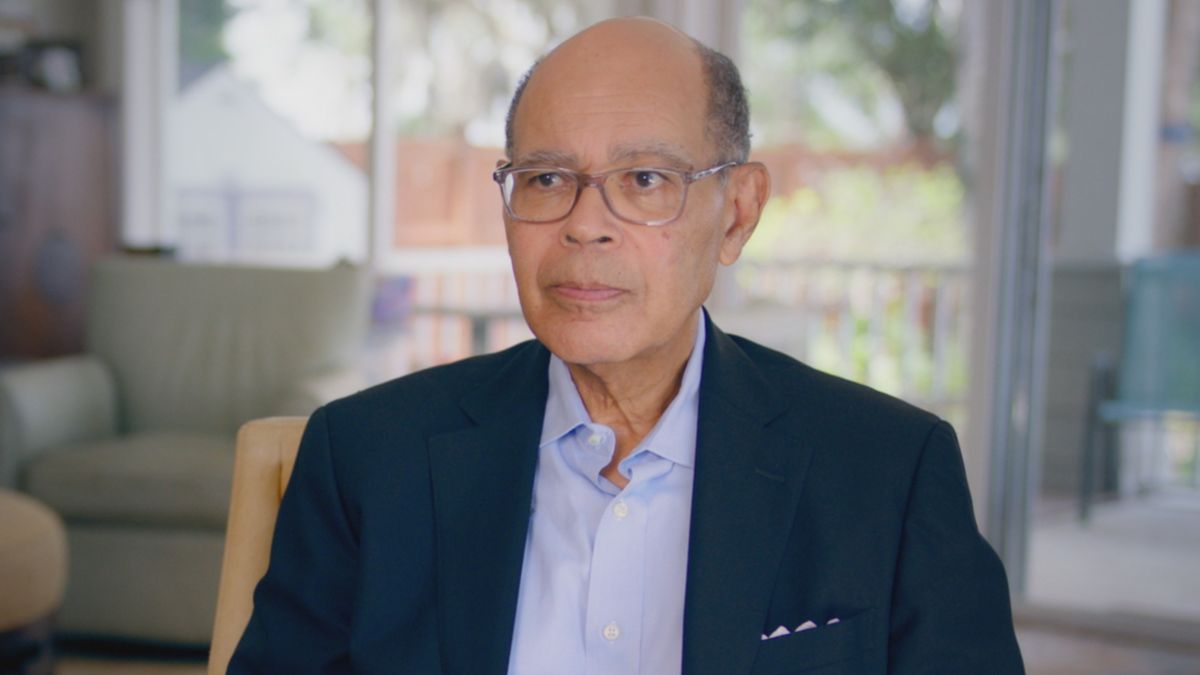
One of the biggest ways the film does that is through the contributions of Joe Louis Barrow, Jr. Joe Louis’ son not only reflects on what his father went through at the time, but offers up his own perspective on how the events that unfolded continue to resonate decades after the fact. In conversation with TVBrittanyF.com, Joe spoke about why he became involved with The Clash of Nations and what he hopes viewers take away from it.
Brittany Frederick: What was it about The Clash of Nations: Joe Louis vs. Max Schmeling that resonated with you and made you want to be part of the production?
Joe Louis Barrow, Jr.: What excited me about the documentary was the fact that it put Joe Louis in the context of America [and] put America in the context of what was happening in Germany with Hitler and Max Schmeling. I think the overall historical context that the HISTORY Channel covered was most important and essential in differentiating this documentary from other documentaries that have talked about my father.
The film is about so much more than boxing, but for audiences who may not know a lot about boxing or even this particular time in history, is there anything you feel they should know going in?
I think they need to know that it was a very segregated America. Blacks were being treated in a derogatory way at that time, and that’s the first time that a black man, Joe Louis, emerged as a true American hero. I think the documentary pointed that out—that a Black man came at a time when he was needed, and he was a hero to America. He defeated the German who by all accounts was [believed to be] a Nazi—but as it turns out, Max was not a Nazi. Max Schmeling didn’t believe all the things that Hitler was trying to sell about the Jewish people.
But I think America needs to understand what was happening and how Blacks were being treated, and the fact that he was the first true American hero [who] happened to be Black, and happened to come from the South, and happened to be a boxer.
The documentary comes at a time when America feels particularly divided, and tells a story of two men who came together even though they were competitors. Does that make this feel more timely to you, or what do you think makes the Louis vs. Schmeling story still relevant today?
This country, as you intimated, is about peaks and valleys, and right now we’re in a valley. I think we have achieved things in the past at a greater level than we are achieving today. I don’t think civil rights today [are] what it was ten years ago, twenty years ago. I think we were at a peak ten years ago. And so I think the relevancy of this documentary is the fact that Blacks are being treated today like they may have been treated in the ’30s and ’40s—and that’s incorrect.
What the documentary also points out is that you can take a Max Schmeling and a Joe Louis, you can take Nazi Germany and the United States, and… the two people liked each other. There was a Black man who liked a white man, a white man who liked a Black man, and that’s okay. That story needs to be told today more than anything else, because I think today we’re in a valley… It should be live and let live.
From a filmmaking standpoint, The Clash of Nations also has so much archival footage that’s included in the film. Did you see anything or learn anything that you didn’t know before as you were working on this project?
I was amazed at the archival footage that they found, and I was pleased that they documented what I suspected, in terms of the context of what was going on in America and Germany. That was tremendous, as far as I was concerned, that they put that in context the way they did. I don’t know that I learned more about Joe Louis, but it confirmed the impact that he had, because as his son there are certain little incidents that happened along the way that I knew the importance of my father.
When I wrote my book on my dad in 1988, which was the 50th anniversary of the ’38 Schmeling fight, I went over to England. The head porter at the hotel where I stayed happened to be white, and he once he found out who I was, the son of Joe Louis, he started to cry. That really just reinforced for me the importance of my father and the impact my father had. I went to an event once that did recognize my father… When they announced me, the entire Joe Louis Arena stood up, and the reason they stood up was not because of me, but because I represented my father. That really touched me and made me feel special, because he was special to them, and that reinforced who he was for an entire generation of people.

The family aspect of the film isn’t just about you and your father, though; the presence of your daughter Julia adds another layer to it. How did she become involved, and what did it mean to you that she was part of it?
I talked to the director and the producer before they came down to Jacksonville, and I said do you mind if my daughter sits in, because at the time she was a senior in high school… She did go to NYU and the Tisch School, and she was starting to be in film and TV production. So I said, do you mind if she sits in, and they said no, [they didn’t mind]. As it turns out, her role evolved.
If we were in my office now you’d see a series of scrapbooks, and the documentary looks at those scrapbooks. Each of those red books that you see in the documentary, they talk about the press clippings, the media clippings for each of the fights, before, during, and after. She went through all those books and really pointed out how he was being treated and referred to by the press at the time. And so her role was intentional eventually, and I’m very proud of what she did and how she approached the project.
Is there any other segment of The Clash of Nations: Joe Louis vs. Max Schmeling that resonated with you as a viewer? What stood out to you?
I think the overall nature of them showing that a Black man was revered by whites, Blacks, rich, poor, Jews and Gentiles is very important, and that comes out significantly in the documentary, and I think that’s important. People should understand the context of Joe Louis, because at the time and even today, it’s hard for a Black man to emerge as a hero loved by many and all, as opposed to being loved by only Blacks or only have-nots. He was loved by all, and I think that’s an important ingredient that comes out of the documentary.
Is there anything in particular that you’re hoping the audience walks away with after having seen this documentary? What’s the message you’d like to pass on to the viewers?
Here was a Black man and white man that didn’t feel that they were opponents out of the ring; They really felt that they were friends out of the ring, and that really became vivid in 1954 on between Max and my father. So when you think about today’s context of Black society [and] white society, they should all come together as this Black man and white man did, and I think that’s how I would leave you and question whether or not we’re together as much as we should be.
The answer from my perspective is no, I don’t think we’re coming together the way we should come together. Generations like Julia’s should understand where America was and where America should be, and I think they would have a different perspective as a result.
For people who watch the film and they’re moved by the story, or they want to learn more, what direction would you point them in? Where do we as an audience go next?
People view Joe Louis as primarily and only a boxer, but the fact that he integrated and the way he approached the situations of Black soldiers in the army was important. The fact that he integrated golf is important. The fact that he was a quiet and reserved individual, but when he saw Black people being treated a different way and the wrong way, he spoke out.
I think the viewers of this documentary need to understand that, and they need to look at Joe Louis in a broader context than just a boxer and maybe the greatest boxer of all time.
The Clash of Nations: Joe Louis vs. Max Schmeling premieres June 19, 2026 at 8:00 p.m. ET/PT on HISTORY. Photo Credit: Courtesy of HISTORY.
Article content is (c)2020-2026 Brittany Frederick and may not be excerpted or reproduced without express written permission by the author. Follow me on Twitter at @BFTVTwtr and on Instagram at @BFTVGram. For story pitches, contact me at tvbrittanyf@yahoo.com.