SPOILER ALERT: The following contains spoilers for The Westies Season 1, Episode 1 and Episode 2, “The Troubles” and “The Houdini.”
The premiere of The Westies follows a tried and true formula, but damned if it isn’t incredible fun to watch. A perfectly suited cast plus another Chris Brancato series with a very strong sense of place and time equals one heck of a ride, even if the ride is out of control. And even if the audience already knows it’s not going to end well.
The new series utilizes the same two-episode premiere strategy that MGM+ did earlier with American Classic, and like that show, The Westies benefits from a longer opening act. “The Troubles” stands fine on its own dramatically, but everything that happens in “The Houdini” is directly tied to what took place in the first episode, so it’s easier to follow when consumed all at once. But if the first episode is a gritty mob drama, the second turns into a haphazard road trip comedy, which might feel tonally disjointed to some viewers. At the same time, it’s hard to imagine the story going any other way.
The backbone of The Westies‘ premiere is that one of John Gotti’s made men (played by Godfather of Harlem alum Michael Rispoli) is abducted twice by the Irish mob, with whom the Italians are supposed to be at an uneasy standstill. The two abductions are violent bookends to the story; the second one ends with Vincent being shot and killed. Jimmy Roarke, the right-hand man of Irish mob boss Eamon Sweeney, shoots Vincent rather than kill his wayward best buddy Mickey Flanagan, who orchestrated the abduction. Jimmy then digs himself a bigger hole by swearing that he and Mickey can pull “the old Houdini” and make Vincent disappear by framing him for a jewelry store robbery.
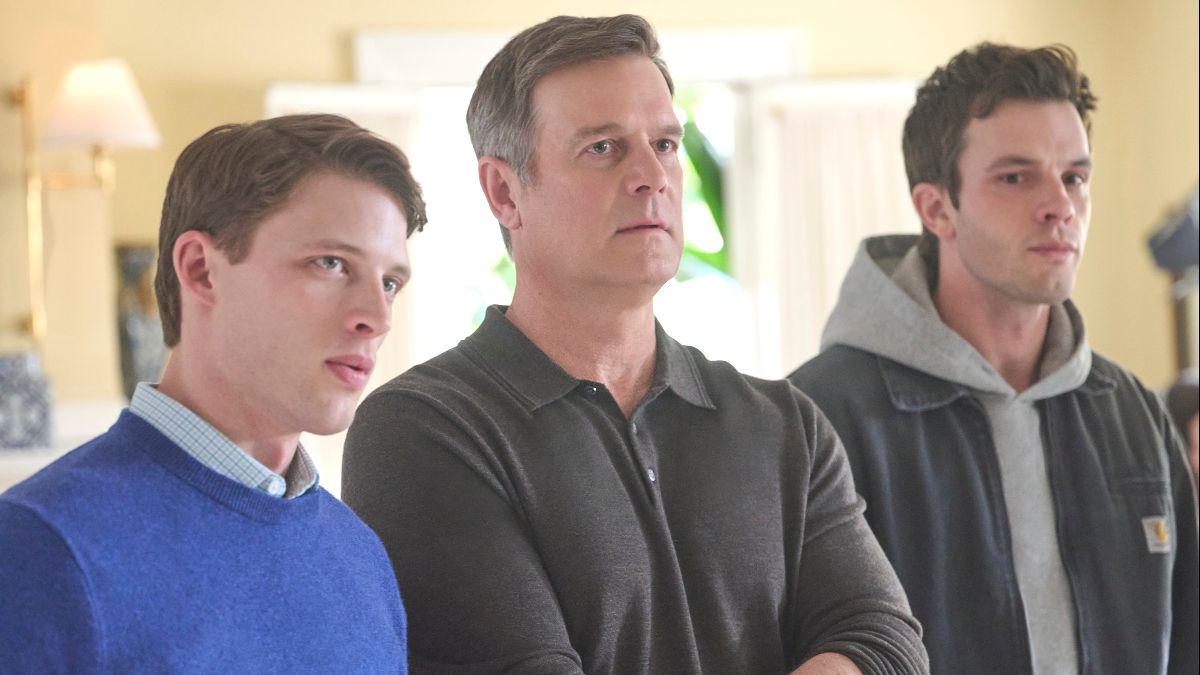
In these first two episodes, The Westies plays with typical mob genre character archetypes. Brancato and co-creator Michael Panes have the intimidating mob bosses, plus the loyal yet sensitive right-hand man, the lovable screwup, and an assortment of supporting henchmen who are all relatively interchangeable on either side. This predictability is what keeps this show from being on the same level as Godfather of Harlem or Brancato’s previous MGM+ effort, Hotel Cocaine. Viewers know Jimmy’s scheme won’t go according to plan, they know it’ll be due to something one of the screwups does, and once they see the setup they’ll know exactly what the something is. But the show continues to be entertaining because of who’s behind the wheel.
J.K. Simmons and Mayor of Kingstown actor Hamish Allan-Headley have already nailed the perfect back and forth between Sweeney and Gotti: that simmering hatred under a veneer of politeness. Simmons seems to be having a great time as he gets to bounce between intense mob boss and frustrated father figure to a group of immature man-children. On the flip side, Allan-Headley plays Gotti as not just a figurehead, but someone who is smarter than he lets on. Gotti figures out that the Irish faction is behind what happened to Vincent in about thirty seconds, instead of the writers dragging it out for dramatic effect, and audiences watch him stew with that information. He’s in play, both physically and emotionally, and it’s fun for Kingstown viewers to see Allan-Headley play that anger in a character who doesn’t immediately jump to violence.

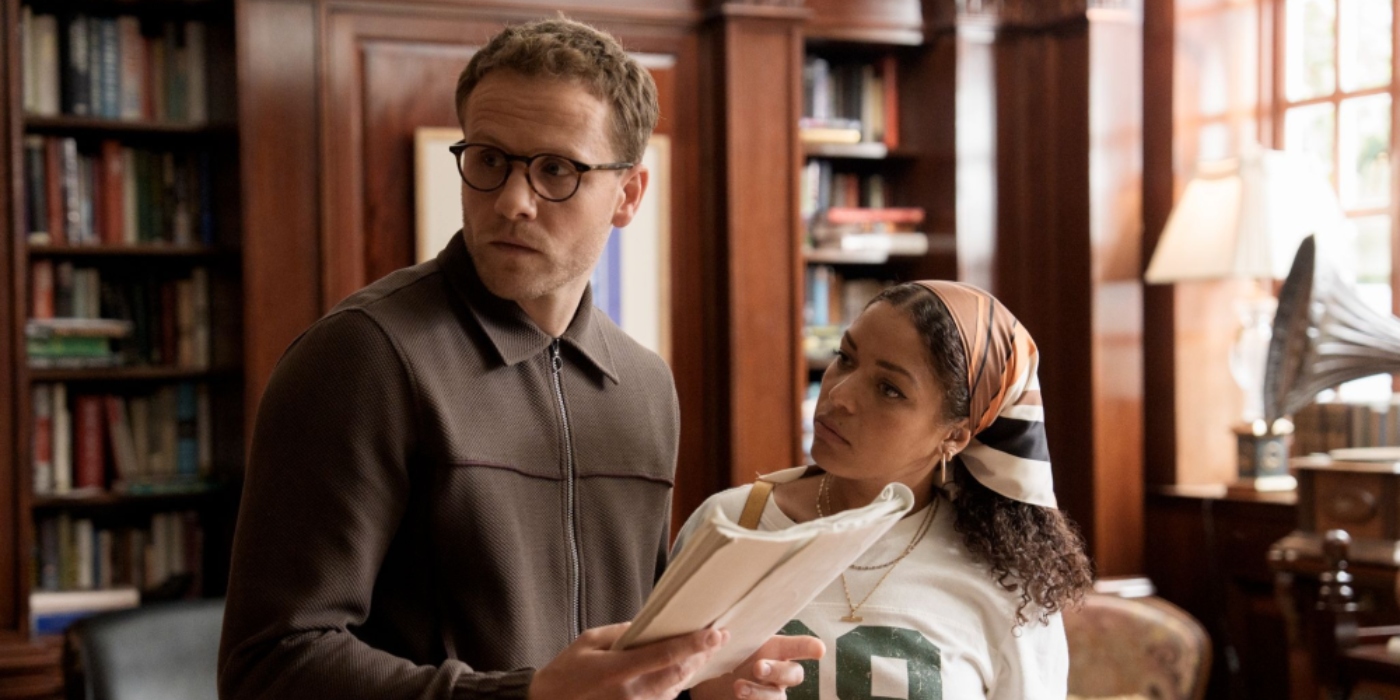
But if one had to pick a single protagonist of this show, it’s Jimmy, as played by Grantchester‘s Tom Brittney. The character is familiar—he’s Sweeney’s best man, but he’s also kind and sensitive and the voice of reason—yet he serves as an anchor point while the chaos continues to grow. Brittney has a charm about him as Jimmy tries, and of course fails, to keep everyone else in line. The half of “The Houdini” where Jimmy and company drive up to Boston to perpetuate their Vincent scheme feels like it could easily be a Guy Ritchie movie. It’s funny and frustrating at the same time, especially when the mistakes Mickey makes are so glaringly obvious.
“The Houdini” ties everything together, but only after there’s been a trail of destruction. Mickey has a crush on Vincent’s mistress Erin, so he gives her a bracelet he kept from the jewelry store robbery, thus enabling Gotti to find him through Erin (and throw him in a car). Meanwhile, another of Jimmy’s colleagues shoots a state trooper after the trooper sees Vincent’s severed hand in a car trunk—of course after the car gets pulled over for something inane. And it’s also no surprise that Bridget Walsh’s ex-boyfriend Brendan Cahill tells her he’s planning on utilizing that rocket launcher in New York; even new writers know you don’t bring out a gun (or bigger) unless you’re planning on using it. At least Allen Leech is as smarmy and unlikeable as he was in Bohemian Rhapsody, making it even easier to root against Brendan and the threat he represents to, well, everybody.
The mob drama—the veiled threats, the now three dead bodies, the fake story being handed to the FBI—is entertaining enough, even if it’s not yet surprising. But what “The Troubles” and “The Houdini” make clear is that The Westies is really about familial and psuedo-familial relationships, whether it’s Jimmy trying to carry Mickey, Glenn Keenan’s broken relationship with his son Danny motivating him, or the new life Bridget has built with Jimmy. Sometimes it gets to be a bit much, yet one can’t help but care about how it all works out, because the characters are so earnest (and so well-acted) even while they’re wandering off course.
The Westies airs Sundays at 9:00 p.m. ET/PT on MGM+. Photo Credit: Courtesy of MGM+.
Article content is (c)2020-2026 Brittany Frederick and may not be excerpted or reproduced without express written permission by the author. Follow me on Twitter at @BFTVTwtr and on Instagram at @BFTVGram. For story pitches, contact me at tvbrittanyf@yahoo.com.