What separates The Greatest from other scripted sports dramas is the care put into the Prime Video series. It’s clear that the creative team wants to tell Muhammad Ali’s story as completely as possible—not just the popular or the exciting parts. This is a biographical drama that feels real.
That dedication starts from the top, with showrunner and executive producer Ben Watkins, whom Prime Video viewers know as the architect of Amazon’s Cross. Watkins, his fellow executive producer Lonnie Ali—the wife of Muhammad Ali—and star Jaalen Best joined TVBrittanyF.com to speak about shaping The Greatest. What were their feelings retelling this story? And how did they all come together?
Brittany Frederick: Ben, you’ve done some incredibly nuanced storytelling on Cross. What was it like for you to step into The Greatest and apply that skill to telling a true story?
Ben Watkins: On one hand, there’s something easier about it in the sense that there’s a life. The source material is right there, and so you have that to draw from. But on the other hand, it’s very daunting. I’m not going to lie. In fact, the first time I hesitated. I said I don’t know if I want to do this, because this is my lifelong hero, and I would be pissed if somebody messed this up—especially if I was the one that messed it up. So I actually said I don’t want to do the project, and I got a call from from someone saying you’ve really got to think about it. At least have the conversation.
In between that, I started thinking about why would I say I don’t want to do the project; it’s my lifelong hero. I realized it was because I was afraid. And the advice I give to every writer is, do the thing that scares you. Here I am, not listening to my own advice, and so that changed my mind.
I said I’ve got to go jump into this and embrace it, and I am so glad I did—because not only did I get to cover all the ground that everybody is familiar with, all the amazing accomplishments and accolades of the life of Muhammad Ali, but more importantly, I got to dig into the connective tissue and dig into the building blocks of how Cassius Clay became Muhammad Ali, and during that process, remind everybody that [he] wasn’t this larger-than-life icon; [he] was a person. In Season 1, it’s literally a kid trying to become a man, and I think that’s really refreshing.
Lonnie, what did you see in Ben’s idea for The Greatest or Ben’s body of work that made you feel he was the right person for the project? What about him did you connect with?
Lonnie Ali: That he wanted to tell the whole story. He wanted the truth, and that’s what I wanted. We wanted the same things. We wanted authenticity. We wanted the truth. We wanted the whole man presented, not just the champion.
Who was he at home? How did he relate to people? How was he as a father, as a husband, as a son? What was the family dynamic? He wanted to know it all. I could tell that Ben had a passion for Muhammad, and that this really meant something to him, and I knew he wasn’t going to mess it up.
He and I wanted the same things, and even the way he collaborated with me told me that he took what I said seriously. I wasn’t just some fluff person [like] oh, that’s his wife, don’t worry. He really took into account everything that I had to say, and that was important.

So Jaalen, when this role comes to you, how did you approach it? Since as Ben says, Muhammad is a hero to a lot of people and you’re naturally in so many scenes; this could be a daunting task.
Jaalen Best: Coming into it, I don’t really know what to expect. So I think at that point, I have to lean on the people around who [are] also telling that story. Me and Ben collaborated throughout the entire process—from the audition until getting the role, even till now. It was always a constant conversation of, what is the story? What are we trying to tell?
And I would say when we were filming, there were so many elements that I had learned from the preparation and from watching the videos that I felt like in a certain scene, this is what I’m going to say, or this is what I’m going to do. And as great as it might have come out, Ben was constantly telling me, this is the story we’re trying to tell here, so it’s important that you understand this element, and then we’re going to progress to that. Fast-forward to the episodes being out and watching it—you truly feel like you’re watching an 18-year-old boy becoming a man throughout the entire series.
I’m a new actor. I don’t understand the industry, the business that much, so I had to rely on someone who does and collaborate with someone who does. If I followed my own instinct, who knows what that would look like. But being able to trust someone like Ben in this process and allow him to coach me, that’s why we have something so beautiful now, because of that.
Watkins: I kept waiting for the moment that was too big for him. I kept waiting for that moment. And it didn’t happen during auditioning. It didn’t happen during the training and the physical evaluation. I said well, maybe it’ll happen the first first day of filming. No.
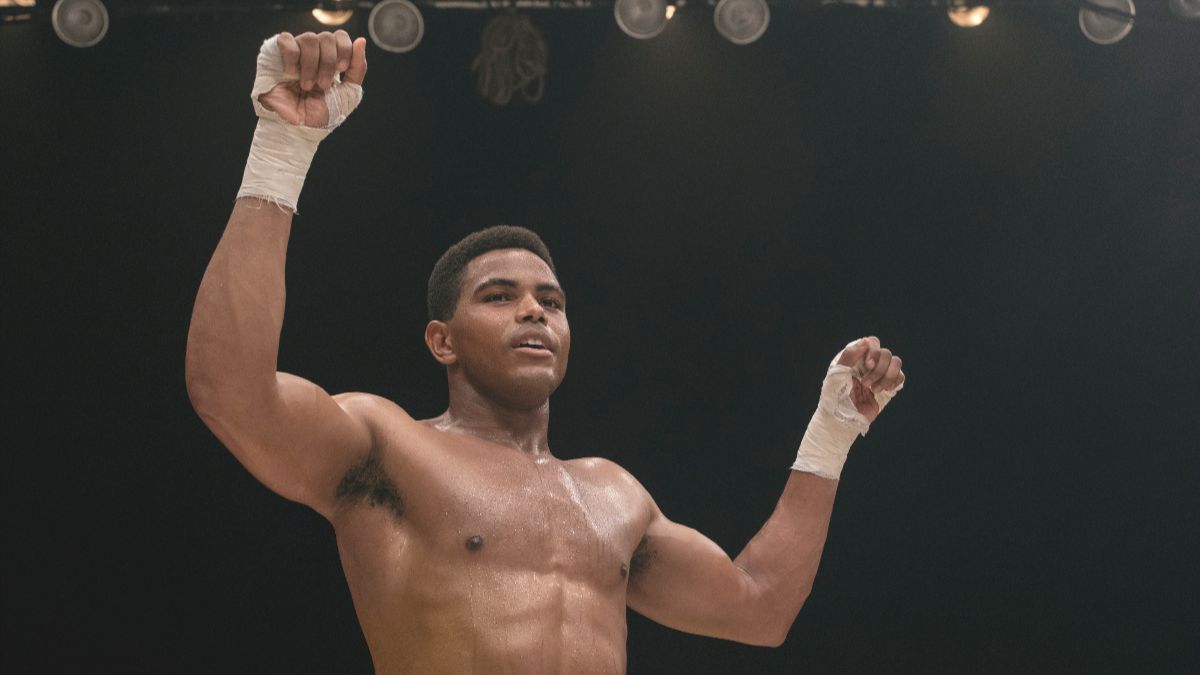
I said well, it’s definitely going to happen the first fight that we film, because it’s going to be hundreds of people there, and they’re going to be like, ‘Do you really look like Ali?’ And not only did he not fold that day we filmed the first fight—that was a day that you could hear a pin drop, because it really was eerie. This man was channeling Muhammad Ali. He never folded under that pressure.
The Greatest is now streaming on Prime Video. Photo Credit: Courtesy of Prime Video.
Article content is (c)2020-2026 Brittany Frederick and may not be excerpted or reproduced without express written permission by the author. Follow me on Twitter at @BFTVTwtr and on Instagram at @BFTVGram. For story pitches, contact me at tvbrittanyf@yahoo.com.