For decades, Gordon Ramsay has helped make the culinary world more accessible to TV audiences. Whether it’s through entertainment like Hell’s Kitchen and Kitchen Nightmares, or his documentaries such as Gordon Behind Bars, he’s enabled viewers to understand the business of food. He’s taken that to another level executive-producing the Apple TV docuseries Knife Edge: Chasing Michelin Stars. Every episode follows chefs who are determined to win the profession’s highest honor, with all the joy and pain that entails.
TVBrittanyF.com spoke to Chef Ramsay at a press conference for the premiere of Knife Edge: Chasing Michelin Stars Season 2 to learn how the culinary industry has changed with the increasing emphasis on social media and online reviews. Do Michelin stars carry the same weight in the modern landscape? And what does he hope that audiences take away from being invited into the most high-pressure of kitchens around the world?
Why was it important for you to pursue this particular project? Was there something about the relationship between chefs and Michelin that you felt needed to be said?
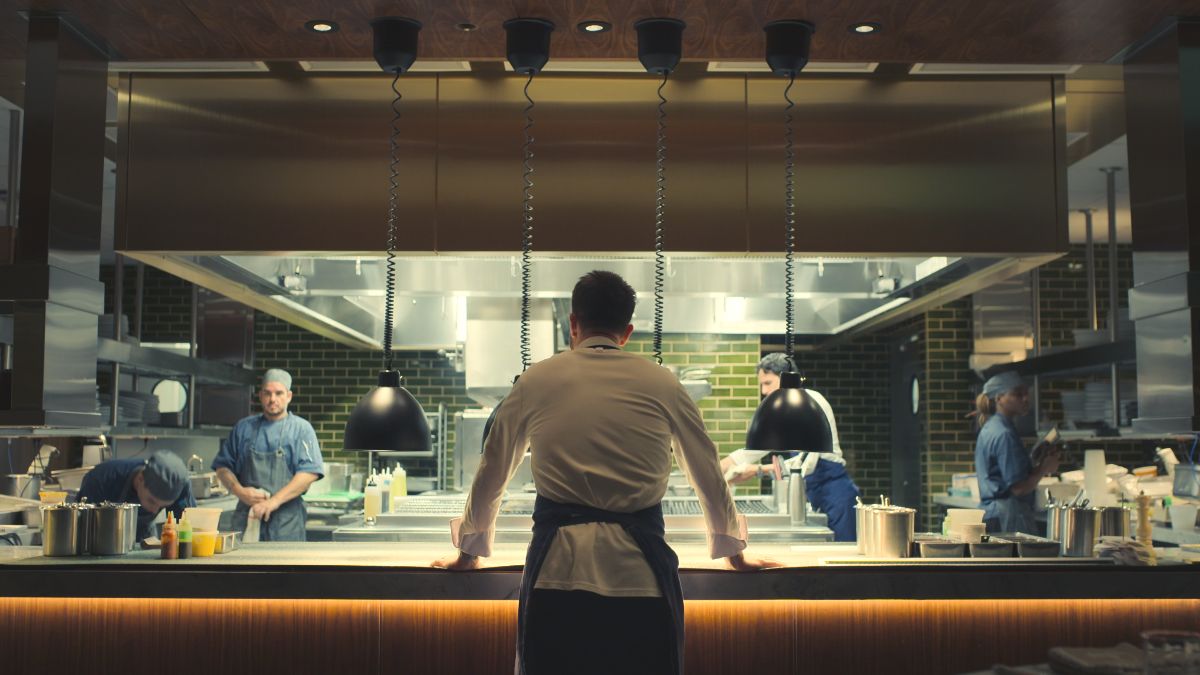
Gordon Ramsay: Knife Edge: Chasing Michelin Stars, for me, was an important moment to really open up the door behind the scenes and get a proper insight to what is happening in these acclaimed restaurants. Also, that level of unscripted drama, following these incredible chefs in pursuit of excellence was something that I’ve done for many years. It took me back to literally 1998 when I first opened Restaurant Gordon Ramsay and won our first star, to the second star, to winning three stars.
And so I was keen to make sure that you got the real unscripted drama, the real unfolding of what it takes to perform at that level. Not just the jeopardy but the financial stakes, the reputation, then the desire to climb that ladder, and also following those emotions. Running restaurants, yes, it’s a business. Yes, it’s incredibly difficult. But more importantly, there’s no script. Every day it changes. Every day it’s different. And so Knife Edge is literally giving you that incredible insight to the pursuit of perfection on a daily basis.
Through producing Knife Edge: Chasing Michelin Stars, do you look back on your own experience earning your stars any differently?
As an exec producer, having done thousands of hours of television for the last 25, 30 years, and I’ve been in these situations many times, from one-star, two-star to three-star environment, you can understand the speed these restaurants work at. I can help pinpoint and show the producers exactly where that kind of empathy, jeopardy, juxtaposition is going to be happening. And nine times out of ten, I’ve got it right.
This series is knitted together beautifully by [Knife Edge: Chasing Michelin Stars host] Jesse [Burgess]. Jesse’s got that incredible, tough job between that fine line of not upsetting the flow, dancing over the scenarios, and pinpointing the customer’s perspective. He has a very difficult job. But I can relate to that in many ways because I’ve been there. I’ve been in their shoes. I feel for them.
Part of this documentary, for me, was giving them more spotlight and more credibility that is so much more deserved. You never understand the real makeup of a proper chef, in terms of the feelings, the emotions. You see the dish, you devour it from a customer’s perspective, But now you’ve got that whole holistic 360 view of what goes on behind the scenes, and it really is a very, very incredible eye-opening moment.
You’ve discussed in some of your own shows how everyone is a critic now with online reviews, social media and influencers. Has the value of a formal accolade in a Michelin star changed with that shift in the industry?
I think, first of all, Michelin has a unique level of consistency when they award stars. That’s why it’s one of the greatest guides anywhere in the world, because of the ambiguity. A) You don’t get to see these inspectors, B) You don’t socialize with them, and it’s incredibly discreet. These things here [holds up his phone] relate to critics as well. Everyone’s a critic when they walk into your restaurant with that. Michelin gets so much more respect because they’re discreet, [with] the level of discretion and how they operate.
And we welcome those online reviews. I’ve always said the quicker we get the bad news, the better we can deal with those kinds of situations. I think that kind of scrutiny online, with those kind of comments, is [to] the benefit of these restaurants today, because it’s instant. When they’re saying the same thing three or four times, and it is consistent with that particular dish, then you know you’ve got a problem. And that is a blessing for every chef, to get that kind of insight quickly.
So many modern chefs are as much personalities and brands as they are chefs. How has the mainstream popularity of chefs, to even have a show like this, impacted the business?
I think that level of entrepreneurship is important in the restaurant business. They have to become the best marketing tool, they have to become a great leader, they have to become a great spokesman, and then they are instantly a brand literally overnight. Today’s world, it’s much more multifaceted, and you’ve got an incredible focus on these chefs.
I think it’s a good thing. You see it in sports… A sports star, a football star, soccer star, basketball player can be sponsored by Nike for millions of dollars, and chefs at one of those businesses can take on that kind of partnership and be sponsored by similar brands. It’s the world we live in. It’s what’s happening [with] that fast-paced growth, and I think it’s healthy to see these chefs. I say to my team every time—you need to become media savvy, you need to be leaders, you need to be entrepreneurial, and you need to understand the P&L [profit and loss], because you’re a tangible asset. You’ve sacrificed sometimes 10, 15, 20 years to put on a plate what you put out to customers, and you deserve the recognition for that.
I don’t think there should be any difference between a prolific NBA player, soccer star, incredible boxer, to a prolific chef. They deserve every ounce of attention, and it’s about time they’ve got that equal footing because of the slog, the work, and the hours of commitment to get to that level of perfection. You never get to see 95 percent of it.
Knife Edge: Chasing Michelin Stars streams Fridays on Apple TV. Photo Credit; Courtesy of Apple TV.
Article content is (c)2020-2026 Brittany Frederick and may not be excerpted or reproduced without express written permission by the author. Follow me on Twitter at @BFTVTwtr and on Instagram at @BFTVGram. For story pitches, contact me at tvbrittanyf@yahoo.com.