WARNING: This interview contains discussion of suicide.
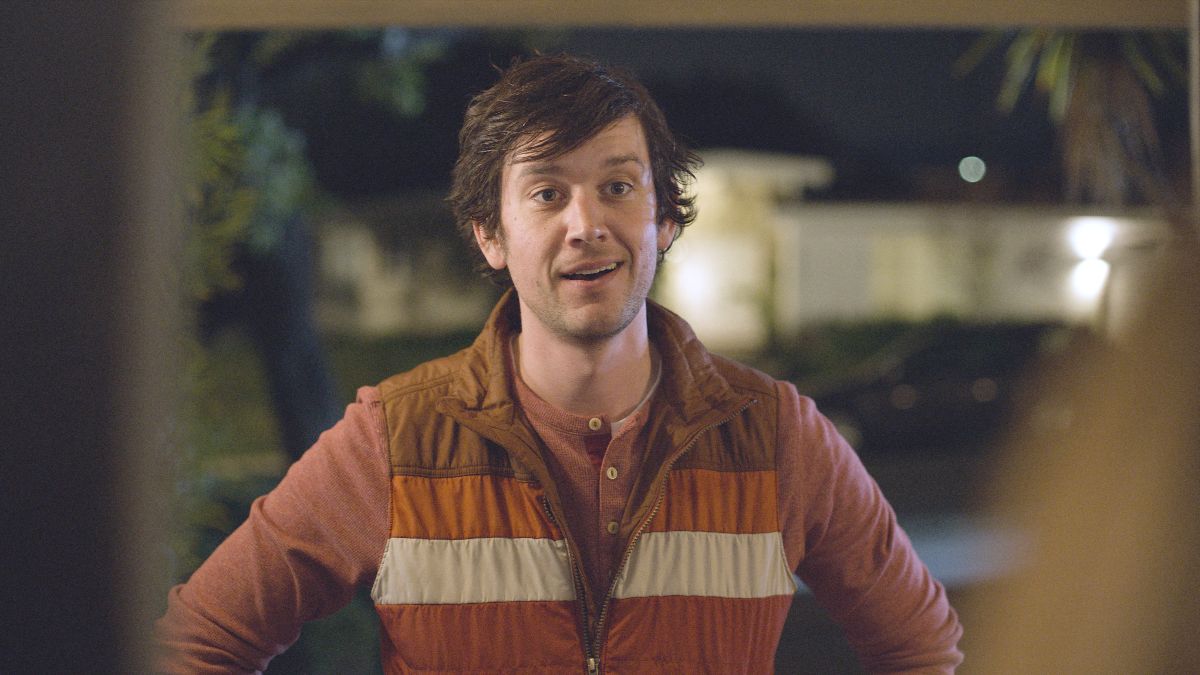
I Hate Myself and Want to Die is an interesting choice for a movie title. But it’s also exactly what the film is: the misadventures of a man who wants to end his life, but doesn’t really know what he’s doing. And yes, it’s a comedy.
TVBrittanyF.com connected with writer-director J. Davis and star Mike Castle to talk about how this surprising indie film came to be. Find out how they approached the balance between comedy and a very serious subject in order to strike the perfect tone. Plus, learn the surprising reason why this was an incredibly challenging movie to make.
Brittany Frederick: J., how did this movie even come to be? What got you interested creatively in this idea?
J. Davis: The movie’s about a guy who hates himself and wants to die. So he decides that this will be the night he’s going to do it—but then his clueless friends and family keep sidetracking and pulling him into their own personal dramas. And the whole time you’re wondering if he’s going to get back to killing himself.
What was exciting to me about that was it being a “one crazy night” movie. I love movies that are set in a short time frame like that. And it was interesting to write as well, because you’re writing a hero’s journey, but the hero is doing something you don’t want him necessarily to do. I thought that was an interesting thing.
Mike, when the project came to you, what was your hook? What did you see that you thought you could bring something to?
Mike Castle: I just love the script. The title instantly gives you a certain feeling. There was this movie I saw back in 2009, I think—it’s called Wilbur (Wants to Kill Himself). I thought it was a very funny and very strange kind of movie. I remember buying it at Blockbuster and going like, wow. And I remember seeing this title and [I] was like oh my God, could I get to do a Wilbur (Wants to Kill Himself) kind of movie?
And then, as basically any rational person [does], I have all sorts of experience with depression and existential anxiety and everything. What J. was just saying about how it’s like this kind of hero’s journey, but everything he’s doing, you want him not to do—we have this sort of narrative reflex. when we’re watching something, where you want them to complete the task that they’re trying to complete because that’s what the narrative is. I would think about [Jacob] trying to get the hibachi grill and how, when I most recently watched the movie, I have this longing for him to get it. And you’re sort of like “No, but then he kills himself!” It’s this weird thing where one part of your brain wants the narrative task to be completed, and then the other part is like no, I don’t want him to do it.
And then on top of it, there’s this realness to it. I love J.’s other movie, Manson Family Vacation. There’s this realness in the tone for both of them that feels very relatable to me. It’s not that there’s like a big set piece, that all these crazy things are happening. It’s more mundane things that come together to create attention. I loved the Andre Highland part. I loved all the side characters—and just all the characters—and it made it feel like an exciting and interesting journey. I primarily have come from doing just pure comedy without an undertone of something heavy. And so I felt excited trying to thread that needle.
Which brings up a critical point. This is very much a comedy, but you also don’t want to seem like you’re laughing at the idea of suicide or what Mike’s character Jacob is going through. So how did you find the right tone for the movie?
Castle: Perfectly for us, there were a lot of extremely annoying weather situations, and it was basically all a night shoot. So there was an existential tension, basically, right from the beginning—where every setup, you’re like, Jesus Christ, are we gonna be able to film this? Why is it snowing where we are? Also, just the way the script is, it felt extremely clear to me.
Davis: Mike did not need a lot of direction. He came and had the character. I said, do you want to do background work? Because I’ve done that with actors. And he’s like no, I think it’s here. I think it’s in the script.
Castle: The tone has this high school feeling to me, actually. With Jacob and Russell, you almost feel like you can see the high school version of them. And I think part of the drama of the whole movie is this sense of a missed trajectory… You feel it with Jacob and Russell. Basically right away, you have this sense of what they were probably like in high school. And it all happens in one night; that gives this high school feeling to me as well.
It’s almost like [a] John Hughes kind of movie. Where it’s like oh, it’s a big night—but then it’s about suicide. And so then you’re sort of like oh, they probably had a lot of big, crazy nights in the past—but then it’s led to this sadness, where Jacob is so disappointed and pained by the state of his life now. It makes you think of the before. Or you see Ali [Gallo]’s character [Hayley] and you see the trajectory ahead of her.
Do either of you have particular favorite elements of the movie or even scenes that you’re proud of that you want to highlight to the audience?
Davis: I’m proud of a lot of scenes in the movie and a lot of performances. But there is something special about the scene between Mike and [Hayley] in this emptied-out pool. It’s a serious conversation they have together, and it’s moving. I’ve watched the movie a lot, because I’m also the post-production supervisor and the editor. And that scene gets me every time.
Castle: I have two that come to mind immediately. There’s a scene with Meredith Salenger in the car—I think it was probably my audition scene as well—that felt so familiar to me. It’s such a specific type of comedy. There’s something about getting annoyed by everything your mom says that feels very funny to me… You’re going to visit home and on your way, you’re sort of like okay, I’m not going to get mad at mom. No matter what, I’m not going to get mad at her. And then she says the smallest thing and you’re like. why do you always do that? [Laughs.] You get mad suddenly out of nowhere. That scene comes to mind.
And then there’s what feels to me like a truly absurdist dark humor scene with Andre that involves a sword. That just feels very funny to me, in terms of he’s trying to stop the suicide, but it’s with the threat of violence. That just felt very much like it’s the whole idea [of the movie].

We spoke earlier about the filming conditions and how that influenced the movie in a sense. What was that experience like?
Castle: I loved our cinematographer, Evan Papageorgiou. In terms of keeping upbeat or having fun on the set, Evan was a very fun presence to be around. I don’t have a ton of training in dramatic acting, and so a lot of it, I would take it on and then in my mind be like, oh, I don’t really know how to get out of this feeling. And there was this levity to our cinematographer and camera operator that was helpful a lot of the time. He had a very distinct Australian accent, which would kind of snap me out of it. He would say something and then you almost can’t help but parrot it back to him. So a shoutout to Evan.
Davis: I absolutely agree that Evan was just stellar. Could not have done it without him. It was a hard, hard shoot. I’d written this script that was a one-night movie in the desert, and I thought, that’ll be easy. There’s one costume, there’s one location, and we’re shooting around Los Angeles, and it’s the desert, and that’ll be fine. [Laughs.] We got rain. We got snow. It literally snowed. We had to shut down for two weeks in the middle of it for rain. And we had to sometimes block rain that was falling down from being able to be seen.
Castle: Or act like it’s like a normal summer night—but you’re frozen to the bone… The scene J.’s talking about, where we’re in the empty pool, it’s got to be the coldest filming experience I’ve ever had in my life. But part of the acting was to go, I’m not cold. I’m not cold. [Laughs.]
Davis: It was a really rough shoot. And then I end up with all this footage of the desert that looks lush and beautiful, green. I’m like, what am I supposed to do with this? For a while, I even experimented with black and white.
Given the subject matter, is there anything in particular you want to leave the audience with? As Mike said earlier, the underlying feeling is something that a lot of viewers can likely relate to.
Castle: I think of the character and the experience of trying to portray the character. You’re trying to not be overly melancholic, but you’re still trying to be available to the comedy of it. It reminds me of the experience of being really depressed—where you’re like yourself and not. You’re engaging in what’s happening, but you’re really fixated on this negative feeling.
When I have close friends that I’m having a candid emotional conversation with. I’m always surprised by how relatable that experience is for people. I know intimately about my own experiences being depressed. But I’m always surprised to learn how universal that experience is. And so I feel like if there’s like a takeaway, it’s this idea of that it’s not permanent. Even though it feels like there’s this permanent heaviness.
In the case of this movie, Jacob’s very depressed from feeling like he didn’t live up to what he wanted to live up to. And a lot of the time you feel so absolute in that sort of perspective. But then it’s these unexpected [moments]. It’s like fighting with your friend and the way that fighting shows that they love you, or the interaction with your cousin [where] she’s reminding you of some sweet thing you did forever ago that meant nothing to you, but so much to them… If you can even take a moment, or if you can encourage yourself to continue to move forward, that there is a moment where you can almost kind of see a light.
I Hate Myself and Want to Die releases Oct. 6, 2026. Photo Credit: Courtesy of the filmmakers.
Article content is (c)2020-2026 Brittany Frederick and may not be excerpted or reproduced without express written permission by the author. Follow me on Twitter at @BFTVTwtr and on Instagram at @BFTVGram. For story pitches, contact me at tvbrittanyf@yahoo.com.