TV’s most thought-provoking series is back. Breaking the Deadlock returns to PBS this week with “AI: Who’s In Control?”, diving into the ongoing debate about artificial intelligence. But this isn’t another debate show; this is a real discussion between experts in their field, looking for a solution.
Ahead of the Oct. 27 premiere, moderator Aaron Tang connected with TVBrittanyF.com to discuss how this timely episode came together. He also explained how the series crafts its intriguing scenarios. Plus, what has he learned from his experiences on the show?
Brittany Frederick: Just like the previous episode How to Fix an Election, this AI episode is hitting at the perfect time. Is that something that comes up during production, or simply a great coincidence?
Aaron Tang: I think the timeliness is a reflection of just how good the production team is. [Breaking the Deadlock executive producers] John Bredar from GBH and Andy Lack, longtime CBS News executive—they just have a great sense of reading what is happening, what’s in the zeitgeist, what are people worried about.
We started planning this episode back in July, thinking about it, and there were definitely signs that AI was picking up as an issue. That was before Hugging Face, the hacking incident, and some of the more recent stuff. But it was already pretty clear that there were real questions. Data centers were getting people really upset; there was anger around that. Questions about the long-term future of the world—existential risks to society.
Andy and John in particular just do such a good job of reading the room, so to speak, and picking a topic that is is hot. And then from there we just have to do our work and drill down and find the pinch points, the dilemmas, the decisions that ordinary people can relate to that we try to present on the show.
Using this episode as an example, how much detail are you able to craft into these scenarios, while still leaving room for the panelists to make their decisions and inject their input? Since you have to be prepared for whatever they might say.
That’s exactly right. We have to game out the scenario. We try to present questions that have answers—either you do this or you don’t do it—and so a lot of the questions take that structure. Right in the very opening scene, either Josh Tyrangiel and Campbell Brown sell their home or they don’t sell their home. We can figure out how the story shifts along those two paths. If they sell and they’re going to be all in on AI, then that aligns them with certain people and we go to them for certain types of questions. If they don’t, which we had an intuition was probably more likely, it plays out a different kind of way.
It’s very rare that we ask a question that’s just like, what do you do? And where the world is completely open. It’s usually a confined set [of choices]. Another example is when Gina Ortiz-Jones has to decide whether to use certain automated license plate reader-type tools. She’s going to either say yes, I’ll use them, or no, I won’t. It’s not like oh, actually, I’m going to go find a different vendor and invent a brand new world.
Because we’re setting the terms, knowing what the different paths are, it does mean we have to prepare for two different paths. That takes work and and thinking, and we’ve been surprised every episode. People do things that we’re not 100 percent expecting, but it’s a limited set of possibilities.
In the history of Breaking the Deadlock, has anyone responded with something that’s taken you completely by surprise?
That has happened before. Oftentimes, it’s journalists—who I think just think about the world in a different way than I do, having never been a journalist in a classical sense—and politicians.
What sometimes happens is a desire to cut through and go straight to a source. So journalists will say well, I would just interview so and so, and and I didn’t have planned an opportunity for the journalist to talk to this panelist and interview them. But that’s usually a good thing, when this kind of engagement happens [and] people want to talk directly with each other. That’s where the show thrives. So luckily, when these these kinds of surprise moments have happened, it hasn’t broken up the story arc.
We’re now a couple of seasons into the show. Does anyone on staff keep track of everything that’s happened in the fictional state of Middlevania, for potential reference? Because it’s a busy place.
We don’t have like a formal database. I would say we’ve loosely stuck with things that have happened in the past, but not always. For one thing, presidents change so often [on the show]; it can’t be the case that there’s six different presidents over the course of a year. So we have to sometimes wipe the slate clean as to who is the governor, who’s the president, and start anew. But we try to keep some of the cities and the nature of the state as like a purplish state. Some of those things we try to keep consistent, but but we can’t do it all.

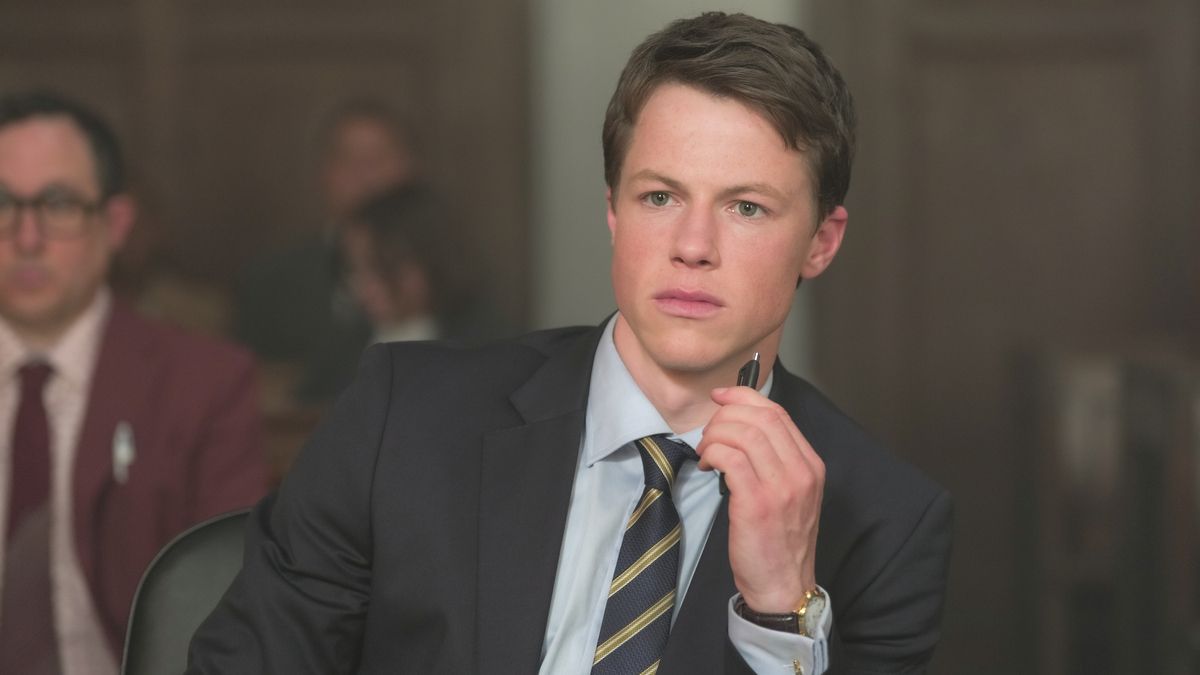
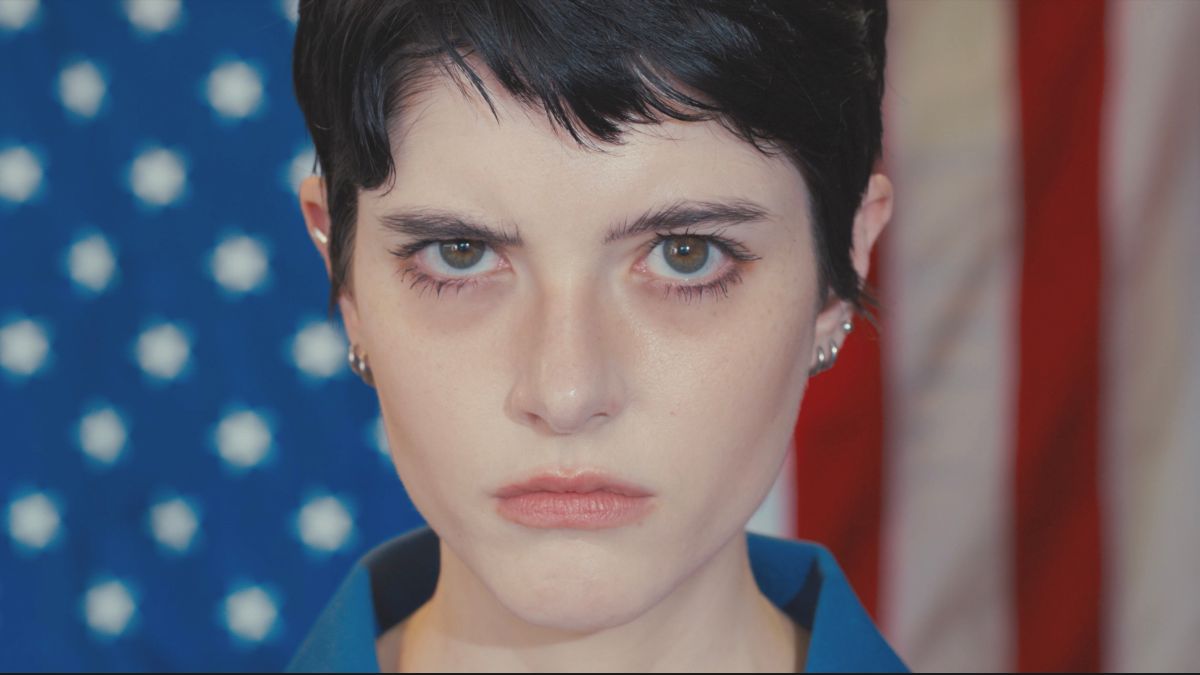
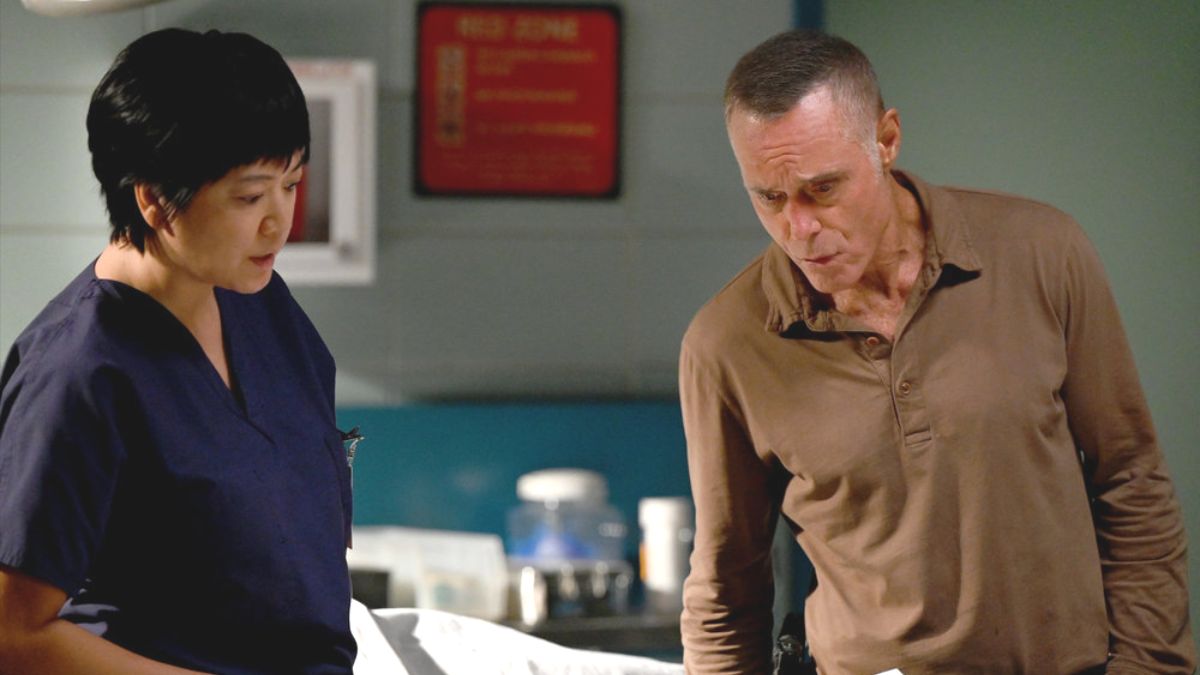
One of the most fun parts of Breaking the Deadlock happens at the very beginning, when you tell the panelists who they’re playing. Do you look for panelists who can fill particular characters you need for the scenario, or do you get the panelists and then adjust the characters based on who’s at the table?
It’s more the second than the first. For example, when you’re casting an AI episode, you want a mix of people who are pro-AI and anti-AI. You wouldn’t go out and just ask nine people who all hate AI, because then it’s not really a conversation. It’s just a one-sided kind of thing. So there are broad buckets that we need to fill.
But within that bucket—who could be a pro-AI voice, who could be an anti-AI voice—we go out and we find the most prominent, interesting people who have thought-provoking, thoughtful approaches on these things, and then we have to tailor what their roles are to them. Campbell Brown and Josh Tyrangiel, for example, are very nuanced—pro-AI in some senses, but aware of concerns. So we went and we found them and now, how do we make their roles? Oh, they could play a married couple; that could be good chemistry, good energy. Most of the tailoring happens after we find the person, but the person has to fit a broad bucket.
It’s actually a source of fun and humor to see how they react to the roles that’ve been created for them.
There is an element of uncertainty here, because we don’t know how well people will play along. Panelists exist on a spectrum, from somebody who like probably did improv comedy in college [and is] like, oh, well, I’ll play along with anything. And then there’s the other range, where people are like, wait, I’m just me. What do you mean? How do I play this person? And so there folks who are on that side of the spectrum, that tends to be more challenging for us.
It’s particularly great when the panelists buy in and the characters take unexpected turns. You had one panelist get fired from their job twice in one episode.
Roger Severino, in one of the earlier episodes about executive power. He’s great. He’s really good at playing along. I think he’s been on three episodes. He’s the only panelist we’ve yet had on three episodes, because he’s so thoughtful and engaging and able to play in this hypothetical world.
As the moderator, you’re in the middle of these memorable discussions every episode. Have you learned anything from Breaking the Deadlock that you’ve been able to take back to your academic career?
Certainly I’ve learned a lot about issues that I don’t tend to think about. In the academic space, I’m a constitutional law scholar, and that does actually apply to a lot of things—more things probably than we wish—so there is some degree of overlap, But AI, gambling, these are issues that I don’t really spend much time [on] in my academic world. So it’s nice to be able to broaden my horizons and think about these pressing social policy problems, even if it doesn’t have much intersection with my work.
What resonates with you from Breaking the Deadlock? Are there moments that particularly touched you as the moderator, or just parts of the show that you really enjoy?
I think the moments that are really important are moments where people who you don’t expect to be able to talk to each other and find common ground do, and it shows the possibilities in America. It shows that the way social media and the mainstream media portray us as a divided country where people on the right are just at the throats of people on the left and vice versa, I just don’t think that’s real. I don’t think that’s right.
A couple moments that come to mind—the interaction between Eddie Glaude and Tina Descovich in “Truth Under Fire.” Eddie Glaude, Princeton African-American Studies professor, very liberal, is well known for his progressive positions. Tina Descovich, one of the founders of Moms for Liberty, as socially conservative, evangelical Christian as they come. They’re sitting next to each other, and immediately we put them in a a position where they should be at each other’s throats.
Eddie Glaude, [playing] a teacher, puts the Ten Commandments in his desk. That’s a core issue for Tina Descovich, religion in the public sphere, and she’s a school board member. She’s got to decide whether to fire him, whether to discipline him. To see them genuinely progress from this conflict to by the end of the episode, Tina Descovich is like, I actually admire how you’ve talked about these issues. I think you’d be a great teacher. At the very end, Eddie Glaude has a chance to try and persuade his students to vote a certain way. He’s like, no, that’s not my job. And Tina Descovich admires that. That he’s not trying to push kids to the left.
I think it’s so important to show that you have people who are all the way on the perceived poles, able to sit next to each other and grow closer, even though the scenario is in a way stacked against them. There are other moments, pairings like that have happened, that I think have been really revealing. But that’s the kind of interaction that I’m most excited about.
Is there anything else you feel is important about Breaking the Deadlock?
The number one thing we need to do is to be good TV. [The show] has to be entertaining to watch, because we’re not going to realize any of our broader aspirations about getting people to sit down together and think through these complex issues in ways that aren’t just binary—we’re not going to be able to do any of that if if the shows aren’t fun to watch or or tense to watch in the first place. So hopefully we can do that.
Breaking the Deadlock airs Oct. 27, 2026 at 9:00 p.m. ET/PT on PBS. Photo Credit: Courtesy of PBS.
Article content is (c)2020-2026 Brittany Frederick and may not be excerpted or reproduced without express written permission by the author. Follow me on Twitter at @BFTVTwtr and on Instagram at @BFTVGram. For story pitches, contact me at tvbrittanyf@yahoo.com.