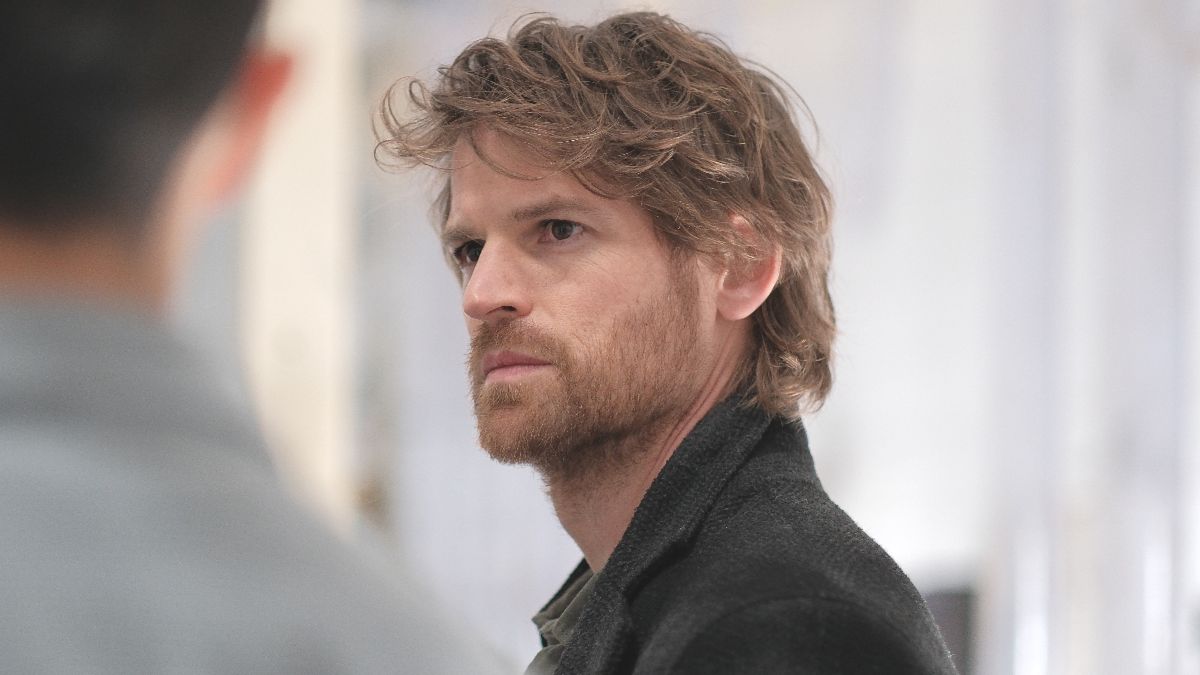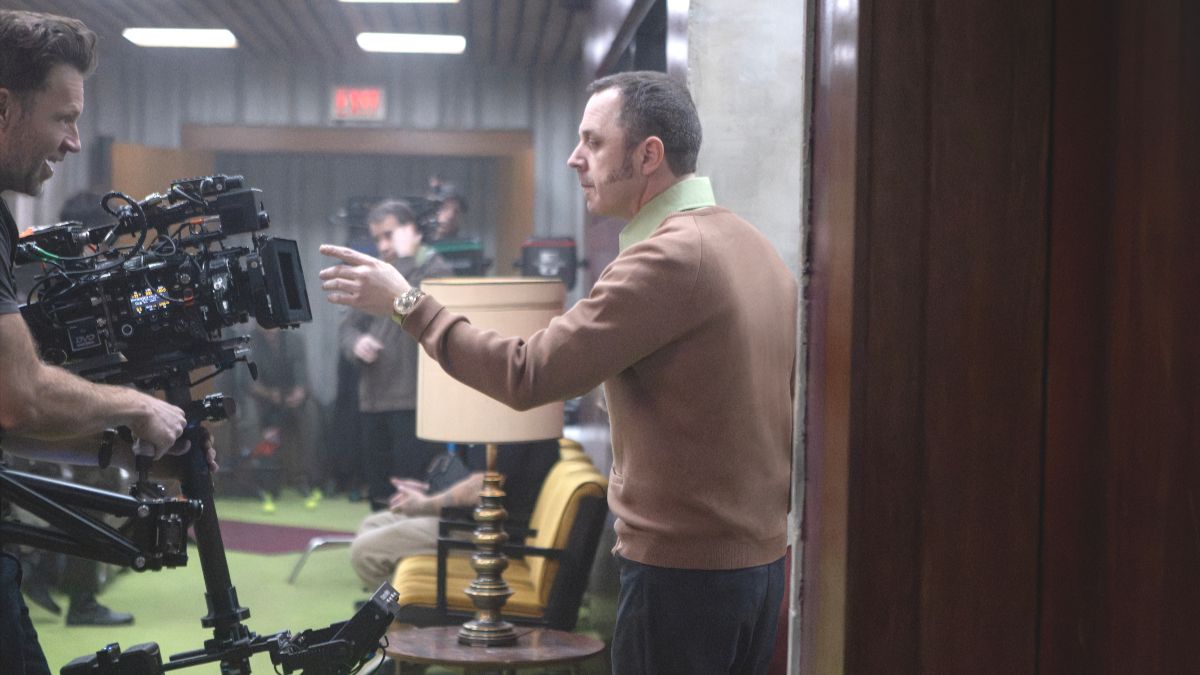
The captivating PBS series Breaking the Deadlock returns July 7 with one of its most timely installments. “How to Fix an Election” brings together another group of major political names to plunge into a hypothetical scenario about election integrity—and what it means for the country as a whole. It’s some of the most honest, oddly nail-biting political debate TV viewers will ever see.
Ahead of the episode, TVBrittanyF.com was joined by Breaking the Deadlock moderator Aaron Tang, Professor of Law at UC Davis and Supreme Court commentator. Aaron gave us his insight into working with panelists on both sides of the aisle—which for this episode includes Mark Cuban, Chris Christie and Claire McCaskill—and a deep dive into how Breaking the Deadlock has distinguished itself from other political TV programming.
Brittany Frederick: This is a unique show that inspires discourse and choices, rather than just debate. What makes Breaking the Deadlock still engaging to you as it enters its third year?
Aaron Tang: America is not well. Our country is not well. We seem to have forgotten, as a country, how to disagree with one another in a way that makes things better. It seems like both folks on the left and on the right, when we disagree with the other side, we are trying to destroy the other side and show how duplicitous or ignorant the other side is—rather than to try to persuade, understand the other side, and find common ground.
There’s only two paths forward when you have this kind of “us versus them” mentality, in any kind of a conflict. One path is to actually destroy the other side, to conquer the other side. The other path forward is to start having conversations again, to better understand, and view yourselves as partners in a shared venture. Maybe I’m wrong [but] my view is the path forward for our country is conversation, discourse, sitting down with and listening to people that voted for the other candidate in the presidential election, understanding their reasons, their thinking, their experiences.
And if that’s the goal, if we want more conversations, the best way to do it from my perspective is to model it. To have people—thought leaders, politicians, who usually are at each other’s throats—sit down, inhabit a world together, listen to each other, try to persuade each other, and sometimes find surprising common ground. That is the essence of our show.
Does the series feel more timely to you than it did when it began in 2024? Because this upcoming episode, “How to Fix an Election,” feels like it’s very timely.
I think it is very important now, I wish it were the case that our backsliding on democratic norms, civic discourse was as recent as the past year or two, but I think in 2024 we were not well either. Frankly, it has been many years in which people on the right and left have viewed the other side as the enemy rather than as people with a shared goal, [and] just a disagreement about how to get there. We brought this series back in 2024 recognizing this broader climate that we are in.
As the moderator of Breaking the Deadlock, you have to guide some very strong personalities. How much of your prep is about the issue, the subject you want to discuss, and how much is geared toward the people who are at those tables?
It’s all of the above, and I think part of what makes it manageable is an incredible team of producers [and] a great writer—a woman named Joan Greco, who really helps us build the dilemmas from the ground up that our panelists are going to face.
And having a really good sense of what the world looks like. The challenges, the problems, the developments that unfold as the show progresses, the choices that panelists have to make. The clearer we are about those those dilemmas, the less sort of anxiety-inducing panic I have to have, because the decision sets are pretty constrained. They can go this way, they can go that way, but it’s unlikely that something completely unanticipated will will arise after we’ve written and prepared and rehearsed the show as much as we do.
You have Mark Cuban in this episode, which immediately will grab some viewers’ attention.
He actually, I think, embodies some of the best traditions here, because he is the one independent in the panel… He truly approaches questions from a “what makes the most sense?” perspective, and sometimes that leads him [to] a position more often associated with folks on the right, sometimes on the left. But he really is not out to grind axes and rehearse talking points. He’s trying to figure out the best path forward.
Are there other particular highlights from you in “How to Fix an Election”? What should audiences be looking out for as they watch?
We start with a decision facing somebody, and quickly it escalates and turns into bigger and bigger stakes, and eventually we’re looking at the fate of democracy hanging in the balance. So that I think is entertaining.
What I would really try to get the audience to focus on is how we intentionally put people in situations where they’re going to disagree with the person sitting next to them. There are a lot of really important exchanges between Brittany Packnett Cunningham and Dan Crenshaw. Dan Crenshaw is a Republican congressman from Texas—very, very conservative. I think he embraces a lot of the talking points that are on the right. Brittany Packnett Cunningham is a community organizer, activist, woman of color, [and] I think is very aligned with a lot of familiar positions held by folks in the progressive left. The two of them are sitting next to each other—and watching their disagreements, their discussions, to me, that is where our show is so important.
They disagree, but they do so in a way that I think underscores that we all want the same things. We all want our country to be safe. We want democracy to function. We want to be hopeful about the future for our kids. We may have different views on specific issues that lead to different directions, but I think those interactions are so important to me, for the audience to see that there is a way to disagree without being at each other’s throats.
This is a series that hopefully inspires further thought or discourse from the people watching at home. What would you want to leave them with after this episode, or where would you point them toward if they want to go further?
There’s always two goals of every episode. One is a lesson about the subject matter. This is an episode about democracy, the founding principles that led us to declare our independence, how they’re relevant today. So there are lessons that we hope viewers take away about the fragility of our democracy, how it depends on well-meaning election officials, depends on all of us ordinary citizens to protect our right to vote, whether through protest or speaking out, standing up against people who would deprive us of that right.
But all of our episodes also try to teach sort of a meta point about civic discourse. If Chris Christie and Claire McCaskill, frequent sparring partners on TV, can sit down and actually find common ground and say you know what, this goes too far. If some fictional president were to do that, that would be too much. That ability to draw bright red lines [of] what is out of bounds in our life is so important for ordinary viewers to hear—to hear consensus among Republicans and Democrats on those points, because it teaches that we don’t have to live in a world where talking heads on MSNBC or Fox News are out to destroy one another. We could disagree with each other about some things, but not everything.
What have you learned in your experience moderating? What has the Breaking the Deadlock experience been like for you?
It’s been a lot of fun. That’s one thing I did not anticipate. When you become a legal academic, the goal is to sort of sit in your office by yourself and think about really complex legal problems as much as possible, right? [Laughs.] And so I’m pretty introverted. I never set out thinking that we’d be doing a TV show and moderating some of these difficult decisions for these big, big names. It’s been a pleasant surprise how fun it is.
The overriding lesson for me has been one of hopefulness, in the sense that almost universally the folks, when they finish our show, they are thankful. We’ve had people from Moms for Liberty. One of my favorite panelists is a person I disagree with about a lot of things—a man named Roger Severino, Vice President of the Heritage Foundation. To see the genuineness with which they wrestle with agonizing decisions, and can understand the perspectives on the other side, even if they disagree with them, leaves me hopeful.
If we could just sit down with people that we disagree with and get rid of the glitz and the glamour and the names like Donald Trump and Joe Biden, which are inherently dividing. If you can just get people to sit down and talk about their core values, sometimes in a hypothetical world, good things are possible. People can disagree. Barack Obama used to say, disagree without being disagreeable. I still think that is something the American people can do. I am hopeful that there are brighter days ahead, and that there is the possibility of leadership in future years that can bring out the best elements in our people.
Breaking the Deadlock airs July 7, 2026 at 6:00 p.m. PT/9:00 p.m ET on PBS, and streams on PBS.org and the PBS app. Photo Credit: Courtesy of PBS.
Article content is (c)2020-2026 Brittany Frederick and may not be excerpted or reproduced without express written permission by the author. Follow me on Twitter at @BFTVTwtr and on Instagram at @BFTVGram. For story pitches, contact me at tvbrittanyf@yahoo.com.