Monique Sorgen’s One Day in Sedona is billed as a romance, and it is, but the movie is actually more of a character study. Viewers are following one prolonged conversation for most of the film—which is a big ask for today’s movie audiences, but also worthwhile. It means they can get invested in two solid performances and two characters who have a lot of layers to them.
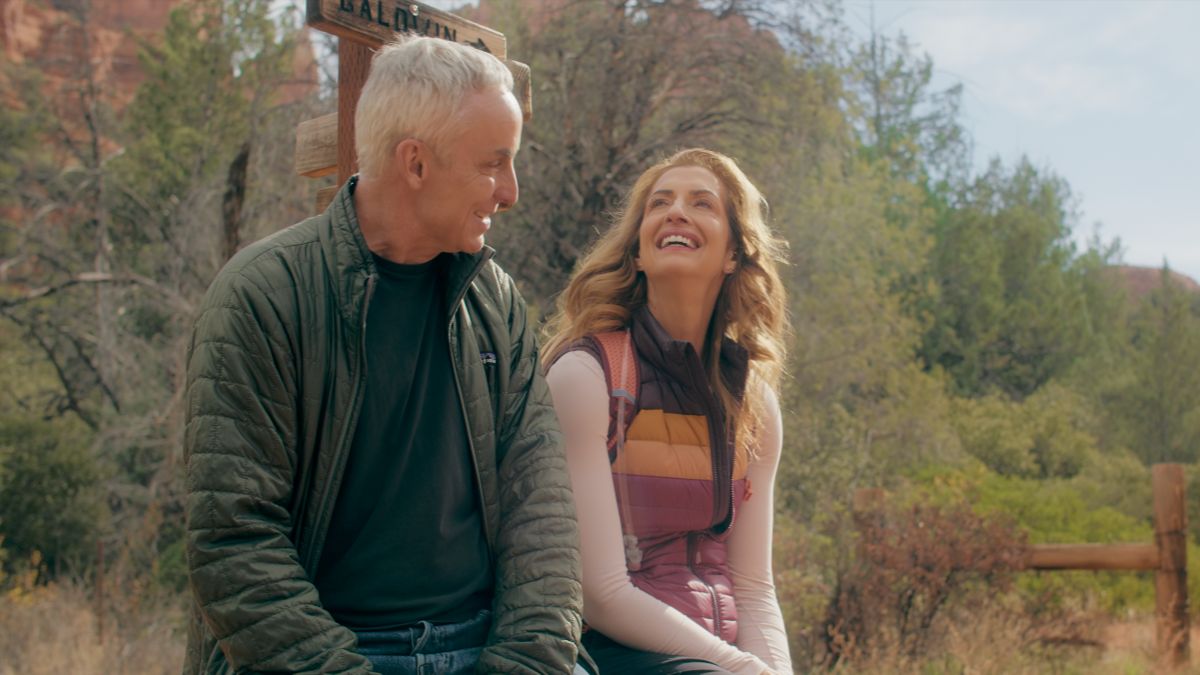
The first plus for One Day in Sedona is its cast. Chances are you’ve seen Alysia Reiner and Wallace Langham in at least a half-dozen things; both are actors who’ve helped bring countless projects to life. That makes it very fun to see them in leading roles, and particularly leading roles in this film, where they are front and center almost the whole time. It gives viewers a greater appreciation of how talented they are. It’s particularly fun to see Langham, who’s often playing more snarky characters—such as David Hodges in the CSI franchise—portray Will, who’s more lighthearted and sometimes even totally flustered.
In contrast, Reiner gets the more straightforward character, which isn’t a huge departure from some of the roles she’s played before. Yet she’s able to make Jules forthright without being off-putting or condescending, which is important because it’s her story that the audience is essentially following. It takes longer to feel Jules’ vulnerability, but when it comes, Reiner is great at it.
In terms of plot, One Day in Sedona is reminiscent of another lovely two-hander, Carter Ward’s recent Step Back, Doors Closing. Both feature a pair of characters who coincidentally find each other, spend one memorable day together, and don’t necessarily know what the future holds for them. They’re the same idea at diametrically opposite points in life. One Day in Sedona‘s characters Jules and Will are trying to rediscover their optimism and their wants after having lived through a lot. Jules is dealing with the death of her father; Will has just gotten divorced. But as the title indicates, this film is far more static. The characters don’t go through anything except some good cardio.
That setup is obviously great for an indie movie—only two characters, very few changes of scenery—but it’s a narrative challenge. Particularly setting the film in Sedona, Arizona, which though fantastic to look at, is still in the desert. Visually, the film’s different shots start to look the same after a while (even if it’s a beautiful sameness). This puts an increasing emphasis on the conversation to hold the viewer’s attention. Luckily, it does for the most part, with Sorgen mercifully avoiding anything that sounds like cheesy romantic movie dialogue until the last few minutes. And at that point, the audience should want the cheesy romantic movie dialogue.
One potential criticism of the film, and it’s not necessarily a negative, is how many hot-button issues the movie covers. Will and Jules’ discussion goes through a whole laundry list of topics, including AI, religion and civil rights. Romance movies don’t usually come wrapped in discourse, and that’s not going to be for everyone. The good thing is that Sorgen does largely avoid preaching at the audience or pushing any particular point of view. One Day in Sedona is not delivering an underlying message. The movie is still about its characters; they’re just characters who like to talk about capitalism and the existence of angels. These are both the people who start an unsolicited discussion at a dinner party. But they’re also people that you’d want to invite to said dinner party in the first place.
The bottom line of any romantic movie is whether or not the audience wants the couple to get together by the end. Sure, they probably will, but is the viewer actively rooting for them to live happily ever after? One Day in Sedona passes that litmus test. While Sorgen could’ve scaled back on the timely topics and still made a fine movie, the discussion that Jules and Will have allows the audience to see that the characters are a good match in ways beyond the usual “meet cute” topics. Langham and Reiner find the give-and-take rhythm that a romantic duo requires. The audience wants Will and Jules to end up together. They want that second conversation.
And in a big-picture sense, filmmakers like Sorgen and Ward deserve credit for not serving up the typical Hollywood ending, but finding that same warm, fuzzy feeling in characters and dynamics that feel realistic. One Day in Sedona requires a little bit of patience, to sit and immerse oneself in an hour-plus of two people talking, but it’s a journey worth taking.
Photo Credit: Courtesy of the filmmakers.
Article content is (c)2020-2026 Brittany Frederick and may not be excerpted or reproduced without express written permission by the author. Follow me on Twitter at @BFTVTwtr and on Instagram at @BFTVGram. For story pitches, contact me at tvbrittanyf@yahoo.com.