WARNING: The following contains discussion of suicide.
There have been plenty of movies that focus on the struggles of veterans, and there’s a much greater awareness of mental health. Worst Enemy, the short film written by Kevin Machate and Todd Rodgers and directed by Machate and Ammie Masterson, combines the two in eleven minutes that don’t feel like enough. Because despite its short run time, the film highlights many of the misconceptions that still exist on both subjects.
Machate turns in a quietly affecting performance as Shane Snyder, a veteran whose life is in a downward spiral—one that only gets worse when he’s diagnosed with Major Depressive Disorder and Borderline Personality Disorder. The film emphasizes the latter, with Shane trying to figure out what it means amidst everything else in his life falling apart. The script packs in everything that could possibly go wrong for him, from alcoholism to the death of his beloved dog Wally.
It seems like too much, but it actually proves a point made by many support groups: the prevention of suicide isn’t just preventing the act, but also helping someone’s quality of life. It’s things like providing a path to employment and opportunities to meet basic needs that can stop them from getting to that perceived point of no return. Worst Enemy hits that nail on the head, hard.
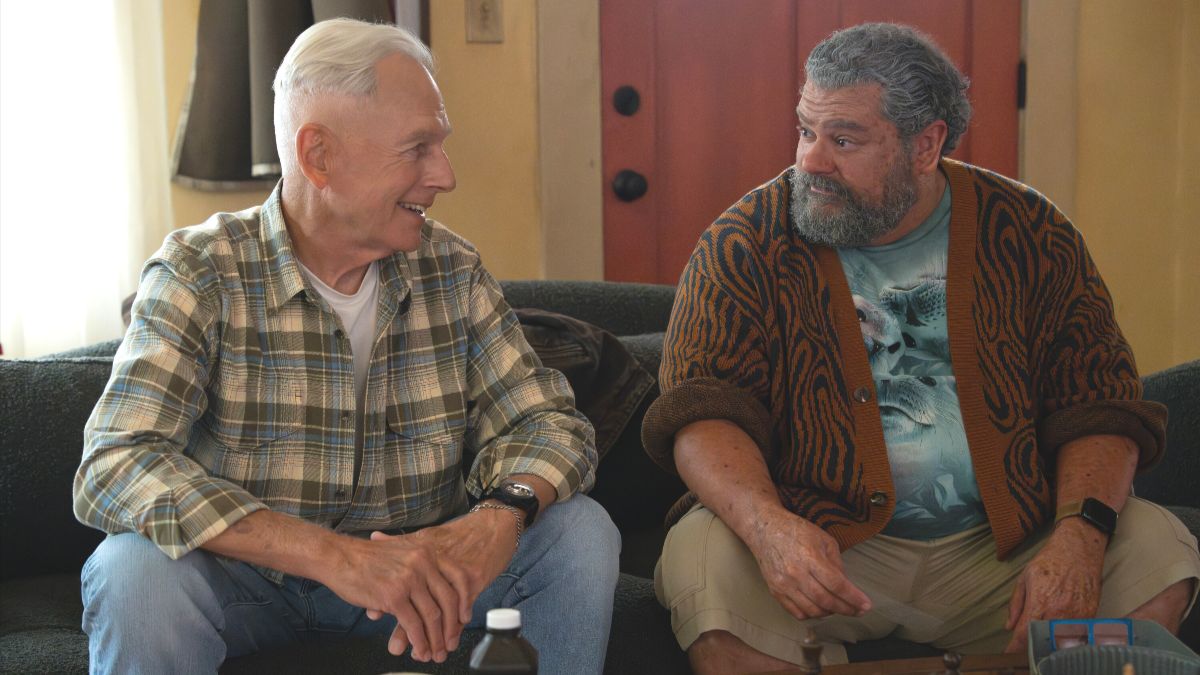
Because of all those things, Worst Enemy feels like a film that needs to be much larger. Not necessarily in a chronological sense; it would be trite to just do a straightforward slog through Shane’s troubled life. But there could be a chance to get to know Shane beyond this pocket of his existence—to paint a full picture of who he is. Machate is certainly capable of delivering that. And the one key relationship in the film, between Shane and his cousin Ashley (portrayed by Beth Shea), is worthy of exploring too. It’s the only real interaction that Shane has; dinner with his father (played by Barry Corbin) is just Shane being talked at. There’s so much more that could be explored and discussed, even after the movie’s tragic end.
On that note, the movie’s depiction of Shane dying by suicide is meant to raise awareness of the issue—the film closes on a pair of statistics—but the film doesn’t feel like it’s a dramatized PSA. Worst Enemy is able to tell its story without being overbearing, and the scene in question is handled as well as it could be. There’s no blood or gore, or overdramatic buildup to the moment. It simply exists. And while it seemingly is meant to be surprising (the gun is barely seen in frame), it’s not for anyone paying close attention to the narrative. Shane truly is out of perceived options. This is another way that a longer movie would be even more effective; he gets to that terrible point relatively quickly. A full feature would ameliorate that compression of the timeline.
Worst Enemy also utilizes, in the person of Shane’s father, some harmful misconceptions about both mental health and disability. His dad utters a few lines people have heard before, telling his son that “you don’t look disabled” and that “we handled our problems like men.” His attitude is implied to come from the fact that he’s a Vietnam veteran—having served and lived in a different time where statements like that were the prevailing attitude. And to an extent, that’s true; we understand mental health a lot better now, and even today, men in particular are told to “suck it up” or be perceived as weak. That character certainly is one-dimensional but it also means something for the film to acknowledge those cliches and the fact that they are cliches, even if Shane doesn’t really push back against them.
The movie isn’t fully fleshed out because of its limited run time, and it does have some issues; it honestly doesn’t need an underscore or the music that’s in it, with the latter being a little overbearing. But it accomplishes its intent of not only talking about a sensitive subject, but talking about parts of that subject that aren’t normally discussed. It does so respectfully, and with a lead performance that brings the emotion this journey deserves.
The best endorsement I can give for Worst Enemy is as someone who has Major Depressive Disorder and who has struggled with suicidal ideation. It is a film that feels real to me. It touched on things I wish more people understood about depression. The best movies are ones that affect the audience in some way, and watching this movie I felt heard, and felt that other people would understand the subject better for seeing it. Hopefully it gets a wider release—or wider development, because there’s a lot here on both creative and emotional levels.
Photo Credit: Courtesy of the filmmakers.
Article content is (c)2020-2026 Brittany Frederick and may not be excerpted or reproduced without express written permission by the author. Follow me on Twitter at @BFTVTwtr and on Instagram at @BFTVGram. For story pitches, contact me at tvbrittanyf@yahoo.com.