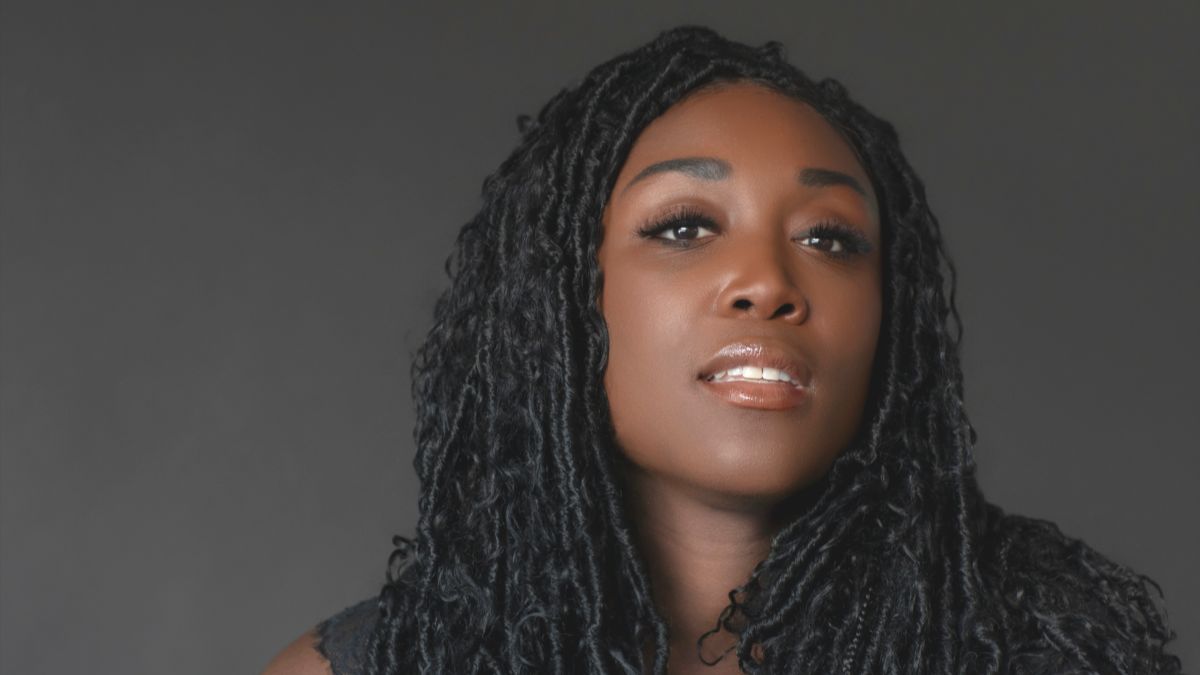
Malynda Hale doesn’t have one lane in her career; she has an entire freeway. Movie fans can currently see her in the film Bull Street, portraying lawyer LouEster Sadie Gibbs opposite acting icons Amy Madigan and Loretta Devine. But acting is just one part of what she does. Malynda is also a writer, director, singer-songwriter, has her own entertainment brand and she’s involved in various good causes. Oh, and she does it all while raising a family.
In an interview with TVBrittanyF.com, Malynda spoke about how she manages such a versatile career. She reflected on her Bull Street role that allowed her to do something she’d never done before. Plus, what motivates her not only as an artist, but a human being?
Brittany Frederick: Your latest project is the movie Bull Street. What was it about the movie that made you want to be a part of it?
Malynda Hale: It was a character that I hadn’t played before—let alone having a Southern accent, being able to play a lawyer. There are a lot of different elements to the character that I was really drawn to, but I really loved the relationship specifically between my character and her grandmother, who raised her. [It] was very similar to the closeness me and my mom have. And so being able to play that out on screen, let alone with Loretta Devine, was something that I obviously was really excited about.
And I just think it was such a beautifully written film. I loved how much Lynn [Dow], the writer and director, put care into the characters as a Black female from the South—chronicling her family legacy and everything that happened with her grandmother and their relationship. And [I was] excited to explore a character that I hadn’t played before. It was really, really special.
You mentioned working with Loretta, which she’s such a phenomenal actor. What did you learn from just the experience of doing Bull Street and being on that set with that level of talent around you?
I learned that I was capable and I didn’t feel out of place at all. This was definitely the biggest role that I’ve ever had. Then acting opposite Loretta Devine and Amy Madigan—you see that on paper and it is a little bit intimidating, knowing the history that they’ve had in their careers, and I’m at the beginning of mine. So you don’t know if you’re going to be able to rise to the occasion.
Not to pat myself on the back too much, but I was really proud of what I was able to accomplish. And just being able to learn from them in the moment; I’m a huge believer of never being the best person. because you always can be a student. I love being a student, and I definitely was on set with both of them. That’s something that I took away, that I was capable, but that I’m always learning. And there’s always ways that I can grow in my art and in my craft.
You have an impressively broad career already, which runs contrary to the popular idea that everyone should focus on one or two talents. What made you decide to pursue all of these different avenues?
I’m a Leo, so that’s part of it. [Laughs.] I actually had a teacher in college that said be the best at one thing, but be good at everything—and I actually took that to heart. But I’ve always had so many different passions. And I feel like the overarching umbrella of Malynda, everything that comes underneath that, it always just goes back to wanting to make the biggest and most positive impact in the world.
And also, I just like exploring the different facets of my skill set. There are times when I want to do more singing. There are times when I want to do more acting. There’s times that I want to focus on doing more cultural and political commentary. But it all comes back [to], I’m very intentional about the things that I do and how I want to show up in the world.
I think that being able to have a variety of skills and being a part of different communities, it’s not only allowed me to explore the different facets of my life, but also I love being exposed to those different communities and finding different people to connect with—within acting, within music, within the creator world, within the podcasting world. That’s been really cool, for me to be a part of and finding community in all of those different areas.
Do you have to compartmentalize when you’re working, or do you find that one skill set influences others along the way?
I think it all goes together. I think it’s hard to turn it off because you’re like, how will I visually see this as a director? How will I perform this as an actor? And then you think about that as you’re writing. My husband is an incredible writer, and I’ve learned a lot from him as I’ve started my writing journey as well.
And that’s why I do love being a multi-hyphenate and having all of these different parts of my life, because I can see things from different angles and see how it would work as an actor, as a writer, or as a director. Even as a producer, I’m like, how much is this going to cost? You have to think about all of those different things. I think that they all just come together, and I don’t really think that I turn off any part of it when I’m creating something.

How does that versatility shape your career? Do you decide to prioritize something if you haven’t done it in a while, or do you see what comes your way and follow the opportunities?
I think it’s a combination, honestly. There are times when I’m way too focused on political commentary and cultural commentary and I’m like, I want to take a break. I need to remind people that I act, sing, and direct—and so I focus on posting that type of content. I’m going to New York in a couple of weeks to do a reading for a brand new play that may end up on Broadway. And I’m like, I’m doing more theater this time because I miss doing that. So I think it’s circumstantial; [it] depends on what season of my life I’m in…. Whatever opportunity shows up that I think will fulfill me in a certain way, if it’ll make me happy, then I’ll probably end up doing it, honestly.
I try to balance, because I do a lot of writing on my Substack and a lot of reels and stuff on Instagram, and I have a really big following in that medium… But they all fulfill me in different ways, and they all have a different place in my life. I just try to figure out when I need more of something or when I may need less of something.
So for people who watch Bull Street and want to see more of your work, what would you recommend? What are you working on next?
There’s a couple of things. My directorial debut that we did a festival run with two years ago called Curtain Call, you can stream it on YouTube. And then the next short film that I directed is called Au Gratin. We’re currently in a festival run; we’re going to be going to Martha’s Vineyard African-American Film Festival in August, showing it there. Once that is up and streaming, I would highly recommend people doing that. I’m also currently writing a narrative audio podcast series that is going to be coming out at the beginning of next year.
Beyond entertainment, you mentioned that you’re active in cultural and political commentary. What are some of the causes that you’re passionate about, and why are they meaningful to you?
Anything that has to do with human rights. I’ve always talked about voting rights, women’s rights, LGBTQ rights, ttalked about just the Black experience in America. I’m just a really huge advocate for explaining why diversity is what makes this country great. Talking about a lot of the current political discourse that’s been happening and making sure people understand what’s at stake and why we need to be showing up for each other. I use a lot of my platform to not only educate but shine light on the good and the bad, also giving people calls to action so that they know what to do, because I think a lot of people do feel a little helpless in the moment with inflation and not knowing how to provide for their families.
I’m very lucky on the creator side that I have collaborated with a lot of incredible organizations: the Persist Network, Just Win Team, Stand Up America, and When We All Vote. I’m lucky that I have a platform [where] I’m able to share information for people that they may not get on a regular basis. And for me, arts and humanity, they go hand in hand. Even if being an artist is my thing, I will always show up with political and cultural commentary because at the end of the day, I’m a citizen. I’m a Black female living in America. A lot of these things affect me, and I know that they’re affecting people that I love, so I want to continue to use my platform to educate others on what they can do.
Do you find that your experiences outside of entertainment then inspire or influence you creatively?
Absolutely. I think it’s impossible for them not to, because they’re both such a huge part of my life. If you’re able to use art to not necessarily take a political stance, but to humanize certain experiences that maybe people aren’t able to conceptualize if they’re not seeing it on screen, that’s a beautiful way to get people to think. Curtain Call really is a conversation around the queer community. Au Gratin is really about the normalization of a Black family during the holidays.
With the stories that I’m creating, I really just want to normalize certain experiences that a lot of marginalized groups haven’t had the privilege to be able to have. We all love and we all have heartbreak and we all go through certain things in our life. But when you look at a lot of media, it really is catered to one specific demographic. I’m trying to say that we as whatever insert group also have these experiences—and it doesn’t necessarily have to be labeled as a Black project or labeled as a LGBTQ project. This is a normalized experience that people need to be exposed to. So it really does find its way into a lot of the art that I create, because I want to normalize those experiences for a broader audience.
Is there anything that you’d say to that wider audience, looking for new sources of entertainment or inspiration?
There is an uptick in wanting people wanting to support independent media, which I think is so beautiful… I would just encourage people to diversify the independent media that you are consuming, because it still is harder for marginalized directors and and creators to push through.
Even when you see the Hollywood List or the Forbes Top Creators, it’s very, very similar demographics. There’s so much out there, and I know we’re probably oversaturated, so it’s hard to know who to follow and what to follow, but try to diversify. Find a woman. Find a person of color. Find someone that has an LGBTQ perspective. Find somebody that has a disabled perspective. Just to be able to cover the gamut of creators and filmmakers, I think that’s how we create a new era of media—by giving people their due and not just watching the same perspectives and the same type of directors. Support as many people as you can. There’s a lot of great talent out there.
Bull Street is on Amazon Prime Video and Fandango at Home now. For more on Malynda and her other projects, visit her website and JMVEntertainment.com. Photo Credit: Brie Childers/Courtesy of ICON PR.
Article content is (c)2020-2026 Brittany Frederick and may not be excerpted or reproduced without express written permission by the author. Follow me on Twitter at @BFTVTwtr and on Instagram at @BFTVGram. For story pitches, contact me at tvbrittanyf@yahoo.com.