There’s a lot being said in Meta Take One, but not all of it lands with the movie‘s audience. This indie thriller from John Dierre and Ryan Dutter, who describe themselves as “guerrilla filmmakers” in the film’s press release, is a great idea that’s over-executed. Still, the cast and crew deserve applause for swinging for the fences.
Dierre and Dutter have a great idea: take those struggles and neuroses that independent filmmakers face, and magnify them by having their fictional film crew commit an actual crime. This approach of using a heightened situation to reflect back on characters or issues is a cornerstone of storytelling. And it’s relatable not just to filmmakers, but to film viewers too, because everyone who’s watched a movie knows how much it takes to make one. Everyone can understand having little to no budget, trying to get anyone to pay attention, and feeling desperate just to get the job done. The opening nine minutes of Meta Take One are actually hilarious in how well they reflect what it’s like to make an indie movie: actors trying to get their lines right, equipment in the shot, the whole nine yards.
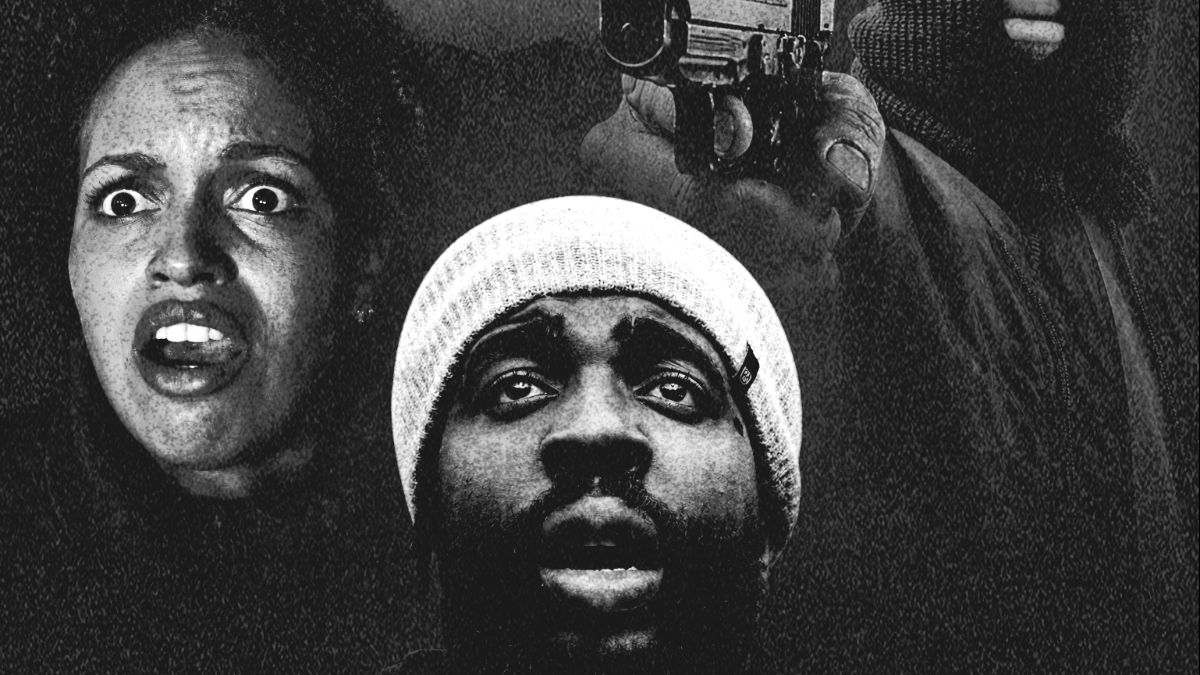
But when the movie turns serious, its ambitions overrun its narrative. Per the same press release, Meta Take One wants to raise “larger questions about visibility, vulnerability, exploitation, and representation.” It’s not as successful in that respect—and that feeling of having to have a bigger purpose makes the smaller, specific story less effective, because it’s more about “what is this trying to say?” rather than what it actually is. Furthermore, there’s an excess of stylistic choices that sometimes visually work, and other times are another distraction from the plot. It’s an interesting decision to shoot the film in black and white, and the movie-within-a-movie in color, when it could’ve been the other way around. That gives Meta Take One a film noir quality that works for its grim story. Yet as with the content, there’s just too much happening visually to really stop and appreciate what does work.
The cast of Meta Take One is spot-on, particularly Ernest Emmanuel Peeples as Damon, the lead actor. Peeples plays the early comedy of an actor who isn’t quite “with it” so well, and then gets to descend into a kind of madness, because it’s Damon who has the most to lose. He ends up serving as somewhat of a voice for the audience against director John (played by EJ Ezeruo). John is the movie’s protagonist in the sense that everything goes through him, but it takes about ten minutes to realize that he’s a walking cautionary tale and how this is going to end. Ezeruo does surprisingly well with a character who has few redeeming qualities; he’s the friend who keeps badgering you to do the thing you don’t actually want to do.

That’s another inherent catch in Meta Take One: there’s no connection with any of the key characters, which makes it hard to care about what happens, even as the audience knows what’s generally going to happen. The movie is too focused on communicating its message about the destructive power of ambition to get the audience on side. The premise of the film would work so much better if Dierre and Dutter showed their characters having more compassion for the situation. Of course they can’t turn themselves in or there’d be no movie, but there’s an overwhelming self-interest—which works for the theme of the picture, yet not for creating empathy in the viewer. The ending could have been so much more powerful if the audience was able to invest emotionally in John, and not just the ideas that he represents.
Yet all of these artistic flaws come back to one thing: that these filmmakers clearly care a lot about making movies. They want to say big things, and they want to do all the things, and they’re working hard to get there; this is a movie that took two years to make. It’s fantastic that there are filmmakers who want to reach for the stars, and who aren’t daunted by the limitations of indie cinema. Underneath the grit and tragedy of Meta Take One, one can feel the passion that Dierre and Dutter have for their craft. They took their struggles and made something out of them. They just needed to scale the movie down and focus its ideas more.
Meta Take One has its share of missed opportunities, but it also shows love for indie movies and the people who make them. These are two filmmakers who clearly have something special in them, even if it’s not fully realized here.
Meta Take One releases digitally on August 4, 2026. For more information on the film, visit its website. Photo Credit: Courtesy of K Porch Pictures.
Article content is (c)2020-2026 Brittany Frederick and may not be excerpted or reproduced without express written permission by the author. Follow me on Twitter at @BFTVTwtr and on Instagram at @BFTVGram. For story pitches, contact me at tvbrittanyf@yahoo.com.