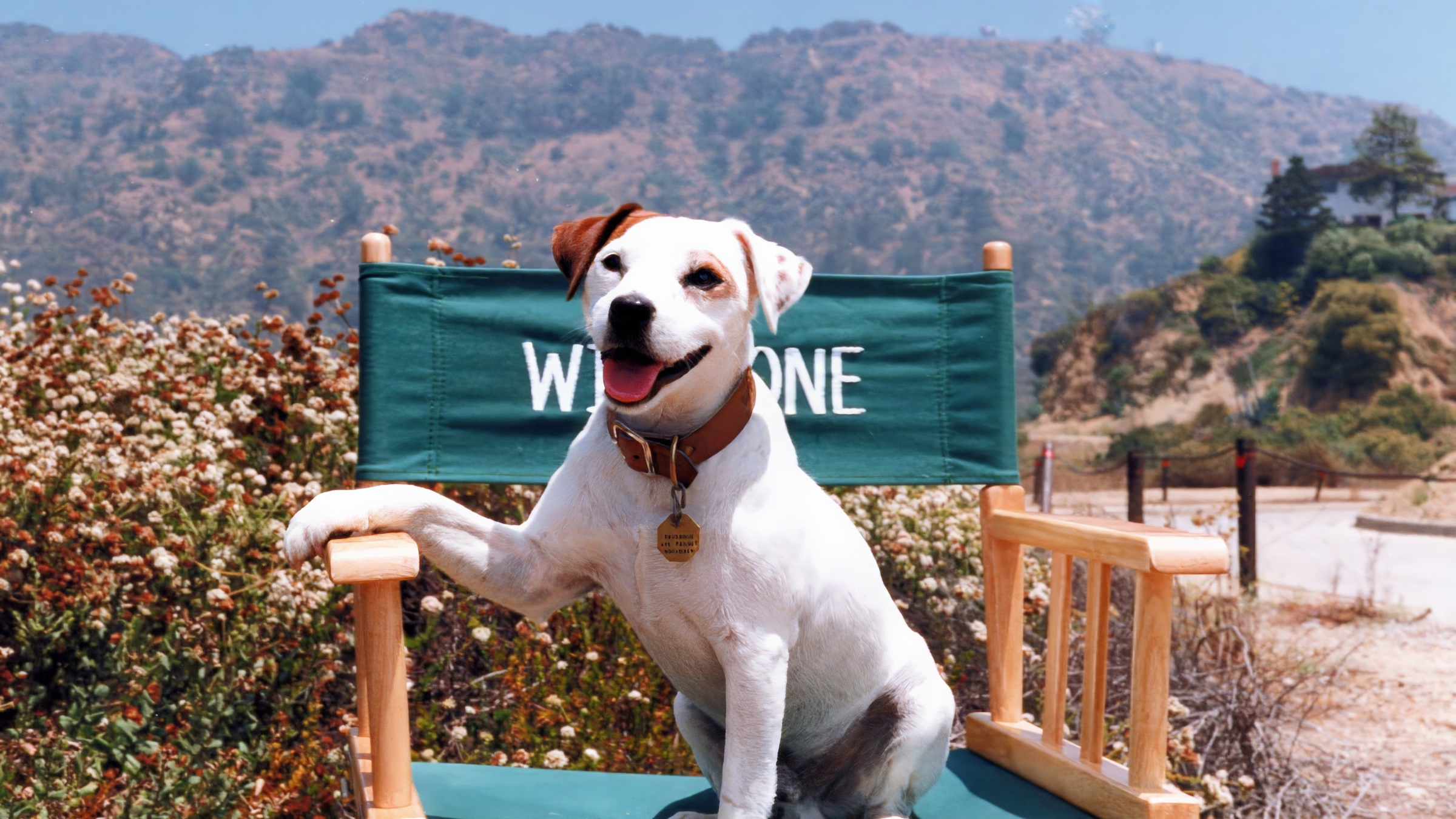
Launching in 1997 on PBS, Wishbone was a cute little show about a dog who would imagine himself at the center of episode-length literary adaptations. Created by Rick Duffield and starring a terrier named Soccer (voiced in the show by Larry Brantley), the series became a surprising success for the network — winning several prestigious awards and developing a fanbase that has spanned generations. Nearly thirty years later, many of the people who worked on the series, both on-camera and behind-the-scenes, have come together to reflect on the story with What’s the Story, Wishbone?.
The feature-length documentary, directed by Joey Stewart (who was assistant director on the show), is a delight from end to end, a true love letter to the show and the impact it had on audiences. During a chat with TVBrittanyF, Joey Stewart, along with Wishbone producers Betty Buckley and Larry Brantley — both of whom also produced the documentary with Joey — reflected on the success of the show, the evolution of Wishbone as a character, and the legacy of the series that’s still going strong three decades later.

TVBrittanyF: Starting off, congratulations on Wishbone as a whole and What’s The Story, Wishbone!
Joey Stewart: Thank you. It’s funny. More than any other job I’ve had on, Wishbone was what everybody wanted to talk to me about. They didn’t want to talk to me about how I worked on Walker, Texas Ranger, or all these other movies. They want to talk about Wishbone! They want to ask about the dog [Laughter].
They want to know how we pulled that off. To see how it changed people’s lives and how it turned them into people who loved literature, and then they became scholars or became librarians… the ways it changed the course of their lives. That’s when the light went off, and I realized what we had done was really special.
Wishbone had a lot of fun bridging the gap between classical literature and folktales to create entertainment that could appeal to all ages. What was the process like to bring those stories into the Wishbone tone?
Betty Buckley: Well, it started with, from a business perspective, with what we could adapt. So we looked at what was in the public domain. At the time, that was the death of the author plus 50 years. We had a really good research department. Stephanie Simpson was our showrunner. They worked with our researchers to look at this sort of massive list, and then would cherry-pick stories that would seem to fit thematically with the show. Each episode had the contemporary story, and then we had the fantasy story, which had to have a role for Wishbone.
Larry Brantley: I was very fortunate in that I got to work really closely with Steph. She sat in on every voiceover session, so I learned her process. One of the hard and fast rules that she had for her writing team is that no matter what we’re tackling, we will never write down to kids. That was rule number one. We weren’t afraid to go after stories that told difficult or sometimes complicated themes, but there were certain parameters that the entire team had to take into mind when selecting a story.
What was the universal theme within that story? Is it love, revenge, redemption, whatever? Can we translate that to the contemporary world, so the kids understand how it applies to them, too? Is there a role for Wishbone? We do not write down to kids. I never knew until I started working on the show and getting to know Steph what a massive boulder the entire writing team carried.
Joey: Keep in mind that once we got into full production after the initial five episodes, we were shooting an episode a week. The writing team had to not only select a story, get a first draft out, but they also had to get it to the department heads, because those guys were already clamoring for a script. They wouldn’t know what world we’re creating yet.
Betty: We would have to have a script, so you know, kudos to Steph and her team for always seeming to manage to get that done and getting it done. At the end of the day, we had a script that not only told a visual story but also told a thematic story that also had to cross over worlds with stories that people could relate to. I mean, that’s a tall order, and they had to do it every single week,
The thing about the show is that it really does feel timeless. It was a show that I loved as a kid, that my son enjoys just as much now. What was the key to making the series have that sort of vibe?
Betty: It was a huge challenge. I remember meeting with Stephanie sometimes, and we would just be at my desk, going, ‘You see, this date here, this is where I die if we don’t have a script.’ [Laughter]. And sometimes, there was so much, it was so massive. After the first five, we would shoot for four weeks and then take a week off. But the writers were just writing as fast as they could.
Some of the scripts didn’t work. I believe Stephanie polished and touched up every single script. It was a huge challenge, and Stephanie did such a great job. It was such a unique, different thing to tell these two stories, and that’s what made it special, I guess.
Vocal performances can really evolve in interesting ways. Larry, as the voice of Wishbone, how would you say the character developed during the production of the series?
Larry: Well, you said something in your question that really hit the nail on the head. I never tried to find a voice for the character; I was always trying to find the personality of the character, and I think the moment that happened was in the callback when I still didn’t have the job. In that moment, I was the least experienced voice actor in the room by a country mile. A lot of them were going in a direction where they had created this voice for Wishbone.
They clearly thought it through. The character was a thespian, that kind of thing. They were all interesting choices, but I was too naive to do any of that. So in that moment where I got to basically improvise my entire audition, I wasn’t thinking about any of that; I was simply trying to vocalize what I thought must be going through that little dog’s head at that moment. That to me was the most honest thing I could do. Hemingway said, “Write one true sentence.” So I was just trying to do the truest thing I thought I could do in that moment.
That turned out to be the key for me to unlock the personality of Soccer. Every day after that, I observed him as much as I was able to. I was very fortunate that I did get to work on set during principal photography with all the other actors, albeit off-camera. It gave me ample opportunity to observe Soccer when he was on camera and when he was off camera, and all of that informed [Wishbone’s] character and his personality. The voice just grew out of that. I think as a young voice actor, I could have fallen into that trap of trying to figure out what they wanted in terms of a voice. If you do that, you’re missing the point, which is the term voice actor – actor is the second word in that term, but it’s also the most important. You have to capture the personality of the character first, and the voice will come after.

The series went on to win so many awards — it won a Peabody!
Betty: Do you want to see it?
I would absolutely love to see the Wishbone Peabody.
At this point in the Zoom interview, Betty stood up and returned to her desk with the Peabody Award the show won in 1998.
Was there ever any expectation that the show was going to have that kind of reception?
Betty: No, we were just trying to make a good show. We had no idea. I have to tell you, I haven’t said this to anybody. There’s a scene in the documentary where Wishbone wins the Emmy, and there’s someone screaming really loudly. I think that’s me! I’m pretty sure that’s me. I was so excited. It was just a thrill. In the making of it, everyone was just so passionate, so we just had such a good time doing it. Getting those accolades was just the icing on top.
Looking back at nearly three decades of this character, what would you say has surprised you the most about Wishbone and the legacy he’s left behind?
Joey: At the time, we were just all young and trying to make it in our careers. I was just a nervous little assistant director, hoping I wasn’t gonna fail in my career, just trying to keep this puzzle going and working and making it all fit and hoping I didn’t fail. In hindsight, everybody came together knowing they were creating this great show. They worked as a team to make it happen. Nobody was just there for a paycheck.
It felt like a team that wanted to make a great show, where you could rely on every department head to work together and do that. That’s really what made it a unique shooting experience. Going into What’s the Story, Wishbone?, I thought it was going to become a 12-hour mini-series. There were so many stories to tell. There were 300 cast and crew members. I thought it would be this four-hour multi-part thing.
When you get everything together and get into the editing, though, the documentary starts to tell you what it’s going to be. As it forms together, you realize that it makes sense. This thread goes here, this story goes there. It was a great joy making Wishbone. Day in and day out, it was a challenge, and sometimes it was sad not to include all the story ideas we had for the documentary. I think we’re all really proud of the work we did on the show and what we’ve done with this documentary. It’s all exactly what we wanted.
What’s The Story, Wishbone? will air on PBS Stations from May 27 to June 9, before becoming available on digital platforms on June 10.