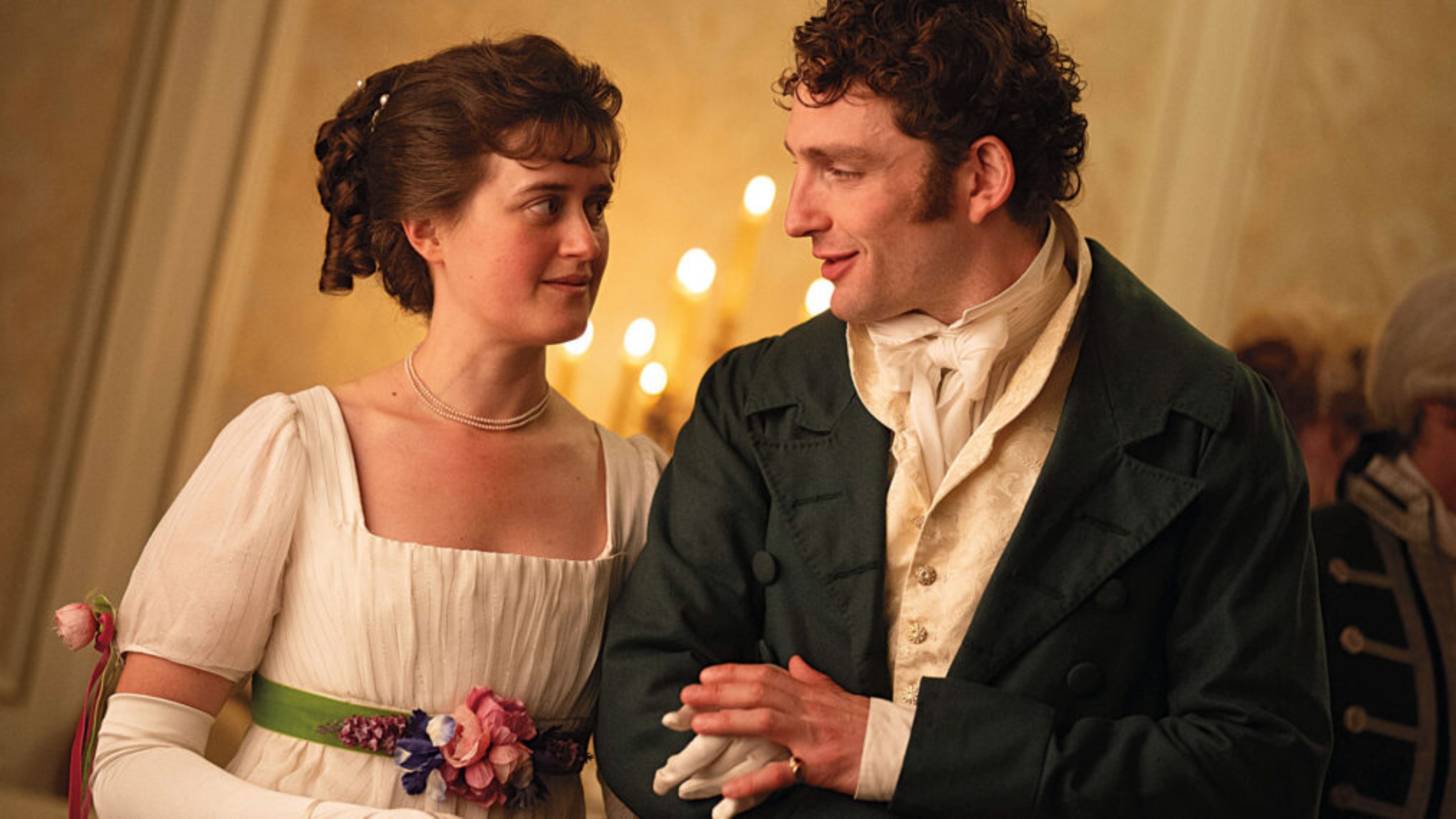
While the story of Pride and Prejudice is pretty well-known, the story of Mary Bennet is less revered. The middle sister in the classic Jane Austen novel, Mary, is a side-character in most adaptations at best, and an afterthought at worst. The Other Bennet Sister is all about reversing that trend, however. Based on the novel of the same name, the Ella Bruccoleri-led show is an absolute delight that thoroughly embraces the young woman for all her quirks and imperfections — and still finds her a fascinating figure worth of love.
It’s a charming show that thrives because of strong casting and a terrific script — the latter of which is courtesy of Sarah Quintrell, who is also an executive producer on the show. During an interview with TVBrittanyF, Quintrell talks about the beating heart of The Other Bennet Sister, making the period piece feel timeless, and the overwhelming response to the show.

What was it about Janice Hadlow’s novel that really captured your attention?
As soon as I read Janice’s novel, it felt like a story of an outsider, of someone who just felt like she wasn’t getting it right, who was on the outside of life, who was being held up to standards she felt she couldn’t reach. I think there’s a bit of Mary in all of us. She feels like everyone else is getting it right, everyone else is finding life easy, and she’s just getting it all wrong, and it’s not working.
I think, however confident you are, there’s a bit of that in you. For some people, there’s a lot of that. Mary felt like a character that doesn’t sit at the heart of any of our dramas, let alone a period drama. It was such a wonderful way to explore a really familiar world with these gorgeous characters that we know so well and we enjoy spending time with, but take a completely fresh angle on it.
It’s very much the Rosencrantz and Guildenstern Are Dead of Pride and Prejudice.
Exactly!
That material is a well-trodden space for adaptation — how did you approach the Jane Austen period-piece setting and make it feel authentic while still staying true to your own sensibilities?
Pride and Prejudice is our big sister, like Lizzie is in our show. It felt like Pride and Prejudice was happening off to the left, where everything was very formal and buttoned up, where everyone was getting everything right and looking beautiful. We were in the kitchen [Laughter]. To me, that’s how it felt fresh. It almost felt like we were in we were just slightly in a different room. I was really lucky that we were allowed to build sets that were kitchens and bedrooms, and places that we don’t often go in period dramas.
I think that keeping it fresh meant really examining this new perspective with Mary and looking at what it is to come of age when you’re the odd one out. I think as long as I felt like I was being truthful with that, we had something to say for ourselves. We’re looking at these characters [with Mary], and they’re completely different. Mrs. Bennet feels very different. Lizzie feels very different. Mr. Collins is very different. That all allowed a freshness that we haven’t seen before.

The reception to The Other Bennet Sister has been phenomenal. What does it mean to see the show get this kind of response?
Yeah, it’s a huge deal. It’s really weird. I used to be an actor, and what I find really weird is that writing feels so much more intensely personal. The first time I’d written for the screen was a film for Channel Four, and I was sick all day before it was on. I’ve never had that as an actor. I don’t know what it is about writing that feels so personal. I care so much about what I do.
This one, more than anything, felt like one of my children was starting school. I was just like, ‘Please love them as I do! Please understand their quirks. Please give them a chance.’ It was putting my heart out there on the line. So, the response has been overwhelming. People have shown me how people online are posting about it. Someone posted on TikTok that it’s really made her think about how she raised my daughter and not judging her. Fostering confidence means more to me than anything in the world, so that people have sat down with their family, they’ve all watched it together, and they’ve all understood the experience, and they’ve shared the experience of this show. I can’t tell you how much that means to me.
All the TikTok edits, I have just loved them. I have been sent loads of them. The way that people have taken Mary’s story to their hearts is how I took it to my heart. When I was writing it, I cared so much about it. I lived with it for seven years. When I finished writing, I genuinely sobbed because I was thinking about what I would do without them. The fact that they’re now on screen and they’ve been brought to life means I can go to them anytime. That means so much to me.
What would you say has been the biggest surprise of the experience of making The Other Bennet Sister?
It’s funny. You live with the characters in your head, and they’re almost like your friends. They’re literally in my head for 12 hours a day when I’m writing them. I felt so protective of Mary, which probably makes me sound like an absolute nutter [Laughter]. But I think the joy was that when they were brought to life, it was beyond what I had ever imagined for them. Normally, I’m on set being insightful. With this, I was just bowled over, clapping like a sea lion. I just couldn’t believe it. If you read my script, the humor is in there, but you need to have a similar sense of humor to me to see it. They’re not punching up my jokes. There’s a world in which I could have been sidling up to the director, or sidling up to the cast, and being like ‘There’s a joke in there, if you want it.’ This lot got it immediately and ran with it. Everyone, the directors [Jennifer Sheridan and Asim Abbasi] were phenomenal with the humor, the actors as well. They all got it completely. I never thought I’d be on set with a crew booing Caroline Bingley. It felt like there was so much love for it. I think this has been an incredibly special experience. I
The Other Bennet Sister is now streaming on BritBox