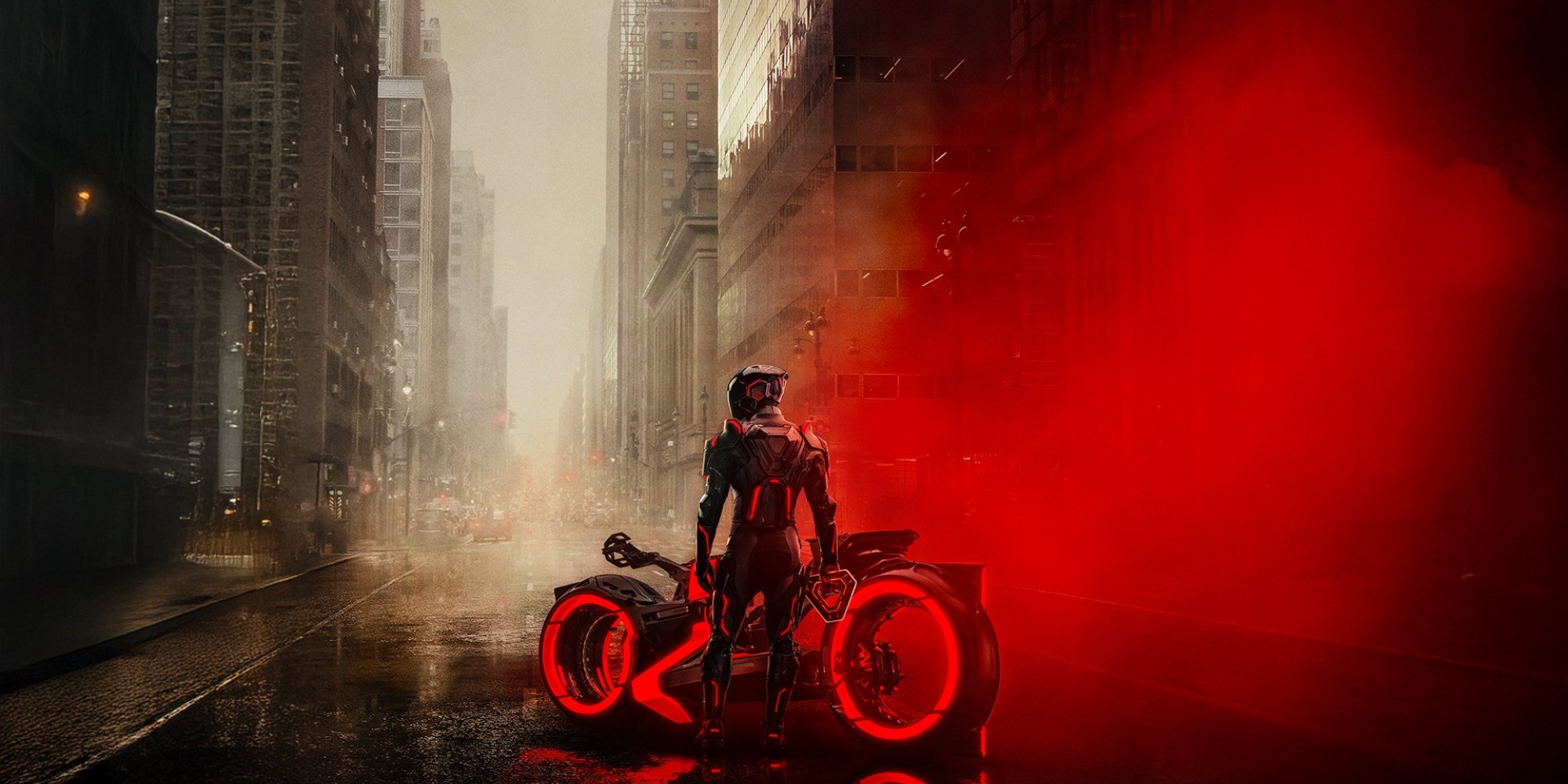
Tron: Ares is the second sequel to the cult classic sci-fi film Tron — this time shifting direct focus away from the Flynn family to center around a rogue program named Ares. Curious about the humanity he’s encountered, his refusal to follow his programming sets off a conflict that crosses between the Grid and the real world.
The sequel was very much designed as a continuation of the themes of the previous films, but with a story and spirit that made it accessible as a stand-alone feature. During an interview with TVBrittanyF, Tron: Ares screenwriter Jesse Wigutow discussed the inspiration behind some of the film’s most clever subversions, bringing Tron tech to the real world
RELATED: The Last Frontier is Apple TV+’s best thriller yet

TVBrittanyF: How did you approach finding the balance between deep-cut references and forging out a new path for the series?
Jesse Wigutow: I think there was a premium put on it to make this something that can stand alone. It doesn’t need to stand alone, but it can. It doesn’t need to be cut off from the past whatsoever. In fact, we don’t want it to be — but it does need to be something that you can step into as an uninitiated viewer and and experience the joy of it. I think there was also this sense that there are certain things that people are familiar with.
On a wider audience level, there are expectations around walking into a Tron movie. A lot of that had to do more with aesthetics, which kind of lives on in the zeitgeist. If you haven’t seen the original, if you were born 20 years later, or if you didn’t have the opportunity to see Tron: Legacy, you still know on a really kind of crude, simple level that there are light cycles and light lines and maybe some music.
That leaves room for the more character-driven moments, stuff like Ares noticing the rain or Athena seeing the sprinkler water and being caught off-guard.
Well, we, you know, we needed moments, I think, to compel or awaken Ares and interest and curiosity and humanity. The real estate in the film is thin. It’s meant to move really quickly, and so you have to be really kind of judicious and thoughtful about where and what those moments are.
The rain, and in the Athena moment, the sprinkler, something simply kind of evocative about rain. It’s reflective. It just felt right. I mean, keep in mind that this is a character that we first thought about 13 years ago. In that time, over the course of development, there has been such a leap from AI to AGI. The explosive growth and learning and analysis that comes in 2025 versus 2012… it takes five seconds to process millions of things in a way that we wouldn’t
Something I do love about the film is the way it plays with the mythological references. In plenty of myths, Athena is the Goddess of orderly war, Ares the savage warrior — that’s usually how it’s portrayed in modern media as well. But in a subversion of exploration, Ares is our hero and Athena our villain. She’s too committed to the corrupt orderly system around her, while Ares is still always fighting — even if that means fighting internally and what he’s been programmed to do. Where did that conception come into play during development?
There was a sense of turning it, flipping it upside down, in a way, in terms of the expectations around those names. Ares was conceived and designed narratively to be a weapon of war. That’s what he is, that is what he was built to be, the ultimate weapon of war. He is also our protagonist and needs to go through an evolution and have an arc of his own. It just felt right. It felt kind of like a fun little twist.

Athena and Dillinger both get to be a bit regretful and almost pitiable in their mistakes. How do you approach writing villains that eschew the more one-note villain motivations and tropes?
You always want your characters to be as three-dimensional as possible. The right answer is that it’s always possible. Sometimes it feels like a challenge, though, because you have limited real estate. They have to serve a certain role narratively. In Julian’s case, it definitely evolved. What I like about the character, and I think Evan does quite good work with, is that he brings this kind of “scion with a complicated past that that we don’t really get into.
There are indications of it from the ink on his body; his energy is kind of a Berserker. He has this kind of highly fueled ambition, but also this sense of wanting to please the next generations and do right by the legacy of the company that he was born into. That feels, if not relatable, then vulnerable and understandable. I think that helps give the character a little dimension.
Just as a nerd, I have to ask — was there ever any temptation to bring Tron back? Because this is a Tron movie without Tron!
Yes. There were a lot of different conversations. The movie has evolved over time, but this was the one that was meant to be. We really kind of landed on that. Here’s the story. This is an Ares story, and it lives in the Tron universe, but Tron is not going to be a part of this one. It doesn’t mean that Tron isn’t out there somewhere, but that’s above my pay grade. Who knows. If there’s a four? What would that look like? All those things could be on the table.
RELATED: Maigret gets a modern—and subversive—spin on PBS Masterpiece

Looking back at your experience writing the film, what characters or elements of the film would you say surprised you the most?
That’s, you know, that’s a really good and hard question…. I think the character that really pops for me, that really kind of had more presence than I anticipated, is Athena. [Jodie Turner-Smith] really had a challenging role, because it is limited in dimension. But I thought that she brought, particularly as her story came to a close, an interesting layer of, I don’t know if it’s quite sympathy, but let’s just use that word for the moment.
This is a character who has done everything expected of her. She interprets things very literally and in a binary sense, and has done exactly what has been asked of her, and yet, here she is at the end. So that was a character that popped — and a lot of credit to Jodi, for bringing that presence to the screen.
Like you said, you’re not in the conversations on the future of the franchise — at least for now. If you had your druthers, where would you want to take the series going forward? What elements of the franchise would you be most excited to see shift more into the limelight?
Well, I personally like the ratio that we designed in terms of the Grid to the real world. It’s not a breakthrough, but it’s what distinguishes this film from the other two, in a way. I think that’s fun. Whether we go all the way back to flipping it back to spending more time on the Grid? I like spending time in our world with Tron assets and technology, living in the real world.
Obviously, there is a kind of ellipsis at the end of the film. You know Ares is out there, learning, discovering, being. It nods to Quorra, it nods to Tron: Legacy and to Tron. There are no conversations I’m involved in, but I can see a world in which all those characters return.
Tron: Ares is now playing in theaters