
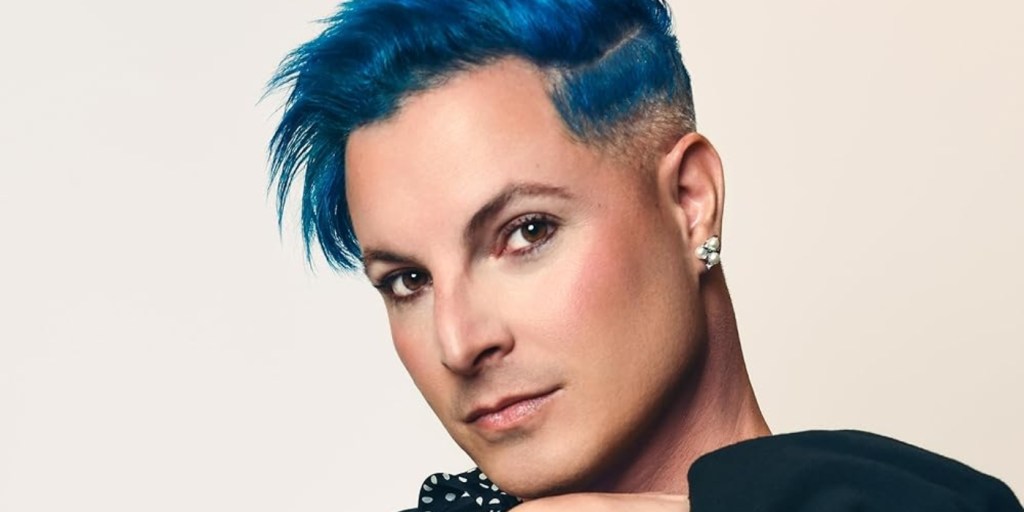
Voice acting in the world of film and television can often feel like a thankless job, with many stars of the screen going unseen despite their voice reaching millions. That’s why it’s so encouraging to see people like J.P. Karliak in the industry. The founder of Queer Vox and a prolific voice actor in his own right, Karliak stepped further into the spotlight with his fan-favorite turn as Morph in X-Men ’97.
On top of several other roles, Karliak is also set to appear on the big screen again in The Smurfs, where he appears alongside Rihanna, Kurt Russell, Sandra Oh, and more. During an interview with TVBrittanyF, J.P. Karliak reflected on the unique circumstances that led to him formally joining The Smurfs, the layers to Morph in X-Men ’97, and why it’s important to turn fan passion into active change in the community.

TVBrittanyF: Starting off, congratulations on The Smurfs! What was that process of joining the film like? What excited you about getting to play Gargamel?
J.P. Karliak: Look, I’m a sucker for villains. Give me any villain, any day, any time, and I am in. I love The Smurfs as a kid, and I think what is so fun about getting this part is that it’s feature with a major studio and all of these celebrities in it. They usually bring in us workhorse voice actors in at the very beginning of the recording process, and then they have us do what’s called scratch. We’re laying down the first take of the script, and then they’ll animate to it, storyboard it, get notes, figure it all out, and then towards the end of the process is when they’ll bring in the celebrities to actually do the voice.
I was brought in with a bunch of people to do it, and they had me read Razamel, who is Gargamel’s brother. Over time, they just liked me more and more in the role. They were like, ‘Oh, we’re still looking,’ until suddenly they were like, ‘Well, I think we found him, and it’s you.’ Which is amazing! There was one day where they wanted to do the back-and-forth between Gargamel and Razamel for a particular scene. They’re like, ‘Oh, I don’t know if we have a file on us.’ I was like, “Do you want me to just do it?” So I just did the brothers talking back and forth. Then they ended up giving me that part as well!
To get one was a lot. To get two is just unheard of. I just feel it’s a rarefied group of voice actors who get to be in major roles in big projects like this. I hope it opens up more doors for other people, because there are so many talented voice actors that nobody knows the name of but that are killing it. I would love them to be heard more.
How much did you look to previous versions of the character, and how important was it to reflect previous versions of a character versus finding your own energy for them?
Well, I’ve played a bunch of legacy characters in my career. Wile E. Coyote, Willy Wonka, the Tin Man, Boss Baby. Every audition process gave me a different clue as to how much they wanted me to adhere to something in particular. Most people don’t think of Wile E. Coyote having a voice. They think of a little sign that says “Yipe!” So I had a lot more freedom to play with that. For the voice of the Tin Man, they wanted something akin to the 1930s movie. Boss Baby, they wanted an exact Alec Baldwin.
For this, there really wasn’t any of that because I was brought in to do scratch. There wasn’t really a specific ask. That went for Gargamel too, because as far as movie portrayals go, Hank Azaria did something that was fairly close to the original animation versus how Rainn Wilson went in a different direction. That one was more akin to his own voice. There wasn’t really anything established. I listened to classic Gargamel… and I was going to stick with that.
I love that raspy voice for Gargamel. Because I got him second, I really wanted to distinguish him from Razamel, who has a much nastier sort of tone. He’s the villain, and Gargamel just wants to impress his brother. He needed to sound more sheepish, and his voice just lends itself to that beautifully.

Do you prefer having that kind of freedom or is it better to have the guardrails of an established character or performance?
I think both are great. I still would love to book an original villain for a series that I get to create from top to tail and make my own. But I also think why I’ve done well with legacy characters is there is something kind of creatively interesting about having a set of parameters, and then having to make it your own.
Even with Boss Baby, started out as a very specific Alec Baldwin voice at the beginning, but I did six seasons of it. As time went on, it really fit more of my sense of humor. The writers were starting to write a little bit more for me than to write something for Alec. It becomes this creative journey with everybody, making the character come to life. It’s a different set of challenges.
What was the biggest surprise to Gargamel?
Not to give too much away, but I think the journey of this character is different than what we may have seen before out of Gargamel. That’s been unique. It’s only ever been Gargamel and his cat Azrael. Now, Gargamel has a foil who’s not only his equal, but maybe a little bit more powerful than him. It is a really interesting dynamic that we haven’t seen before.
We all recorded individually, so I didn’t get to meet any of the celebrities. But there was a lot of time where it was me and the director Chris Miller, just chatting about the film. I could see his excitement and joy about this creation. I would come in for sessions months apart, and every time I would come in they’d be like, ‘We finished a sequence, you want to see it? You want to see it!’
They’d show me more of it, and the style of the animation was a real surprise to me. I didn’t expect it to be quite so painterly and really lush and beautiful. I’m not saying it changed my tone necessarily. It’s not like I made a different acting choice because of it. But it ramped up my excitement about the project. It put even more fuel in the tank for what I was doing. We all creatively inspire each other. There’s the visuals, there’s the sound, there’s the music, there’s the voice, the writing, all of it. We’re all in a cycle of inspiration.
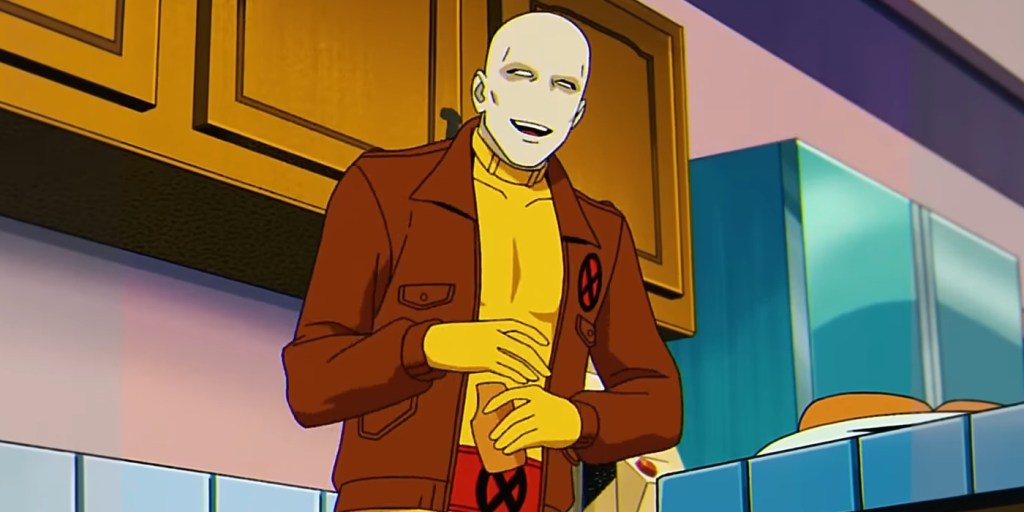
One of the things I loved about your Morph was that there was the snarky moments — Morph is kind of a bitch! But there’s a lot of little touches, little flashes of vulnerability that showcase the deeper side of the character and prove that he’s not just a stereotypical “sassy gay best friend” character. How do you approach all those little subtle touches as just a voice actor, without any of the physicality that might aid other performers?
I mean, that’s the job of every voice actor, isn’t it? I think that’s why, as a coach and teacher of voice acting, I always find it’s a little bit easier to convey how to voice act to theater actors than it is to film actors. With film actors, there is that dependence upon those little facial subtleties that we have to still have, but have to somehow distill into vocal quality. Theater actors get the idea that they have to hit the back of the house. The person in the back of the orchestra has to be able to get that emotion, just as much as the person in the front. It really is a process of taking all of those things and getting iit across with the voice.
I think I identify with Morph on a number of levels. I was somebody who grew up in the 90s and was struggling with their gender identity and sexuality and used a lot of humor and wit and bitchiness to cover up their trauma. I could not shapeshift, that’s about the only difference. Nor was I ever murdered and brought back to life by an undead monster [Laughter]. But I can identify with it, and I think that’s because it’s all about using cutting humor to push through trauma.
I think it’s a very human experience, but I also think it’s a very inherently queer experience, especially for my generation. That “you need to laugh through it or you’ll cry through it” sort of mentality. I think because Morph was written by queer people in this iteration, and is played by a queer person, there are those subtle intangible elements that you get from the character that brings out the empathy that you’ll have for him — as opposed to just seeing Morph as a sassy two-dimensional gay character that is impossible to relate to.

The interesting thing is, there have been people who have said, ‘Oh, well, of course, Morph is non-binary. They are a shapeshifter.’ And, well, yes and no. First of all, shapeshifters aren’t real. To me, it’s a conflation of gender expression and gender identity. Though the shape-shifting that Morph undergoes is very skin-deep, it is still gender expression. It’s how they choose to go out into the world, but their gender identity is within. I think of it as a counterpoint to Mystique. No matter what gender she takes on, Mystique is a woman. She is a lesbian woman, whether she’s Senator Kelly or whoever. For her, it’s a different experience [than for Morph].
I try not to let people conflate the two, although if you were non-binary and you have the ability to shapeshift, what a wonderful gift that would be. To be able to explore the nuance of your gender identity. Or if you were trans and had the ability to explore the nuance of your body and your gender expression. I don’t know if this really comes across in the show, but I know in our discussions of Moprh and why they were never seen in the Changeling face until now, I think it had a lot to do with coming to terms with their gender identity. That gray face is who Morph has always been in the same way Mystique has always been blue. That human form has always been for other people’s comfort, and this is a much more true representation of what other natural state is.
Where would you like to see Morph go next season and beyond?
As we saw last season, Morph still has a lot to grapple with. There are still elements of trauma. There were Sentinels in that very first battle. I’d like to see Morph start to push through that trauma and start to come to grips with it and still be able to be a whole person on the team. I think really reintegrating with this team was a big part of Morph’s journey this past season. I think in upcoming stories, I would love to see Morph, not that they have fully healed from theiir trauma but pushed through a great deal of of it, I’d love for Morph to be able to find their own story. What is there to Morph’s journey beyond healing? What is Morph’s journey of joy or adventure, what’s strikes his passion? Where does Morph go next with that?
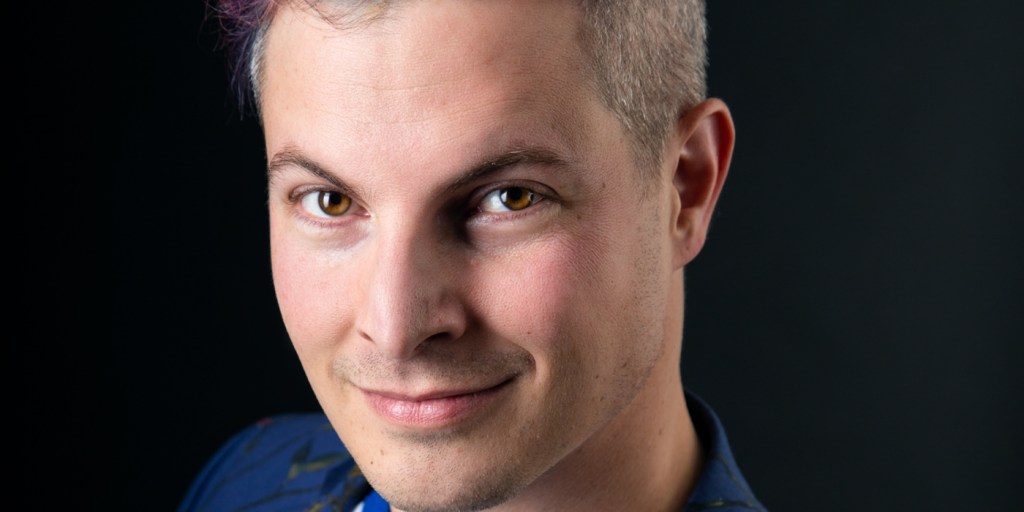
With groups like NerdsVote and Queer Vox, you’ve been really leading the way turning fandom love into real societal change. From your perspective, why is it important to turn fandom into activism?
I know this is gong to sound like a read, but it is because I’m a nerd myself and everything that I’m about to say is also something that I attribute to myself. I think for nerds, when life is hard and external forces are getting scary, we jump into our fantasy worlds to escape. I’m not knocking that. I think that there’s a comfort level with that, and a little bit of comfort is great. To take a breath, take a rest, is great. But it’s not a place to live. I think with all of the creativity and the passion that we nerds put into playing or exploring or watching or reading the universes that we’re so excited about if we took just a fraction of that and put it into the real world, we could change the whole world. We could change the universe.
I want to empower these communities. I want them to feel like the heroes they’re reading about the characters they’re playing in a video game, you actually have some of that power yourself. Especially as a community, you can move mountains. You can make huge amounts of change. You just have to believe that it’s possible. The cynical side of me… is like, ‘yeah, sure, whatever.’ But it is doable. It is it is possible. We just all need to take a bit of that and bring it out. We all need self-care. We all need to be mindful of our own physical and mental well-being. But we also need to not get comfy and complacent. W e need to stay involved in our democracy and in the advocacy for queer people.
With stuff like Queer Vox, representation of queer people isn’t just important because we want to hear queer people make funny voices in cartoons. It’s vital. I always tell the story that I believe that my mother understood better who I am as a queer person, because she was a fan of Modern Family. Because she saw that unfold in a semi-realistic way on television and in a positive representation, she could start to envision how that jives with my existence. She could see the humanity in it.
I think when shows like Steven Universe and Adventure Time and She-Ra: Princess of Power and Dead End: Paranormal Park Shira and Kipo and the Age of Wonderbeasts and X-Men ’97, all of these beautiful animated shows exhibit a queer story. We don’t even have to say it. It’s those instances that not only make a queer person feel safe and seen and a part of society, but also for the people who are not queer, it starts to humanize us. It makes us real people. It shows people that, and makes them have a struggle about voting against their rights, because now I’m seeing them as people and not as something scary or unknown that’s threatening my life.
That’s always been a strength of X-Men, and it part of what makes people thinking X-Men has only recently become “woke” all the more absurd.
There’s been so many lovely interviews I’ve done where they’re always like, ‘How have you been dealing with the backlash?’ I’m like, please. I felt that reading the backlash to Morph as a queer character or Holly Chou voicing Jubilee or any of the things about how this is somehow blasphemous, that it’s somehow wrong. It’s like, do you get this property? If you’re a fan of a comic about a demonized community who has no civil rights, and then you are like, ‘what is this? Woke?,’ you’re reading it wrong. It’s sort of like when you see somebody reading a book, and then it’s like, “Oh honey,” and you have to flip it because it’s been upside down.
X-Men ’97 is now streaming on Disney+ and The Smurfs comes to theaters July 18
 TVBrittanyF.com