
SPOILER ALERT AND WARNING: The following contains spoilers for Chicago Med Season 11, Episode 17. It also contains discussion of suicide.
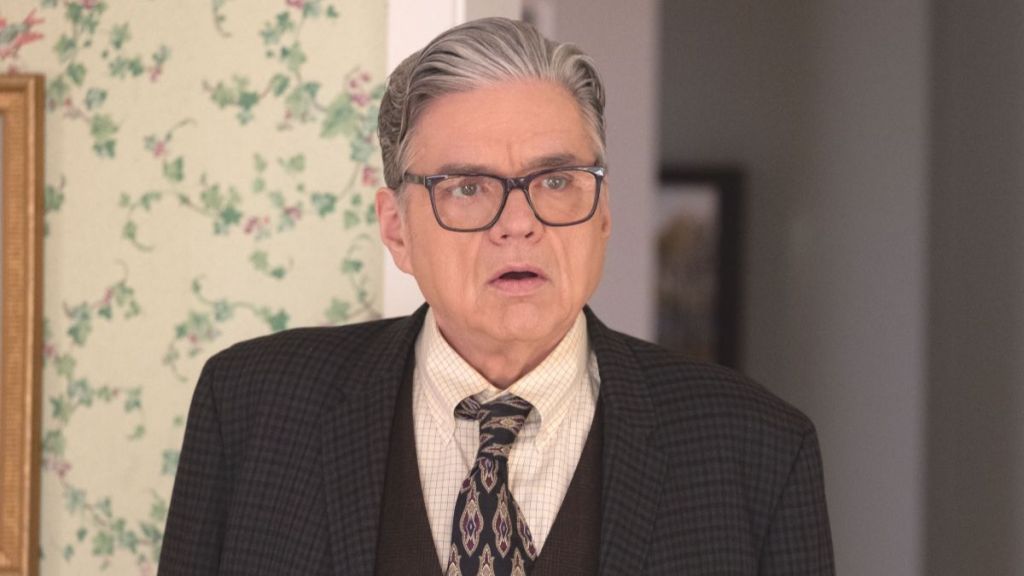
Fans of Chicago Med have learned Dr. Daniel Charles’ fate—and a whole lot more that they never knew. In “Altered States,” it was revealed that the fan-favorite character portrayed by Oliver Platt survived his stroke. Yet the real challenge was in Dr. Charles’ own mind, as he faced up to everything that had brought him to that point, including the loss of his father.
In the third part of our interview with Chicago Med showrunner Allen MacDonald, we dive into the making of “Altered States.” Allen explains how some of the episode’s most important choices were made, and what inspired this incredibly difficult but also incredibly moving story. Plus, find out what big scene almost turned out very differently.
Brittany Frederick: You wrote “The Book of Charles” and put together this excellent story delving into Dr. Charles’ mindset. Talk about passing the baton to Deanna Shumaker to write “Altered States,” and what made her the right person to bring this plotline home.
Allen MacDonald: To me, she was the natural person to embark on this journey with and share the experience with, because her writing is always very emotionally centered, and moving and human, and humorous, I always say that on Chicago Med, I want people to both laugh and cry when they watch episodes, and it’s ideal if they can do both at the same time. I don’t mean like laugh like comedy or joke; I mean laugh because what you’re seeing on screen is so relatable. That you laugh at it because you’ve been there too.
The episode feels like it checks off pretty much everyone who’s anyone in Dr. Charles’ life. How did you settle on the characters to utilize?
There was a list of characters that we knew we absolutely wanted to delve into. Ripley was very much the first name that popped up, and I wanted to see that.
I wanted to see his mother again. The actor who plays his mother, Deanna Dunagan, is someone I’ve been a fan of for a very long time. She was in a play on Broadway called August: Osage County… and she played a tyrannical mother in that, that makes Margaret Charles look like a kitten. I wanted to work with her again, even though her character was dead. When we killed her off last season, I was already thinking that we’d bring her back… but I obviously didn’t tell her that, because I don’t want to make promises before I know that I can do it.
With an episode where you have dream sequences, that doesn’t really fall under the typical brand identity for Dick Wolf television shows, and so there were a lot of concerns and conversations, about whether we should do this. Much to their credit, Peter Jankowski and Rebecca McGill at Wolf Entertainment were both very supportive of the idea of doing, in essence, dream sequences like this, and they completely believed in us to pull this off. But we had to get permission from Dick Wolf. Rebecca called him, and we were all waiting on pins and needles for what he was going to say. She called him and pitched him this episode, and he replied, I love it, let’s do it. And so I owe them all a big thank-you for their faith.
What made that the right creative device to use to tell this story? Especially since, as you said, it’s so atypical to the world in which you’re working.
Everything I do is a homage to something I loved. I watched an NBC medical show in the 80s called St. Elsewhere, and there was an actor on that show named Howie Mandel, who’s now known as the judge on America’s Got Talent, but he played a doctor named Dr Wayne Fiscus on that show. And they had an episode called “After Life,” where he got shot in the heart in the ER and Dr. Craig, played by William Daniels, did heart surgery on him during the whole episode. The episode took us into his spirit or whatever as he went to heaven, hell and purgatory, and he interacted with all these dead characters from the past.
That was what inspired me to do this episode. But I obviously I didn’t want to do the heaven, hell, purgatory. I wanted to do my own version of it, which is more based in the idea that Dr. Charles, who’s an extremely talented shrink, has to shrink himself and the only way for him to do that is in his dream.
The entire two-part story arc culminates in the scene between Dr. Charles and his father Lucas, played by Elden Henson. Can you walk through that scene in particular?
When I had Charles tell Anna the story of when he found his father dead from suicide at the end of Season 10, I was already planning on seeing a version of that in a dream sequence in this episode, so that was very meaningful and important to me to do. Because I think if you encounter something traumatic like that, you probably spend your life playing it through your mind, wishing you had gotten there in time and that you had been able to save him.
It’s wish fulfillment, and I wanted the audience to experience that wish fulfillment with Charles, and then suddenly have the garage door close and the car start, and the exhaust start coming through the hose again into the car and realize the obvious. But the audience is hopefully hoping for something different… And I was just moved by the idea of Charles talking to his dad, who he is now older than, and to see that visual of the father being younger than the son,.
It was really important to me that the father speak in patterns that we are used to Charles speaking in. We hear the dad call him “buddy,” we hear call him “pal,” which are things that Oliver’s been doing since long before I came on the scene. Most importantly, Lucas says to him, I need you to remember three things, and then he goes through it, and that’s something that Charles does a lot. In fact, he does in Episode 18 that’s coming up.
Let’s talk about the rest of the flashbacks. What were they like to put together, not just stylistically but in deciding what you wanted out of each of those scenes?
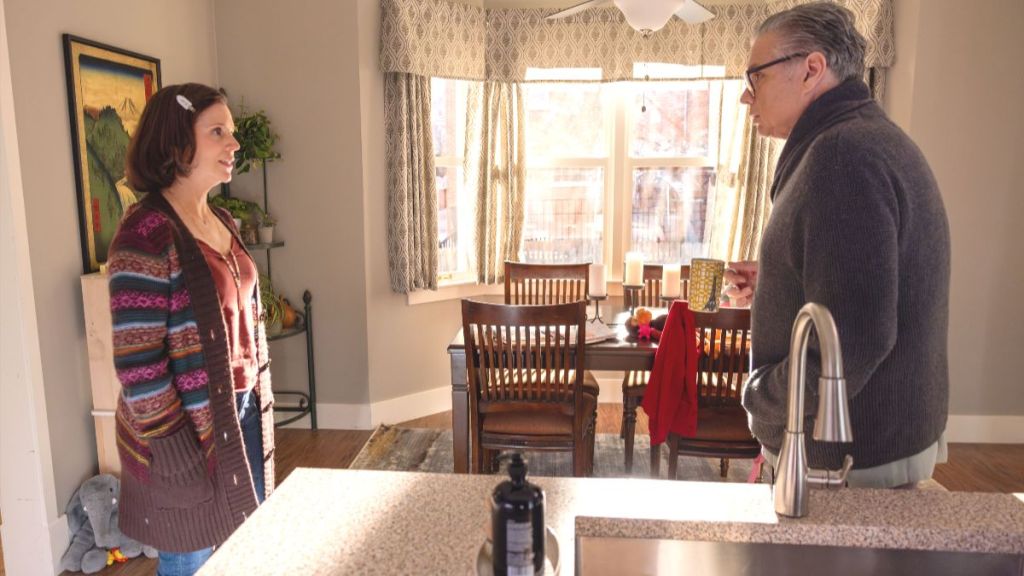
I really wanted to see the ex-wives, and I wanted to see that there was a pattern, and to have him go through this kind of bittersweet, melancholy tunnel of emotional horrors—basically all the ways in which she’s failed as a spouse. I also wanted to see him see Robin as a child, because [actor] Mekia Cox is a regular on The Rookie, and we aren’t able to get her when she’s doing that. So that was a way to have that character in the episode as a child, and to see Anna as a kid.
What was funny was we had to shoot the flashbacks, each one of them on different days. It was a big undertaking, because the set had to be completely redone for each section. We got through the first two, and then we ran out of time on the schedule. And so I went back and forth about whether we needed the third one for about seven or eight weeks. And finally I said, you know, guys, it’s not going to feel right if we don’t have it. So, you know, we went back and we shot that and put that in.
And I wanted to see snotty, teenage Ripley, so the audience can really feel what what he was like back then—what a defensive, misguided young man he was, and how differently his life could have gone.
Where Chicago Med leaves Charles at the end of “Altered States,” there’s a road to recovery ahead. But the show has used time jumps for big events before, so is this going to be another one of those situations or what can audiences expect going forward?
We do a time jump but it’s like a real time jump, because the condition that Charles has—that kind of stroke, and the TPA procedure that kind of reverses it before it actually does any permanent damage, that’s all real. And when we looked into the research, when you stop a stroke in his tracks like that with that procedure, you only do need a couple of weeks to recover.
Physically, Charles is now in a very good place. Emotionally, he still has some stuff to work through, but he’s in a better place. I think Charles had doubts about his future, doubts about his ability to continue to be as strong of a psychiatrist as he is. And I think that this near-death experience renews his commitment to many things in his life.
Moving into the end of the season, one of the many things that this stroke has brought into focus for Dr. Charles is that he wants to stay at Gaffney. That might not be as easy for him to do as he initially thought, because Dr. Theo Rabari fills in for him while he’s recovering for those two weeks, and is a little too comfortable in the position when Charles comes back.
Let’s talk about Charles and Sharon Goodwin, because their friendship is not only tested in “The Book of Charles” and “Altered States,” but it’s also key to these episodes. How did you approach that in this second half?
Although the episodes are about Charles, Goodwin has a lovely arc with a lovely performance by S. Epatha Merkerson. You really get to see through the course of these two episodes what they mean to each other… I wanted to put Charles in such a strange place that we’ve never seen him before, that he actually lashes out in a way that he, most of the time, never would, and that he would lash out at the person he actually cares the most about. Obviously he loves his family and all that, but Goodwin is his best friend and they love each other. It’s not a romantic love, but there’s that.
And then there’s the pain she feels after he’s had the stroke, and the bonding with Anna over the fact that they both have their own huge fights with him and that they seek solace and find comfort in each other by discussing that out loud. Anna tells Goodwin how much she actually means to Charles and their family—and that’s why it was super important to Oliver and I that it would be Goodwin that was there when he woke up at the end. That it would be Goodwin that was terrified that there was something wrong with him cognitively for a few seconds, before realizing he’s going to be fine.
In the initial drafts of that, we had Goodwin in there, we had Anna in there, we had Ripley in there—the three people that in the dream sequence break him out with the fire extinguishers. And when Oliver and I spoke, he made a very good point, as Oliver always does, that it would be more powerful if we just chose Goodwin. We already get how he how he feels about the other two people, but since they had the big argument, it would be best to see her alone with him when they wake up. And I get choked up whenever I see that very last moment of “Altered States,” [when] she smiles to herself, and she looks down with relief, and then they cut to black.
Chicago Med airs Wednesdays at 8:00 p.m. ET/PT on NBC. Photo Credit: Courtesy of NBC.
Article content is (c)2020-2026 Brittany Frederick and may not be excerpted or reproduced without express written permission by the author. Follow me on Twitter at @BFTVTwtr and on Instagram at @BFTVGram. For story pitches, contact me at tvbrittanyf@yahoo.com.
 TVBrittanyF.com