
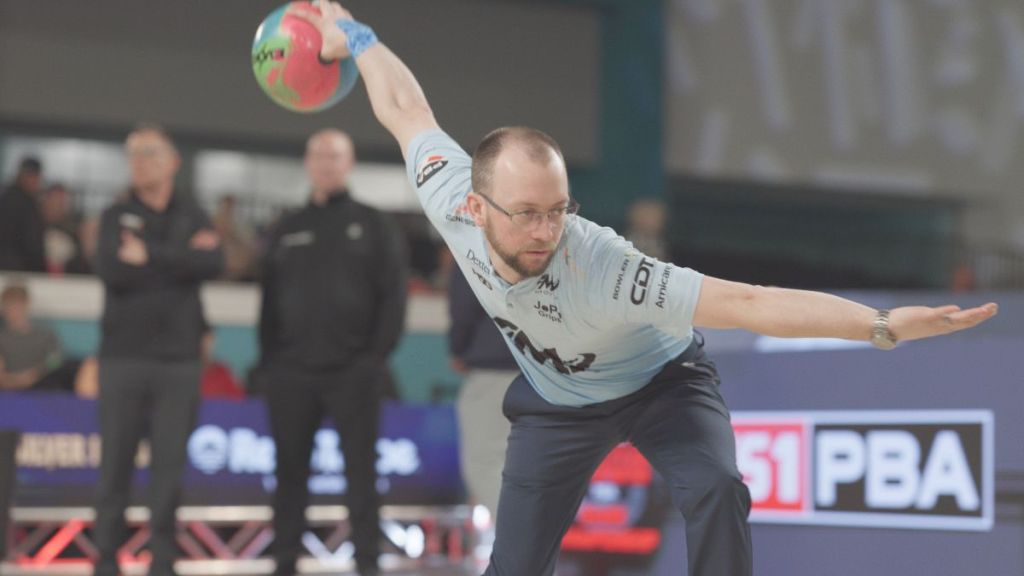
Everyone knows bowling, but few people know professional bowling—and the HBO docuseries Born to Bowl aims to fix that. The show from James Lee Hernandez and Brian Lazarte brings the same tongue-in-cheek approach that the duo used in McMillion$ to the Professional Bowling Association (PBA). But it’s not something that viewers have to be a bowler, or even a bowling fan, to enjoy. It’s bigger (and quirkier) than that.
In an interview with TVBrittanyF.com, Hernandez and Lazarte spoke about what got them interested in the world of pro bowling. They also reflected on applying an unserious approach to their sports documentary, while still taking the subject seriously. Plus, what do they want Born to Bowl viewers to know… and what would they say you don’t have to know?
Brittany Frederick: Most people are familiar with bowling, but it’s seen as more of a social sport; a lot of people don’t remember that professional bowling exists. So did that influence how you approached Born to Bowl?
James Lee Hernandez: It very much was a choice for us to look at it in the way of, we wanted to pick five really fascinating individuals that were great characters, really interesting backstories—and they just so happened to be professional bowlers. We’re really living in this world with them, and you buy into the wins and losses and all the hardships they go through. The backdrop could be almost anything, and you’d still want to watch these guys.
And then also really diving into the idea that everybody, at least in America, has some sort of relationship with bowling. Whether you went to a birthday party, your own birthday party, were in leagues growing up—somehow you have some connection to it. And so everybody has their own thought of like, well, what if I was really good at it? Now you’re seeing people at the highest level and understanding the struggle that the life is that they lead.
One of the most awesome things about the show is that your narrator is Liev Schreiber, who also provides the voice for HBO’s NFL franchise Hard Knocks. His presence adds gravity but also a self-deprecating quality to Born to Bowl. How did that come to pass?
Brian Lazarte: it was really a collection of conversations that led to that. When we were putting together the voiceover and strategizing our tone, honestly, the approach was actually more like, how can we do something that felt like Ron Howard in Arrested Development. That was how we were kind of building the building blocks of the storytelling.
Liev Schreiber, he has been the voice of every HBO major sports program that’s ever been out there, that we have watched and loved. It was a simple conversation that started with, would you like to do it? Here’s what the cut looks like. He liked it, he responded to it, and it happened really fast. We couldn’t be more grateful that he agreed to do it, and he did it so quick. He’s such a pro. It was amazing.
Now that audiences have seen Episode 1, what do you want them to know about the rest of the season? Were there highlights for you, or things that viewers should be on the lookout for?
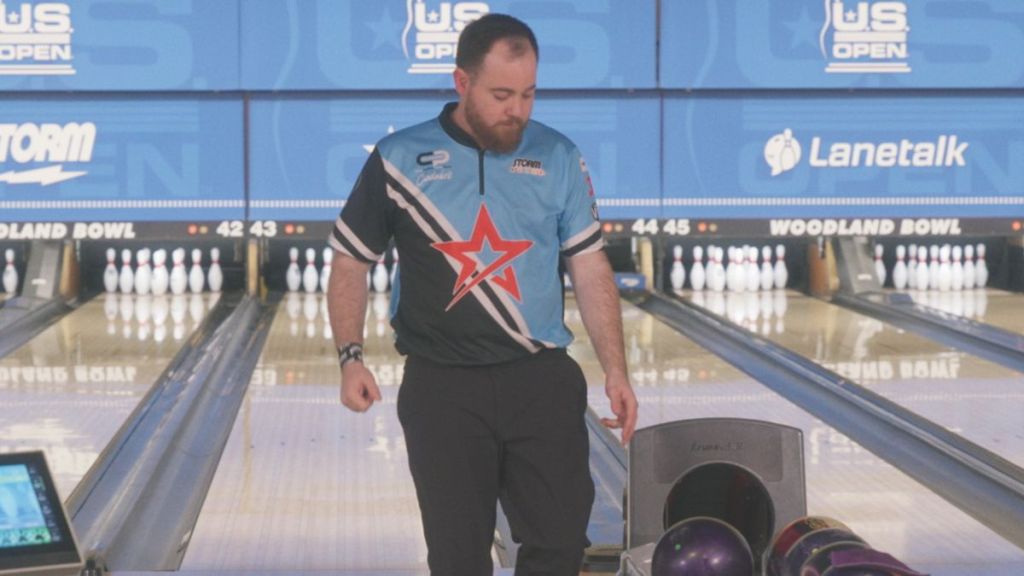
Hernandez: Episode 1, you really get to meet Kyle Troup and Cameron Crowe, the rookie, and you start to see the world. And what we’ve really done is, so many people have questions. We explain what oil patterns are in Episode 1, but then you start to think okay, what goes into selecting a ball? What goes into the shoes? What is the life like over a span of time? And we start to answer those questions as they come along.
A big thing that happens in this next episode is bowling has its own vernacular, and a lot of it is just not intuitive. Outside of probably everybody knowing a strike, a spare and a turkey, what those things are, you don’t really understand all the other things. And we have this kind of fun little section of really explaining you don’t need to know all the vernacular. You don’t need to know the ins and outs, because we’re going to guide you on this path. At the end of the day, you just need to understand wins and losses.
And then as we get deeper into it, and we get more emotionally invested with all of these different bowlers, you start to see the existential crisis that bowling faces. It was once one of the most popular sports in America, and then started to fall out of favor and become more of a niche sport. And you start to see how it could possibly have an upswing back to be popular again.
As you were making Born to Bowl, did you become more interested in the sport? Did you learn things that you didn’t expect?
Lazarte: As we learned more about the sport and these guys, it is contagious. It made us want to go bowl like every single night that we were working on this, because it’s such a fun thing to do. It’s a fun sport, and to see all of these guys embrace the fun of it, but to do it at a really competitive level was was truly exciting for us.
And there [were] a lot of parallels to life. You can look at bowling, the simplicity of luck and skill, right? And you can apply that to all things in life. James and I were just talking about the resilience of these bowlers. It is so much this analogy for you can have these wins, you can have these losses, but you’ve got to pick yourself up. And every day is a new re-rack. So there’s a lot of things that we’ve just taken from this, in ways that we didn’t expect to take away from it.
Obviously the series is entertaining, but like you’re saying, there’s bringing people into the world of professional bowling. So are you hoping that the HBO audience also takes away anything specific? What’s the sort of intent at the end here?
Hernandez: With McMillion$, it was almost like living inside of a McDonald’s commercial, and now we’re living inside of a commercial for bowling. [Laughs.] But with McMillion$, our whole thought process with that was we wanted to take a true crime doc and flip it on its head of what you normally think. Pitching that to HBO and saying, we’re going to do a true crime doc, there’s really no murder, and it’s going to be funny. [It] was kind of a mind-blowing thing for them at the time, and with this project, it was the same sort of thing.
We’re going to do a sports doc, but we’re going to make it in a way that is atypical of the F1: Drive to Survive, overly serious [style]. [That’s] very entertaining. But at the same time, all those guys are millionaires, whether they win or lose, and they all live in a beautiful place in Monaco. The guys on the pro bowling tour, they’re all living and dying by every single strike, every single throw of the ball. And that’s something that’s far more relatable, especially in this day and age. These guys, if they don’t win, they’re doing all this on their own dime. They’re really taking a chance on themselves and betting on themselves to provide for themselves and their families.
We looked at it in a way of really wanting the takeaway for anybody who watches this to be that you can have a passion. you can have love for something and just go after it with all that you have. Whether it works out or not, the idea that you are really living the dream and going after that is the journey itself. And so that was really exciting for us, to show that world and see what it’s like to actually strive for something like that.
Born to Bowl airs Mondays at 9:00 p.m. on HBO. Photo Credit: Courtesy of HBO.
Article content is (c)2020-2026 Brittany Frederick and may not be excerpted or reproduced without express written permission by the author. Follow me on Twitter at @BFTVTwtr and on Instagram at @BFTVGram. For story pitches, contact me at tvbrittanyf@yahoo.com.
 TVBrittanyF.com