
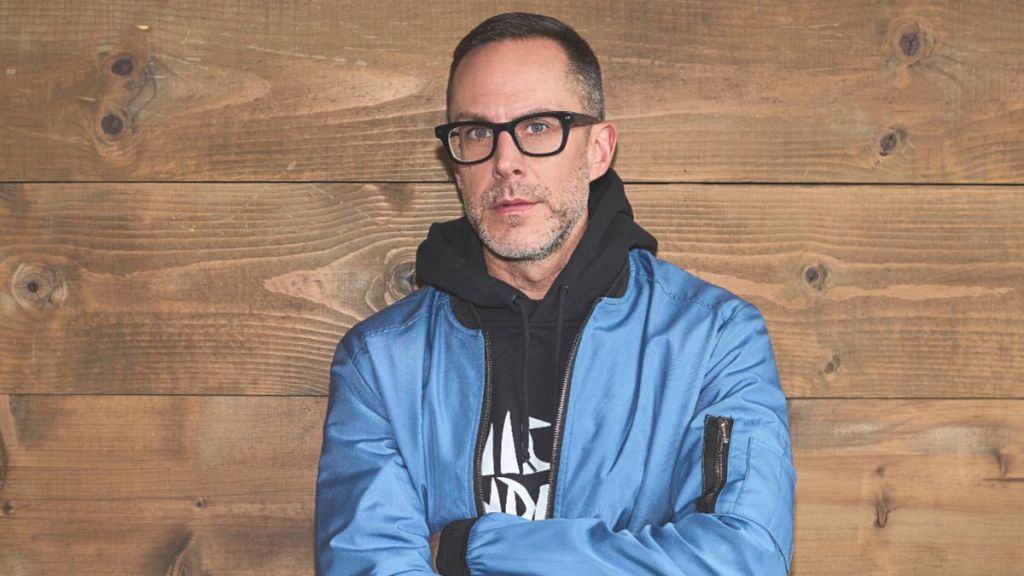
Tim Walsh co-created one of the most unique crime dramas with On Call—now he’s returning to the world of true crime with The Hillside Strangler. The four-part MGM+ docuseries is a re-examination of one of the most infamous stories in American history, including insight that viewers have never had before.
In an interview with TVBrittanyF.com, Tim spoke about what makes The Hillside Strangler stand out from other true crime projects. He also spoke about how his scripted crime drama experience applies to the true crime docuseries. Plus, learn how he got detective Frank Salerno to be part of the project—the first time Salerno has spoken about the case in 40 years.
Brittany Frederick: What was it about the Hillside Strangler case that made you want to revisit it? What motivated you?
Tim Walsh: This was always the natural follow-up to Night Stalker, which was a docuseries that I produced for Netflix. There’s a specific detective in Night Stalker, Frank Salerno, who was partnered with Gil Carrillo. Frank Salerno’s origin story started with the Hillside Strangler. He sort of caught lightning in a bottle by catching two serial killer cases in his career—one being the Hillside Strangler and the other being the Richard Ramirez, Night Stalker case.
The Hillside Strangler is notable for Salerno’s participation. What was the process of getting him involved? Because that’s a massive accomplishment on its own.
I think ultimately that was gaining his trust through the job that we did on Night Stalker. Credit to Tiller Russell, who directed that, and the end product turned out as well as it did. I think Frank knew that we were for real. There’s a lot of people out there with YouTube channels and stuff who do one-off serial killer things, and I don’t think he had any interest in putting his time and energy into that.
He knew that if we were going to do this, we were going to do it on the biggest stage. I told him that I was only going to do it on the biggest stage… and that ended up being MGM+. So it was ultimately, like anybody else, gaining his trust. And we did that through the first series we made, which was Night Stalker.
What stood out to you about your work on The Hillside Strangler? Was there anything that particularly resonated with you throughout the process?
I’m incredibly proud of, with the Hillside Strangler, how we portrayed it through the lens of female voices—and female victims, considering they were the ones being targeted. A lot of that credit goes to our director, Peter LoGreco. The seeds of that were there in the development, but he’s the one that saw that through. I’m very proud of the voices, especially the female voices that we have in there.
You reimagined the scripted crime drama with On Call. Can you take anything learned in the scripted world and apply it to an unscripted show, since they’re in the same genre?
Good storytelling is good storytelling. You use the same structure, the same muscles. I learned a great lesson from Dick Wolf, which was eat your dessert first—meaning have every episode feel like you’re shot out of the cannon. I apply that to the true crime space, too. Just because it’s a documentary doesn’t mean it needs to be like paint drying on the wall. It should feel very entertaining. Granted, I understand it’s very serious subject matter and a lot of people have been affected. But ultimately, we want to get people to watch this, and the way to do that is to make it as entertaining as possible.
How much does the process of production change on an unscripted project?
It is a little bit different in scripted. You write a script [and] as the showrunner, you see that all the way through production. Here, I’m in early development phase, and then we were fortunate to hire someone like Peter to direct this. I surround myself with people who know what they’re doing and I get out of their way. Peter took it over and he saw it through production. He was the showrunner of this show. I’m not there on set every day—but [I’m] watching cuts and giving notes on every edit of the episode and really just being in support of the director, who I was 110 percent confident from day one that he knew what he was doing.
When you got to the end of The Hillside Strangler, what made it worth revisiting this story for you? Was there anything you hoped that an audience would take away from seeing it again?
The unique piece here is we’ve got the lead investigator, Frank Salerno, who’s going on record speaking about this. As you pointed out, he has not done that in quite some time. And Kenneth Bianchi himself, who has agreed to go on camera and be interviewed, which I’m not sure he’s ever done. And if he [did], it’s been a very long time. So that was a real draw.
I took a very journalistic approach. I was going to set aside all of my personal feelings for the case—what I believed, what I didn’t believe—and I was going to let him tell his side, because I knew that that would illuminate things in the investigation and overall just the case. That would be new information that would make it appealing to tell this story again.
[I had] newfound respect for the people involved—the investigators, the women, the families who went through it. The bravery of some of those folks who got on camera and told the story of their loved ones and their relatives. I’m never not amazed by that. And I think walking away from this, [I] was equally amazed as I was with Night Stalker, seeing the people who were really affected by this case have an opportunity to talk about their loved ones who were tragically murdered.
The Hillside Strangler airs Sundays at 10:00 p.m. ET/PT on MGM+. Photo Credit: David Higgs/Courtesy of Hilltop Entertainment.
Article content is (c)2020-2026 Brittany Frederick and may not be excerpted or reproduced without express written permission by the author. Follow me on Twitter at @BFTVTwtr and on Instagram at @BFTVGram. For story pitches, contact me at tvbrittanyf@yahoo.com.
 TVBrittanyF.com