
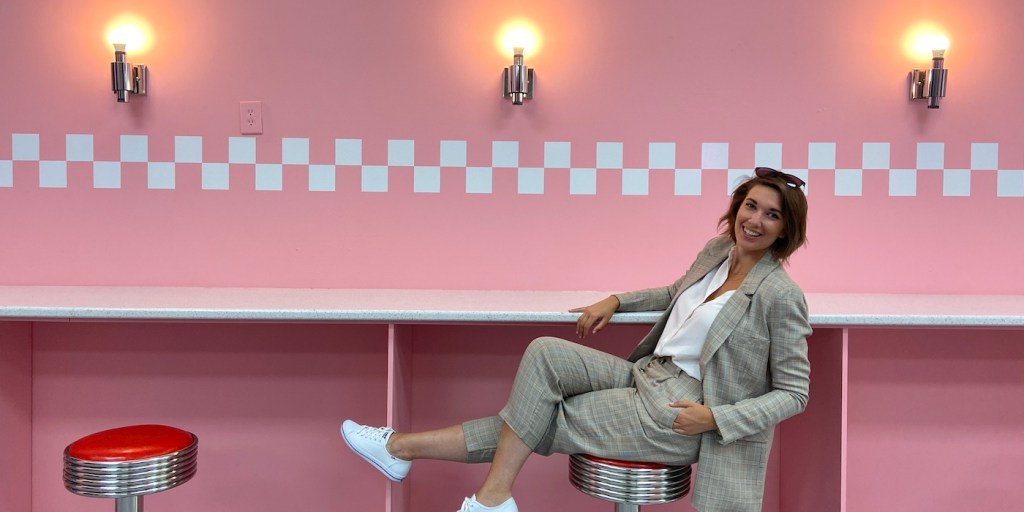
Working in the entertainment industry can be a grinding experience at any level, where finding one’s niche can be incredibly tricky. That isn’t necessarily the case for Amanda Verhagen, who has proven to be an adaptable asset on everything from indie fare like A Nice Indian Boy to the blockbuster spectacle such as Jurassic World: Dominion. Going all the way back to her time working on commercials or her child actor, Verhagen has seen the ins and outs of the industry, and has found her place helping filmmakers take good ideas and make them into great films.
Wearing several different hats in her capacity as a production coordinator and crew member, Verhagen’s latest films — including upcoming fare like Gillian Anderson’s Teenage Sex and Death at Camp Miasma and the Matthew Broderick, Sutton Foster, and Mary-Louise Parker dramedy The Best Is Yet To Come — all benefit from that deep range of experience. In an interview with TVBrittanyF, Amanda Verhagen reflected on what she sees as the key to being a good producer and the most important lessons she’s picked up from a career that spans small stages to massive blockbusters.
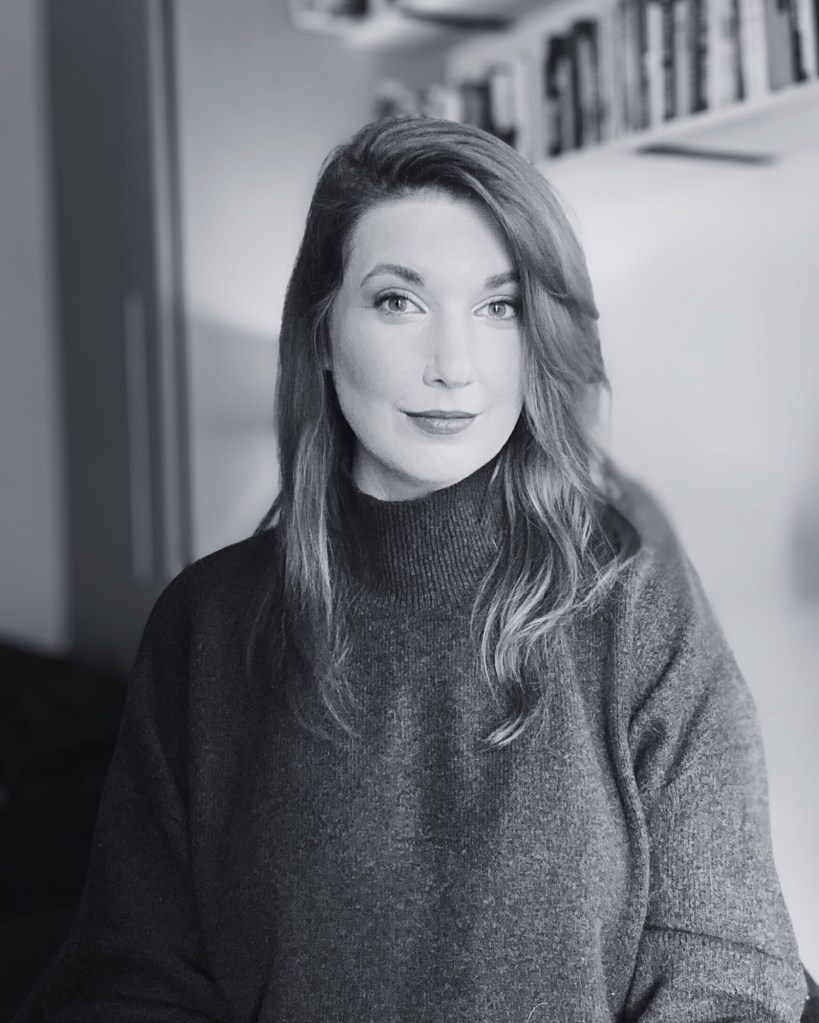
Brittany Frederick: When did you become interested in this career path?
Amanda Verhagen: I, surprisingly enough, was a childhood actor. I did a lot of theater when I was a kid. I remember being 11 or 12 years old and watching all the people in the blackouts, moving all the furniture. I thought, there’s got to be a more efficient way to do this. So clearly, I had a production brain all along. I was on the wrong side of the industry!
Ever since then, I’ve definitely been the type to organize things for everybody. I organized all the school dances. I was on the student council. I was that kid who was always trying to tell kids what to do. Then, those kids tended to graduate and move on to leadership positions. [Producers] tend to be the people who want to make life better for everyone else. Then, theater led into film. That’s really where I found my home. It was a natural fit. I think sometimes the job finds you, you know?
How do you approach being a film producer?
I do a very specific thing. I’m the person that people in the States call, I’m the Canadian. I’m the person in the States call and they go, ‘Hey, I have $10 million. I want to make this movie. Can we do it? And can we do it in Canada?’ I’m the one they call, and they ask if the movie can actually work for that amount of money, and where we think we could shoot it. I consider myself a creative in that I’m putting the crew together.
Who you pick for your crew is an incredibly important process in the movie because those people are going to touch on every single part of your movie. If you don’t pick the right people, it’s going to be a completely different project. It’s a really important process. I’m not the person who finances the movie. The movies come to me fully financed, but I handle everything else. Then, once we’re done shooting, I tie it up with a nice little bow, and I hand it back to the studio, and I say, ‘Thank you very much. Here you go. Please make it good in post.’ [Laughter].
What would you say fulfills you creatively?
There are two ways I’m satisfied with a movie. Did everyone get out of it alive and safe, and happy? That’s a really big point to me. I like to lead from a bit of a different perspective in that I have a ‘No Jerks” policy on set. I want everyone to have a work-life balance. I want to look at the way we’re making movies from a macro perspective, so that we’re focusing on things that are beyond what is just on screen. Are we taking care of people’s mental health? Are we taking care of that as much as we’re taking care of physical health? Are we being as inclusive as possible? On A Nice Indian Boy, I did things like making sure we had pronouns on call sheets and crew lists.
We got a lot of our cast doing interviews, saying it was the most inclusive and warm and friendly set that they’ve ever been on. If I’m getting that feedback, that’s a major success for me. The other thing is, even if it’s not a major audience seeing it, if it makes an impact on even one person, that makes a difference to me. I got a ton of feedback on A Nice Indian Boy, about people who said that it gave them a sense of pride, a sense of bravery, a sense of renewal in terms of how they felt like they could find love again. To me, if one person feels impacted, that’s a success. I know that’s not what the fancy studios want to hear when they want to recoup their funds, but creatively, that’s great.
What would you say was the most formative lesson you learned in this field that you hold onto with each successive project?
I mean, I’ve worked on so many different formats. I’ve learned a lot working in commercials, weirdly enough. I think it’s really important when you want to work in features to get exposure from everywhere. In commercials, I learned that gear loss and damage don’t matter. As long as the person’s okay, we can do an insurance claim. It’s totally cool. With Jurassic World, I learned how to do things in large scale. If you know how to do it in a big way, you can scale it down into a small way.
I have learned how to be relentless in the pursuit of excellence from working on pilots, because you have such a short amount of time in order to do everything. You just have to push as hard as you can, because you’re setting the tone of a show that could carry on for 10 seasons. From doing tiny $1 million movies, you have to learn how to be incredibly resourceful with what you have and what’s available to you. You learn how to ask and work with the community that you don’t normally film in. Shooting in Kamloops, at the time when we were shooting, they didn’t have a lot of filming. We got to kind of create the rules and work within the community and with what they had. I’ve worked in TV, across film, in everything from theater, and you learn really quickly how to react to a crisis and not panic.
I’m a major feminist. I am big in supporting the queer community. We have several mandates for our productions. Some of our mandates include 35% minimum BIPOC crew. The minimum we’ve ever hit on a show was 55%. We just ask our teams to look beyond their typical resources and make sure that they are reaching out to other people whom they don’t normally reach out to. It’s been great, and it has given lots of people opportunities.
It’s the little things, like the pronouns on call sheets, which weeds out a lot of jerks. When people start protesting against that, you know someone is probably not a good fit for your film set. I like to choose my projects very carefully. I choose my films based on the question, is this a movie that needs to actually exist in the world? Is this going to benefit the world? It can be a silly comedy. It can be a bloody horror, but it has to be entertaining, and it has to be something that actually benefits the world. That is what I’m passionate about.
 TVBrittanyF.com