
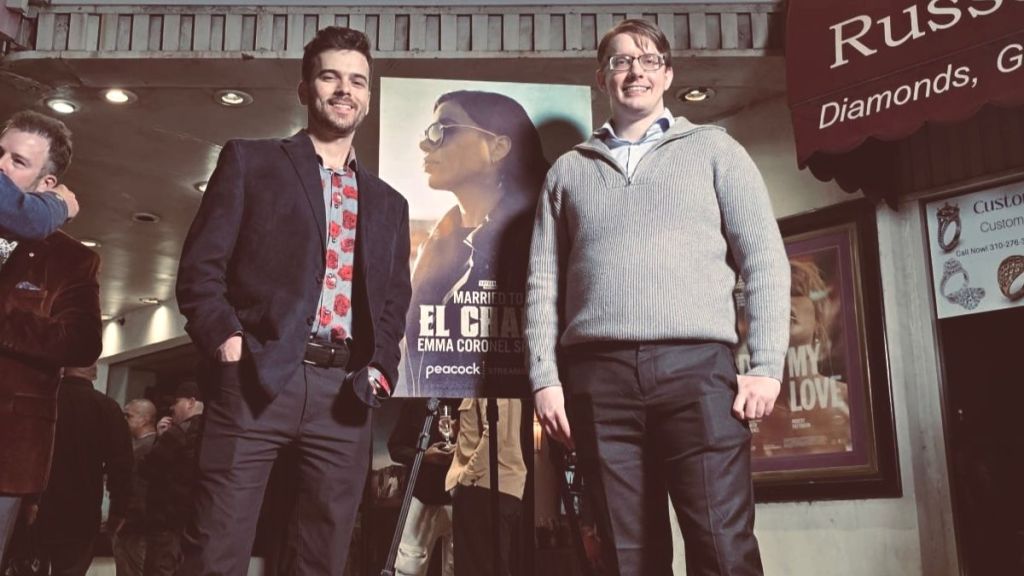
Married to El Chapo: Emma Coronel Speaks is now streaming on Peacock after its Oxygen debut, bringing this true crime documentary to a wider audience. Audiences are getting further perspective on the woman who wed one of the most infamous crime figures in the world, but the story of how the film got made is almost as interesting. How did Emma Coronel’s story take center stage?
To find out, TVBrittanyF.com spoke to Cameron Penn, who executive produced Married to El Chapo alongside Noah Evans and Spencer Judd. Cameron explained how he first became interested in bringing Emma’s perspective forward, and what it took to make the project a reality. He also reflected on what he experienced during the process and what he learned from those experiences—which went beyond just making a movie.
Brittany Frederick: How did you initially become interested in El Chapo, and specifically in Emma herself?
Cameron Penn: [Noah and I] both went to the trial, and we barely got in… We were literally the last ones that they let into the courtroom. That was kind of my introduction to [that] world. As I was sitting there watching the trial, it was just more and more fascinating testimony. And every day was different. There was a guy there that had his face surgically changed so he couldn’t be caught—he looked like a vampire. He did get caught. There were DEA agents testifying about murders and people being buried alive.
But the one consistent presence there was this lady who was dressed in all black Prada. She didn’t speak to anyone. The entire courtroom was packed, every single row—except the row that she sat in, which was the friends and family row. She was the only person there, and I started to be very curious about her story.
How were you able to connect with Emma, especially when doing a project like this might have legal ramifications?
When I approached Emma and her lawyer Mariel [Colón] with Noah as well as our friend Spencer Judd, who’s another producer on the film—we’re these three college kids. The big thing was selling Emma on how do we have the background to do this, because we’re just NYU and Columbia students. Noah and I had interned at Legendary Entertainment. But the original pitch was, we basically invited Emma and her lawyers to dinner and pitched her a TV series [or] feature film with actors and actresses.
This did come up, the idea of her incriminating herself and things like that. We said well, it’s going to be a fictional project, and that was what we had been developing with her. Ultimately, we secured her life story rights and spent a year interviewing her off-camera for a scripted project. It wasn’t until she went to prison and got out of prison that she’d already done her time and then felt comfortable doing a documentary.
But then you enter into this grey area of collaborating with her to get her perspective, while also wanting to avoid being biased. How were you able to keep Married to El Chapo from becoming one-sided?
This was why I was really excited to partner with Maxine Productions and Mary Robertson, [who] did Quiet on Set. I feel that they handle things really delicately, and they’re great filmmakers. And [director] Ted Bourne, whom you spoke to; Ted’s amazing.
I wanted it to be a character study—that it’s studying her, and it doesn’t mean that we’re that we’re saying what she says is true necessarily. That’s why we have the journalists, to balance that viewpoint. I think she has a story that’s certainly worth telling. It’s a widely known story in Mexico. It’s great to bring it to a U.S. audience, but you have to handle it delicately, so that it doesn’t become like a puff piece.
You have to recognize that she was married [to] and supported one of the most destructive human beings in modern history. It’s that balance, of you have to get her to agree to do it, but then you have to tell the story authentically, and in some ways hold her accountable.
The making of Married to El Chapo was in itself a journey to these places that were important to Emma and in her story. What was the most surprising or memorable experience that you had during the production of the documentary?
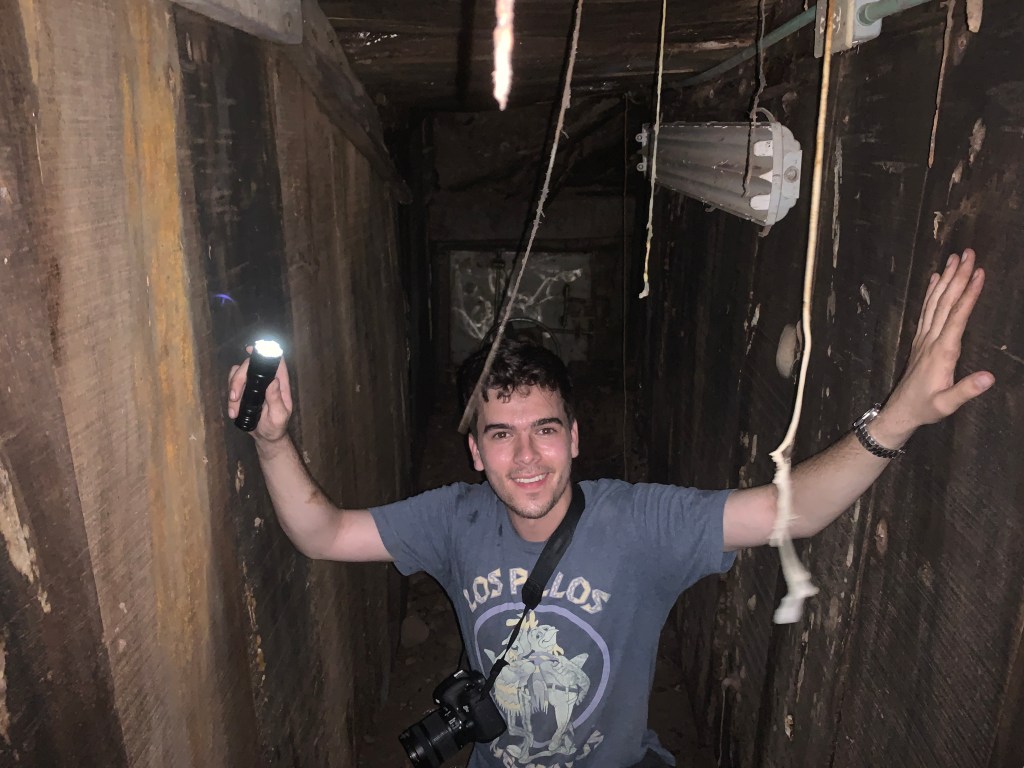
The most eye-opening experience was when I went to Canelas in Durango, which is Emma’s hometown; she lives in a specific little hamlet of that area called Angostura. When I went to Canelas and then Angostura, it is such a remote area; there is almost nothing there. It’s just small farm towns. You can understand how someone like El Chapo could live there for years and never be captured, because you can’t get there. The military could not get there without El Chapo knowing well in advance they were on their way.
And also, there’s so little there. It’s such a simple rural farming community and drug lords, in a way, are almost seen like royalty. It’s almost like your child being with a drug lord there is like seeing them date a prince. It’s really bizarre, and it’s this medieval environment. So that was really eye-opening to me—the U.S. view versus those kinds of rural views in the Golden Triangle in Sinaloa and Durango. That’s not to say that people there don’t recognize that drug trafficking is bad and the drug traffickers are bad. It’s just different, because one of the only ways you can escape poverty is to become aligned with a drug trafficker. It’s a lot more widely accepted, which was very interesting [and] helped me really understand Emma and her upbringing a lot better.
I went to some dances in the town, and you would see mothers doing their daughter’s makeup on the outskirts of the dance floor, and then sending their daughters in to go dance with cartel soldiers that had AK-47s on their back. It was very bizarre… You want your daughter to be picked by a cartel member, because they have money and that can provide resources for your child, yourself, your family. That was an experience I’ll never forget.
Given everything that went into the project, what’s going to make you consider Married to El Chapo a success? Is there something that you want to leave the audience with?
If it can be seen as a great character study of Emma and her life, who she is, and just create debate and intrigue—that would be the goal for me.
Ultimately, and it’s sort of a goal and a fear, in a way… when this does get distributed in Mexico, it’s important to me that when young girls in Mexico see this documentary, that they do not want to become Emma. That they can see the tragedy of the fact that her brothers and father all ended up in prison, her husband is in prison and will never be out of prison, and that ultimately, her decision to marry El Chapo was a tragic one in a lot of ways. The story is ultimately a tragedy.
I hope that when young girls in Mexico watch this—because Emma does have a lot of fans and followers on Instagram who probably will want to watch this—that it doesn’t create a situation where people aspire to make the choices that she made.
What’s next for you after Married to El Chapo? What kinds of stories are you hoping to tell in the future?
There’s a lot of different projects that I’m excited about, that I’ve had in the works for a long time. Anything from a senior citizen murder comedy that’s totally scripted called The Roommates—which is based on a pilot that I filmed with Barry Bostwick years ago—to other crime stories, other women in crime that I would be interested in exploring their story. I feel like it’s an untapped genre that I would like to build upon.
The stories that I am drawn to are the ones where I could I see a version of myself in the characters that I portray, or I can relate to them. The story of Emma and how El Chapo won her over during the pageant—by flooding the town with armed men, flying in famous musicians, locking down the whole town so she couldn’t leave, and her just being courted by him—I think you can’t not relate to how that’s such an incredible scene. What it must have been like to be her in that moment, that’s the impetus for the whole story. But whether it’s a scene or a specific character, those are the types of things I look for.
It took many, many years for this project to get made. Many ups and downs through COVID [and the] writers’ strike… The entertainment business, it’s really a test of perseverance and not giving up on yourself and on a project if you’re really passionate about it. And ultimately, the proof is in the pudding in the sense of this was able to get made, and I’m very pleased about that.
Married to El Chapo: Emma Coronel Speaks is now streaming on Peacock. Photo Credit: Courtesy of Portrait PR.
Article content is (c)2020-2026 Brittany Frederick and may not be excerpted or reproduced without express written permission by the author. Follow me on Twitter at @BFTVTwtr and on Instagram at @BFTVGram. For story pitches, contact me at tvbrittanyf@yahoo.com.
 TVBrittanyF.com