
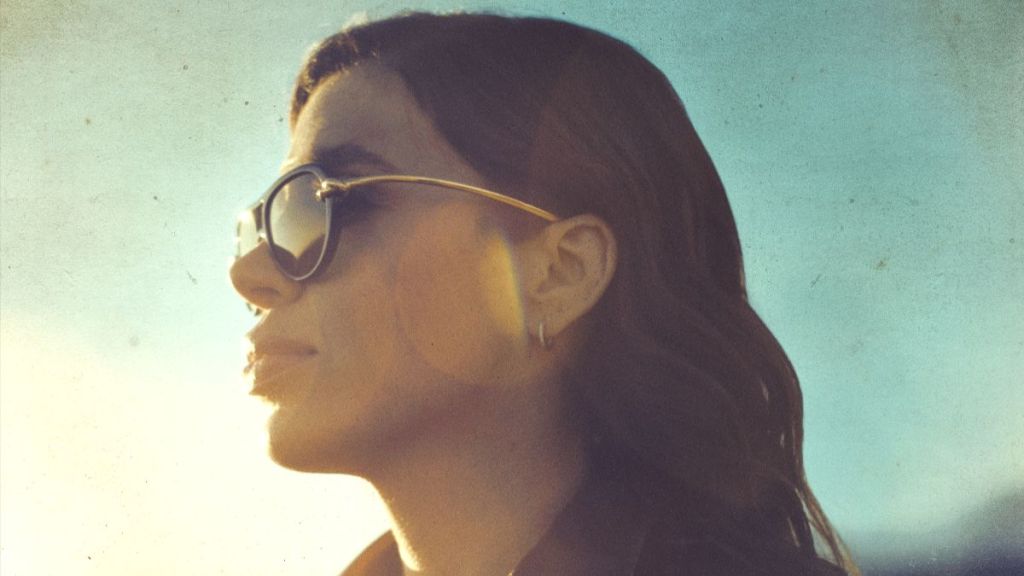
The story of El Chapo has gotten tremendous amounts of true crime coverage, but Oxygen is telling a different version with its new documentary Married to El Chapo: Emma Coronel Speaks. As the title indicates, the special is a chance for Emma to have her voice heard. But what did it take to put the project together?
With the documentary now streaming on Peacock in addition to airing on Oxygen, TVBrittanyF.com spoke to Married to El Chapo director and producer Ted Bourne to find out. Ted explained how his previous experience in the documentary space—including years on the iconic crime series The First 48—applied to this special. He also spoke about what was taken into consideration during the production, and what he’s hoping to leave true crime fans with at the end.
Brittany Frederick: Having done a lot of documentary work, what was it about Married to El Chapo: Emma Coronel Speaks that made it feel different or unique to you?
Ted Bourne: Across everything I’ve worked on—whether it’s an investigative series like The First 48 or a political series like The Circus—I try to find within the stories ways to challenge people’s preconceptions. I recently produced another film, King of the Apocalypse, about the family of a prominent militant leader, and I remain interested in complicated characters that perhaps don’t fit neatly into viewers’ expectations. So when Mary Robertson of [production company] Maxine [Productions] reached out to me about taking on this project, that was certainly what interested me most about it.
Emma Coronel is a complicated person—someone who married this powerful drug trafficker at a very young age, 18, when many would say she was too young to make such a momentous decision, but who, while distancing herself in many ways from his actions, has nevertheless maintained loyalty to him. So I was very interested to dive in and explore these somewhat paradoxical realities that might pull viewers in different directions.
Given that El Chapo’s story has been so well-documented by other TV shows, what was the creative team’s approach to ensure that Emma’s voice wasn’t overshadowed by her husband’s infamy?
In terms of the creative team, I worked closely with executive eroducer Frida Torresblanco, who had been developing this project for years, and with co-EP Monica Villamizar, who was my right hand in the field and conducted all the Spanish-language interviews with Emma. Along with Mary, we had multiple discussions throughout production and post about how to find the right balance in the story.
We came to feel that while it was necessary for context to include some of the key moments of Chapo’s story, we wanted to do it as much as possible through Emma’s perspective. At the very least, we never wanted to spend more than a few minutes away from her interview. And after each sequence, we found it worked structurally to always return to her interview—to explore her perspective on the previous events in the film, and to get her reactions and her answers when confronted with questions an audience member might have regarding those parts of the story we’ve just spent time on. We felt that in this way, even when focusing on him, we experienced it through Emma.
From a directorial standpoint, how did you find the style and tone you wanted for Married to El Chapo: Emma Coronel Speaks?
Finding the tone of a piece like this is an ongoing process, but I would describe the tone of this film as an honest one that maintains room for multiple perspectives. While much of it is heavy subject matter, we felt that it was important to also make space for other feelings—including curiosity, mystery, and even humor. In terms of the visual style, we knew that this would be a film that lived primarily within the interview.
So with the help of our DP [director of photography] Caleb Heller, we leaned into creating visually stunning interviews, and did everything we could to capture little bits of cinematic B-roll and verité along the way to help tell a story that would otherwise rely on archival and news footage. For additional shot visuals, we also sent a great local crew to a few key locations in Mexico to capture the atmosphere of those places, and we set up a few targeted scenes for recreations when we didn’t have other material to bring the viewers into those moments.
Our goal visually was to create a unified and elegant style that didn’t fall prey to the “hodgepodge” of random news and archival footage. And with the help of a great team of editors, producers and cinematographers, I think we achieved that.
You spent years working on The First 48, which is the class of the field when it comes to true crime series. Did that experience help you on this project?
One of the lessons I’ll always carry with me from my time on The First 48 is the importance of maintaining tension throughout the story you’re telling. And this was a particular challenge in this film, because while you might call it “true crime adjacent”, it’s not a typical true crime story, so the storytelling isn’t pegged so much on following the trail of an investigation, but instead on the question of Emma’s role or knowledge of El Chapo’s criminal activities.
We came to understand the primary tension in this story rested in the interview itself—and the question of how much Emma would reveal at any given moment, and how she would respond when asked directly about difficult aspects of her or her husband’s story.
All of the moments that grabbed me during the process were during our interview with Emma. We didn’t know how much she would reveal, and we knew that she was still loyal to her husband, so whenever cracks showed in that armor, there was a bit of electricity in the air. For example, at one point when her energy was flagging during the interview, she revealed that it didn’t interest her to talk about her marriage, to talk about her past, about the life that led her to doing time in prison, that this was boring to her. Moments like this were surprising and revealing to us.
How much did your perspective on El Chapo’s story change through working on this documentary? Did you learn anything that surprised you?
One of the most striking things that I learned from researching this subject and working on this film, is that in certain segments of society in Mexico, there is a respect for people like Chapo and his “rags to riches story” and to the cartels for providing work, bringing in money to poor areas, and for basically providing for people in a way that the government doesn’t. This was kind of eye-opening for me.
There were even people out protesting when Chapo was arrested. Were they encouraged to do so by the cartel? Maybe, but nevertheless, it’s fascinating, and runs counter to the narrative we have here in America about El Chapo.
With what you know now, is there anything you’d have liked to explore further, that just didn’t make the final cut?
I think it would be fascinating to go deeper into the nuances of the culture of rural Sinaloa and Durango—including the importance of events like the beauty pageant that Emma won when she was 17—and the ways in which the cartel as an organization is entrenched into every aspect of that culture.
Is there anything specific you want viewers to take away from watching Married to El Chapo: Emma Coronel Speaks?
I think in America, we have a very surface-level understanding of drug trafficking. We know that the cartels are cutthroat black market organizations that will do anything to further their goals and make more money—including fueling overdoses and murdering rivals that stand in their way. And this is all basically true.
However, I’d like for viewers, especially in America, to understand that beneath this reality there is a complexity to the world that Emma comes from, where livelihoods are dependent on this drug trafficking ecosystem that exists. And for individuals who are immersed in this culture, this is the reality that informs their decisions. And I think it’s important to understand this reality when we talk about the larger goal of combating drug trafficking.
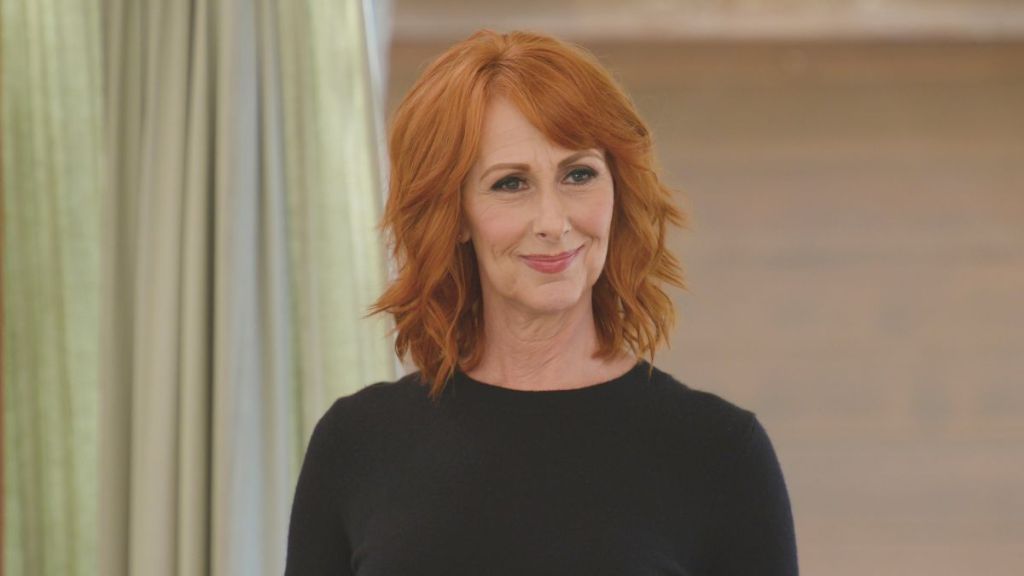
Married to El Chapo: Emma Coronel Speaks is now streaming on Peacock and continues to replay on Oxygen; check your local listings for TV airings. Photo Credit: Courtesy of Oxygen.
Article content is (c)2020-2026 Brittany Frederick and may not be excerpted or reproduced without express written permission by the author. Follow me on Twitter at @BFTVTwtr and on Instagram at @BFTVGram. For story pitches, contact me at tvbrittanyf@yahoo.com.
 TVBrittanyF.com