
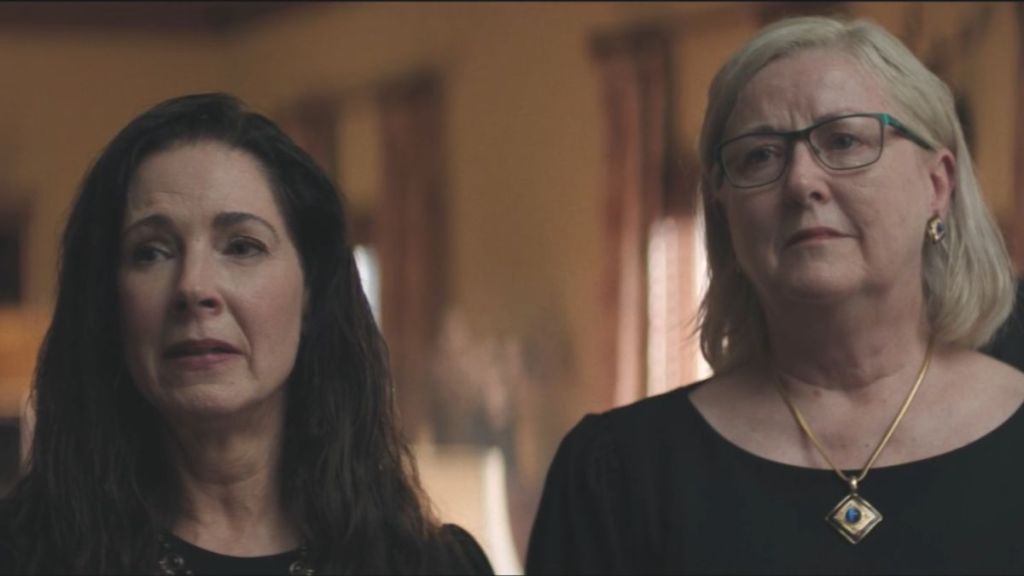
The Hulu miniseries Murdaugh: Death in the Family has given TV viewers a dramatic retelling of one of the most infamous true crime sagas in recent memory. One of the actors bringing the scripted version of the Murtaugh story to life is Ramona Floyd, who recurs as Lynn Goettee—Alex Murdaugh’s sister.
Before the Murdaugh: Death in the Family finale, TVBrittanyF.com spoke to Ramona about how she approached a story that’s already been in the headlines, as well as playing someone that viewers don’t know as much about. She spoke about the on-set environment, working alongside the likes of Jason Clarke and Patricia Arquette. Plus, learn what other role is among her favorites.
Brittany Frederick: The Murdaugh family story is now very well-known. What interested you in retelling it in Murdaugh: Death in the Family?
Ramona Floyd: My daughter’s a big true crime fan, and the story of the family and how all of this went down, I wanted to know more information about it. I had heard about the story. I didn’t know all of the characters. I didn’t know a lot of details. My daughter knew a lot about it, because she’s big into true crime, but I really was interested in the family dynamics. How you stay connected and supporting in a situation where it continually unfolds and makes it challenging for a family member. What do you do in that situation, when it’s someone you care about?
Was your process in playing Lynn the same process you’d use on a wholly fictional project? Or did you change your approach to portray a real person?
There are certain routes to all preparation, which is to find the truth and the emotional truth of the character—from my point of view, from the writer’s point of view, from the director’s point of view. I personally am very curious about the characters and how they relate to this story. And I did watch some of the [trial] testimony, just to kind of get a feel for whatever I could see, and some information on Lynn. There’s not a lot of information.
This story is a fictional account, so it’s an emotional truth of the characters in the story. I grew up in the South, so I understand a lot of those southern dynamics, and also women in those southern dynamics—especially very male-dominated environments, which this story is.
Joseph [La Corte], our costumer, worked endlessly. He had photos of everything and every individual…Lynn was a statement necklace woman, and Joseph worked really hard to make sure that we had those things.
So once all of those layers come on top of the work that you’ve done internally and emotionally, you’re there and you’re with the family, and so you build that. We did that with Amye [Gousset] and Holly [A. Morris], who play my sister-in-laws, and Patch [Darragh] and Noah [Emmerich], who play my brothers. Over time, especially when you’re there for an extended period of time, it builds.
There are so many recognizable actors in Murdaugh: Death in the Family, regardless of the size of their roles. It’s a wealth of talent on screen. What was it like to be part of this ensemble?
It’s absolutely wonderful. My first day on set, you’re brought to the location, and we’re all sitting there in the tent waiting for the scene to start. And it was a big scene. My first day was the big scene of the party in the first episode. J. Smith-Cameron is just sort of hanging out, and you’re meeting Gerald McRaney. And you realize just how well this story is going to be layered, with all of this talent [in] every single role.
You’re in awe, but at the time when you’re doing the work, you’re doing the work, and it’s the same thing you do on any project. You’re there, you’re delivering that story with those people, and you’re bringing that to life. You’re all kind of shoulder to shoulder to do the job.
Do you have favorite scenes or episodes from the miniseries that were particularly rewarding for you?
My job in this role was to support the the development of this family as a whole, and [show] how it radiated out to the family, and how everyone manages this series of crises. One of the scenes is the scene with Cindy [Karr], who plays Alex’s mom… She’s suffering from dementia, and she kind of comes out of it and explains a moment when Randolph had published her obituary when she had threatened to leave him. The fact that this sort of generational patriarchy has been going on since Randolph and all the way down to Paul, and even Buster and Brooklynn are sort filtering down to their generation.
She’s explaining that she had threatened to leave him, and he just had, as a joke, published her obituary in the paper. It’s such a subversive act, but it’s just full power, that he knew he could do this. He sent the message. She never left. Things carried on. And so, from my point of view, being the only daughter in the family, I’m part of the cover-up. My character is saying well, you know, we aren’t going to talk about that, but she knows it. For my work as an actor, it’s like, how did she integrate knowing that about her parents and where that power was, from an early age all the way through?
There’s another scene that I enjoyed a lot, and it’s when they really start to understand just what Alex has been doing. There are these levels of denial that people do, where they’re just kind of like, this is my family member. I’m going to believe them. I’m going to care. And then just how that starts getting chipped away as the trial takes place.
Playing Lynn is a different kind of role for you. So what would you recommend to people who are finishing Death in the Family and want to watch more of your work?
The Punisher was a great role. I got to work with [Jon Bernthal as] The Punisher. It’s a couple of episodes. I’m playing a doctor taking care of him; I get to be sort of a sassy country doctor that needs to bandage him up. And we had such a good time on that. He was so great to work with.
When you have a guest star role like that, which is a smaller number of episodes or just a more supporting part, do you do additional work to flesh out the character for yourself?
Absolutely. My job as the guest star is to is to move the story along and to make sure that the leads are getting all that they need for that story to progress. It’s more about me serving the material and giving the other actors what they need to go where they need to go, because their story is the long story… I love that kind of work.
Working on Murdaugh was a very long process. It was three months’ worth of working because I’m in six out of the eight episodes. My job is to make sure that that family is built, and the showrunners and the producers being happy that they got what they needed in order to flesh out this family. Because it’s complicated with this family—there’s so many of them, and they all have different points of view.
I really took it from the standpoint of being the only daughter in this family. My point of view was like, how did she keep her head down and survive, knowing from a very early age where the power was and where it wasn’t. How did she sort of integrate that to staying in support of what was happening? There’s not a lot of spotlight on her, and I don’t think she wants that. I think her process was keep your head down and stay in the game.
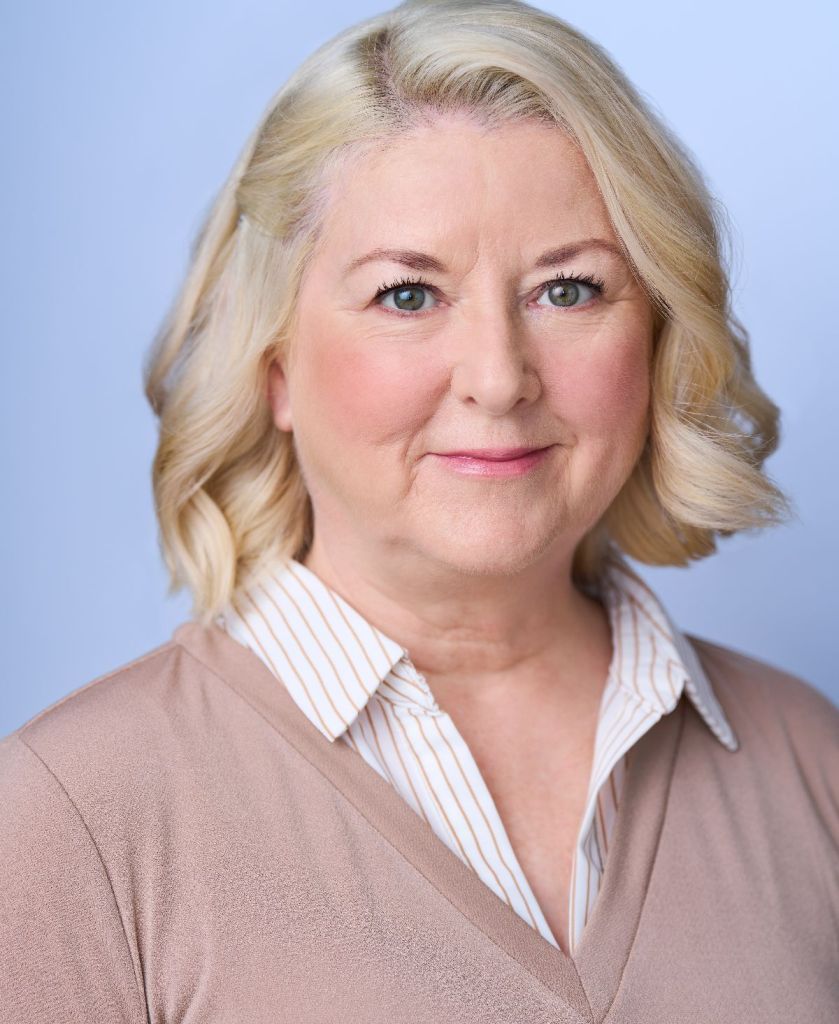
People watching the miniseries may not be aware of the full breadth of your career. You began on the stage, and you’ve also done quite a bit of voice work. What would you say are some of your most memorable experiences?
I got to play Medea in Medea, and part of their marketing thing was they had this crazy, ginormous poster of me that was on the full building outside. So for a while I would go down into the Lower East Side, and you would see just this building-size poster of me as Medea, which was kind of silly and fun.
And I think Punisher was so much fun because [of] just hanging out and sitting and talking to Jon Bernthal. He was playing this very high-action character, but he is a consummate professional. That was one of my first gigs, too… I was kind of like trying to work out the business while they were setting up the shot, and he was like yeah, try that. Try that. While they were doing setups for the next one, he hangs out, and we’d just sit and talk, and the writers [were] coming over and saying that they really liked everything that we were doing. I was just like, hope they’re all like this.
Is there anything that you want to leave viewers with as they get to the end of Murdaugh: Death in the Family?
I love how this story is so relevant. This is a story about excess patriarchy, kind of unstoppable, no consequences, and how that trickled down to people—and to a lot of innocent people.
To be able to part of that story, that’s showing the results of the fact that there’s no consequences for that, at a time when I think we have to really understand that unbridled power. And it was nice to see that addressed in a way. Most of us can understand when we see it in a family dynamic, because that’s kind of what we all relate to.
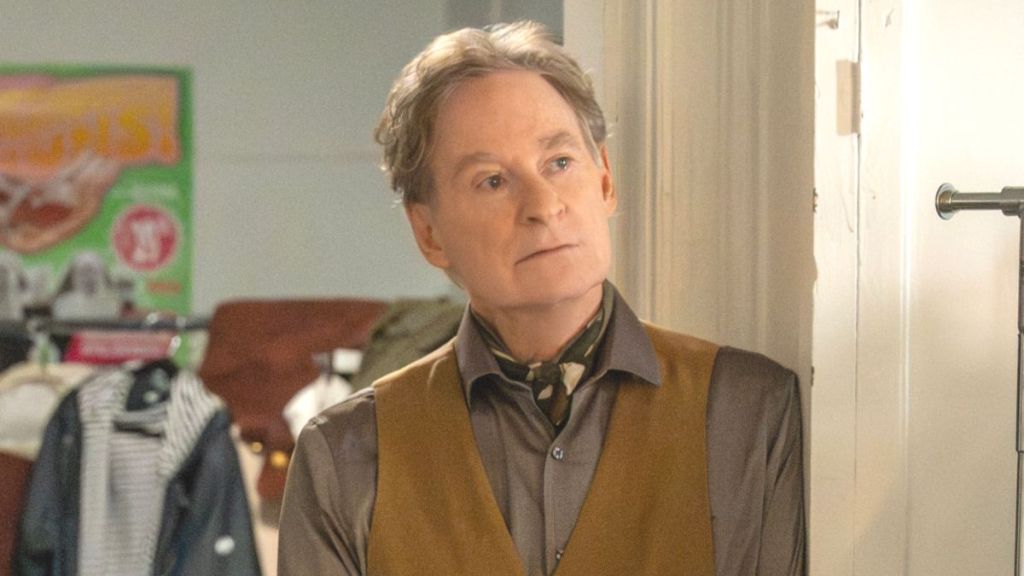
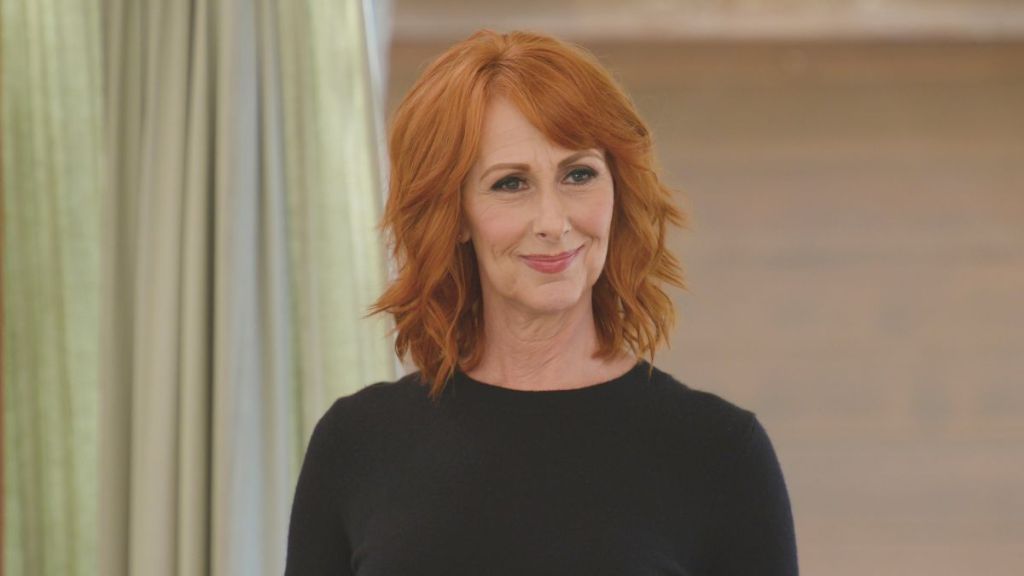
Murdaugh: Death in the Family is now streaming on Hulu. Photo Credit: Headshot by Chase Anderson, screengrab by Disney/Hulu, both courtesy of Entertainment Lab.
Article content is (c)2020-2026 Brittany Frederick and may not be excerpted or reproduced without express written permission by the author. Follow me on Twitter at @BFTVTwtr and on Instagram at @BFTVGram. For story pitches, contact me at tvbrittanyf@yahoo.com.
 TVBrittanyF.com