
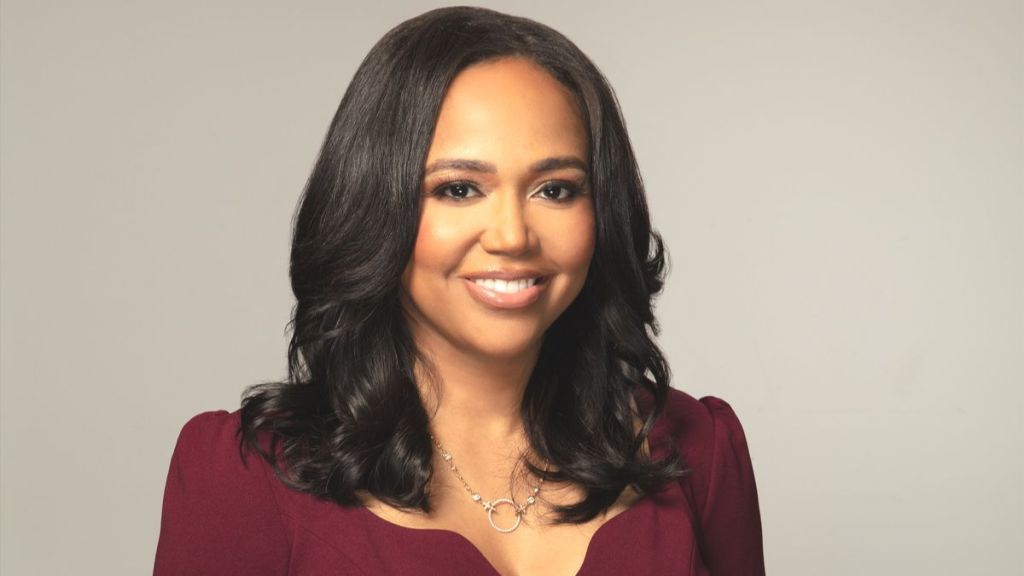
The fourth season of Killer Relationship with Faith Jenkins takes the Oxygen true crime show even further. Season 4 goes beyond just family or romances into coworkers, Internet connections and other types of relationships that start well and ultimately turn fatal. What can viewers expect from the new season?
Ahead of the Nov. 9 premiere, Faith Jenkins joined TVBrittanyF.com to talk about Killer Relationship with Faith Jenkins Season 4. She reflected on if her previous experience hosting Judge Faith and Divorce Court has been an asset for this series, and what continues to interest her about working in television. Plus, learn what makes this series distinct from the plethora of other true crime programs.
Brittany Frederick: This is your fourth season of Killer Relationship with Faith Jenkins. What continues to interest you about the show?
Faith Jenkins: The stories that we tell and the victims that we talk about. We are very passionate about telling the viewers about who these people are and their legacy and their lives. Not just about how they died, which is a big part of the story, but also how they lived.
And we don’t tell any victims’ stories without having the family’s support and their sign off on the show. That’s something that I’m very passionate about, and it’s a way to keep their name and their legacy and their story alive.
Season 4 expands into types of relationships that the series hasn’t covered before. How interesting was that for you, to branch out into new directions?
We’ve had no shortage of cases to choose from, unfortunately, for the series. Every season, our research team gets started, and we have so many cases that we read over, and we have to narrow the cases down to about 13 for the season. I knew when we started that we would branch out eventually.
At first, we started with all of the romantic relationships. Now we’re branching out [with] workplace relationships, social media connections, people who’ve connected in other ways. I think that the viewers are going to continue to relate more, because relationships are universal.
We don’t have one case where people were enemies or frenemies from the very beginning. They liked each other. They got along. In some cases, they loved each other. And then we take them through this entire story—how their relationship changed, how it evolved, and what made this person, in the end, take somebody’s life.
Were there any Season 4 episodes that particularly surprised you?
I’m surprised every season, and I’m heartbroken every season, because I will never get over the psychology behind the decisions that people make, especially this season. We used to focus a lot on the warning signs and the red flags, and family members not liking the person that someone was connected with, which is a red flag. If your family who loves you and supports you and they want to see the best for you, if no one likes the significant other that you’re dating, that is a warning sign, because oftentimes people will see something that you don’t because you’re too closely connected to the situation.
But this season, I think [it’s] just once again seeing the decisions that people made. I think it’s our season premiere where we have the young lady who was seven months pregnant who was murdered. And not to give too much away, but the person who did it did work in law enforcement. This story made national news, and a lot of people talked about it, because it’s really not about the surprise of who did it; it’s about the why.
You have someone who was sworn to uphold the law, to serve and protect and do all of those things, and then in the end, he ends up taking the law into his own hands and choosing someone’s fate. Choosing death for that person as their fate. And for me, I think the important part of that story is getting into the psychology of their mind and understanding what happened and why.
Your previous TV shows, Judge Faith and Divorce Court, also dealt with relationships in a courtroom setting. Did any of that experience help in making Killer Relationship with Faith Jenkins, even though it’s a very different series?
I love that question, because that is the reason why I do this show. I took my experience in having all of those cases with relationships, combined it with my prosecutorial experience in New York, and that’s how I pitched this show. That’s how I created it—combining those worlds together. What happens when love goes wrong? Love turns deadly and people just don’t want to break up. A divorce is not enough, but they make this other decision. That’s how the concept of the show started.
Initially I thought I was going to do a show like Kelly [Siegler]‘s. I wanted to do a cold case show. I wanted to help actually try to solve cases. But I found something about connecting with the victims’ families that I liked a lot, and being able to share more about their stories.
I will tell you, some people do not want to be on television. It’s understandably too painful. They don’t want to relive the case through telling the story on TV. But for others, they want to, and it helps them to be able to talk about their loved one and who they were and about their lives. And so they are very appreciative of the platform that we give to them, to help them do that.
What continues to interest you about working in TV? What about it is still engaging for you?
Continuing to find stories that people want to hear. Continuing to find stories that are compelling. Sharing the message behind why people do what they do. Helping people to understand and getting involved in sharing the investigations behind them. How do we solve these crimes? We have one case where it wasn’t solved for 13 years. So what happens during that 13-year time period? What do families do?
[We’re] showcasing how families sometimes put pressure on the investigations to keep them going, keep searching, keep looking… Raising awareness of relationships and relationship dynamics. We’ve talked about those red flags before, and so there’s an educational component to it. Everything I’ve done since I left the practice of law, on television, has been related to the law. I’m always passionate about sharing my knowledge, helping others learn in some capacity through the TV shows that I do.
What conversations do you have with your production team about keeping Killer Relationship with Faith Jenkins distinct, given there’s an oversaturation of true crime shows on television?
Not only on television, but also in the podcast world as well. I try to bring my knowledge as a former investigator and as a former prosecutor and give a different perspective. I always think that that’s what makes our show unique. It’s my perspective, and sharing that perspective and walking the viewers through those stories and talking about what happens when the investigators made this decision, and perhaps why they made that decision. I try to use my perspective to tell the stories in a unique way.
What makes this show so popular [is] there’s something about the stories that we tell—highlighting how these relationships start off so strongly. And then the second thing is it’s kind of shocking, because for the most part, the perpetrators in our cases, they don’t have any contacts with the criminal justice system. There’s this shock of the crime they committed, but also how they lived their lives thus far. So when you take all of those things together, it’s really compelling to listen to these cases, and the outcome of these people’s lives as a result of one decision.
Killer Relationship with Faith Jenkins airs Sundays at 7:00 p.m. ET/PT on Oxygen. Photo Credit: Courtesy of Oxygen Media.
Article content is (c)2020-2026 Brittany Frederick and may not be excerpted or reproduced without express written permission by the author. Follow me on Twitter at @BFTVTwtr and on Instagram at @BFTVGram. For story pitches, contact me at tvbrittanyf@yahoo.com.

 TVBrittanyF.com