
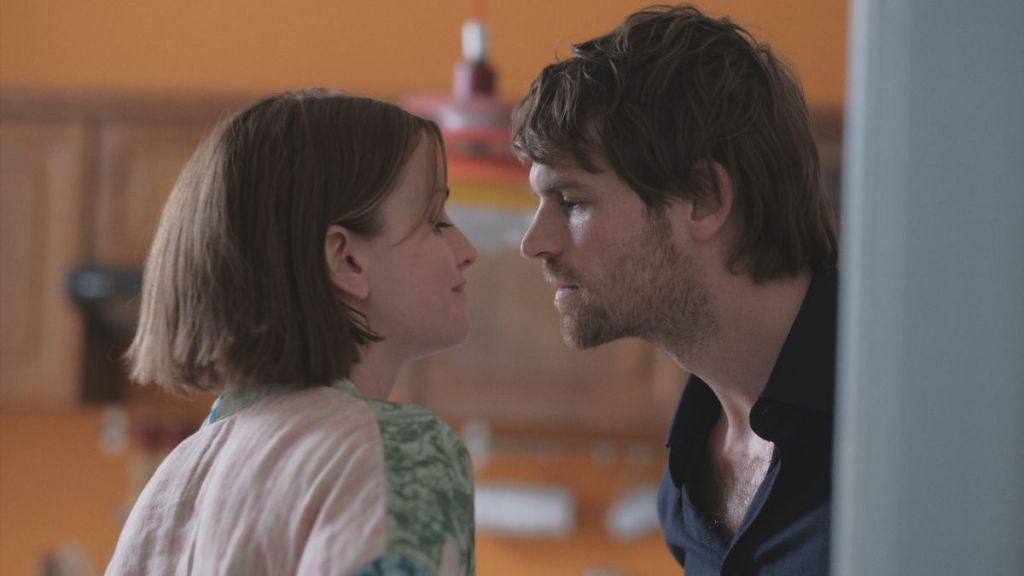
The most interesting dynamic in PBS’ Maigret has little to do with crime-solving. It’s the rapport that Maigret has with his wife Louise—because it’s more than the typical cop and spouse relationship seen on TV. They feel like an evenly matched pair personally, while Louise also contributes to the greater story in her own ways. It’s unique, charming and well worth following.
In an interview with TVBrittanyF.com, Maigret stars Benjamin Wainwright and Stefanie Martini shared their experience working together to create Maigret and Louise’s marriage. They also discussed what it means to play the title character in a crime procedural and the unexpected connection between Prime Suspect 1972 and Maigret. Plus, why does Benjamin see Maigret as an underdog?
Brittany Frederick: Benjamin, what was the experience of Maigret like for you—not only being the star of the show, but your character’s name is in the title. He really is the center of the action.
Benjamin Wainwright: Yeah, suddenly the buck stops with me, huh? It’s very cool. And when you get a job like this—I say when you get this, the only time I’ve had a job like this [laughs]—you enjoy it for maybe 30 seconds to a minute before it crashes down, that you’ve actually got to do the job and do it well. And then when you start doing research and you realize there’s been 36 or 37 Maigrets before you, there’s another French one coming at the moment, and that you’re the only contemporary one, then the walls really start crashing down.
But there was so much comfort in the scripts. The scripts are just great. And I wanted the part from the start, so careful what you wish for. But I just think it’s so well written, and we had such a cool team and great cast, and I was very happy and comfortable most of the time. The only stress is when you feel like you’re not quite there one day, because you’re exhausted because you’ve been doing it day in, day out. But that’s the joy of it. You eventually relax into it.
Stefanie, you’ve got experience taking on an iconic detective role from playing a young Jane Tennison in Prime Suspect. Did you have any conversations with Benjamin about that aspect of Maigret?
Stefanie Martini: No, I asked, [he] didn’t need advice.
Wainwright: Did you?
Martini: I think at the beginning you were like well, any advice? No, nothing. Apart from just you get really tired when you’re leading a show. Your whole life goes out the window… And also, Blake [Harrison] was in Prime Suspect with me as well. I saw him go into the room for Maigret after I came out, and we were like, let’s do another detective show. [Laughs.]
Was there any part of you that missed being the one doing the crime-solving?
Martini: I genuinely prefer doing human relationship-y [material]. What’s happening between us as an actor, I kind of prefer that stuff anyway… I was very happy eating loads of food and lying in a bed and walking around and chatting to Ben for weeks.
Wainwright: The strength of the writing of Louise is that she contributes a lot to the cases when I come home and go, I’m about to be demoted. We talk it through. And her background as a psychiatric nurse means Maigret has another brain at home who can find another way into these cases or test his wonky theories.

What makes Maigret interesting is that viewers know from the start that a lot of people don’t seem to like him. His promotion is controversial and he doesn’t have many fans. Benjamin, what was it like to start from that position instead of being the more traditional hero detective?
Wainwright: Being Maigret in a show called Maigret, it’s always going to be an uphill struggle. I think people will like the show. I think a lot of people will miss the kind of gloomy noir of previous versions and say I’m too young, so I’m an underdog, whatever way you slice it.
And I think Maigret doesn’t really mind what people label him as. He doesn’t care if people like him. And there’s a lot of freedom in that. He just does his thing. And I think we could all afford to worry less about if people like us, generally.
The subversive moments of Maigret are some of the best parts. What was it like for you to play them, and do you have other favorite aspects of the series?
Wainwright: Patrick [Harbinson] does some brilliant subversions of the genre. I think there’s a lot of those tropes—I’m constantly on the phone and stuff—but there are some brilliant, absurd moments like that. I’m drinking with criminals and turning people upside down, and all these weird little details that that Patrick has inserted, that make it slightly left-field, that I enjoy.
Martini: I’ve just watched Episode 6. I really like it—which is not me saying everyone keep going to the end, but it is slightly me saying everyone keep going to the end. [Laughs.] Because I think the further it goes on, the more you know all the characters across the board. And I know I only get to work with Ben, but everyone’s really strong, so I loved seeing all of the detective scenes and seeing them sort of challenge [him], and the tensions there, and bits that are really funny that I missed when I read it, because of how they’re doing it.
Wainwright: I think [Episodes] 5 and 6 are great. When you’re establishing a new series, and it’s a load of new actors, there’s so much to worry about. And I think by 5 and 6, we’ve all relaxed into it, and it feels self-assured. But there is a favorite bit. I think it was our last day’s shooting in Budapest, where the murder takes place, and I actually got to just be behind the cameras and witness it for a bit. And it was [with a] rain machine and red light and a van, and just one of those big shooting days. This just real magic on set some days. And I liked being there, especially when I don’t have anything to do. [Laughs.] I love being there. It’s nice to act. It’s also nice to watch others.
Maigret does really make Budapest feel like France. What was the shooting experience like?
Martini: I’ve been in Budapest a million times. It’s a beautiful place. It’s a really beautiful place. The crew are fantastic—work really hard and really, really talented at what they do. When you’re watching the show, no one sees the crew and how hard they’re working and who they are, but they were all absolutely amazing, which is kind of my main thing about always going back to Budapest, because I normally get to see the same people.
Wainwright: Budapest, it’s amazing how well it works for Paris. You’re not always trying to go oh, we can’t use that detail; you can kind of open up and see a lot of it. And then we did do two days shooting in Paris, and it was glorious. And we’re fighting to turn those two days into a week, three weeks, five weeks. [Laughs.] I hope we captured that essence of it. I was very hot on good croissants. Good black coffee.
Martini: You were very specific.
Wainwright: The French details. We could really lose everyone on it. [Laughs.] I was having wobblies about what kind of coffee and how big my crossaint was and how fresh, because that’s what you can do when you play Maigret.
Martini: That’s how you use your number one on the call sheet. [Laughs.]
Maigret airs Sundays at 9:00 p.m. ET/PT on PBS. Photo Credit: Courtesy of Playground Entertainment and Masterpiece.
Article content is (c)2020-2026 Brittany Frederick and may not be excerpted or reproduced without express written permission by the author. Follow me on Twitter at @BFTVTwtr and on Instagram at @BFTVGram. For story pitches, contact me at tvbrittanyf@yahoo.com.




 TVBrittanyF.com