
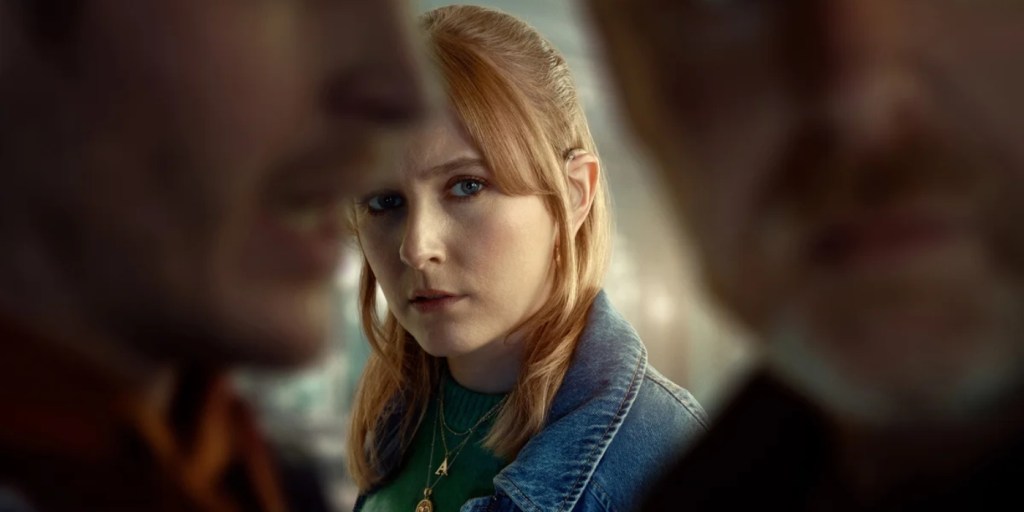
Code of Silence is a fresh take on the crime-thriller genre that embraces a unique perspective by featuring a protagonist who is deaf. Created by Catherine Moulton (who also wrote and executive produced the show) and starring Rose Ayling-Ellis, Code of Silence focuses on Alison, a deaf bartender who finds herself working for the police as a lip-reader. It was a unique experience for Moulton and Ayling-Ellis, who are hard-of-hearing and deaf in real life.
Bringing that personal touch to Code of Silence was one of the most exciting elements for both, and an important showcase for how disabilities shouldn’t impact someone’s ability to help bring art to life. During an interview with TVBrittanyF, Rose Ayling-Ellis and Catherine Moulton sat down to discuss the origins of the series, finding the right balance of crime thriller and grounded character, and the importance of fostering a film set culture that’s accepting to crew members and cast with disabilities.
RELATED: Hulu thriller Red Eye is Richard Armitage’s show—and that’s why it works

TVBF: What excited you about exploring this genre with a deaf lead character?
Catherine Moulton: It just felt really exciting to put something that was quite personal to me [into a show]. I’m partially deaf, and I have hearing aids. I have been since childhood. To take something like that I do all the time like lip reading, and put it into a crime thriller? It just felt like it hadn’t been done. I love crime shows, and I thought, ‘Why? Why not have a crime show that has a deaf main character?’
That just excited me. They’re both things that feel very personal to me. So it all started from there. Then, when I’d written an outline, I knew about Rose’s work. It felt really exciting to be able to take the outline to Rose and have her come on to the project at a really early stage, even before I’d written the script. This meant we were able to collaborate on it. All those different elements were exciting to me.
Rose, it’s rare that you get to see a character where their deafness is so central to the narrative. As someone who is deaf yourself, what did you bring from your own experiences into your performance as Alison?
Rose Ayling-Ellis: Those moments where she’s actually going to have to prove herself — it’s frustrating how people have an idea of how she should live her life and how she should be. Alison is frustrated in her job working in a bar, and everyone decided that she should be really happy to have a job at all. But that’s just assuming for us. We’ve also got feelings, we’ve also got ambition, we’ve also got drive, and we want to build things.
I know so many disabled people who’ve been working for the same company for 10 years, and have had the same job, only to never get promoted. Someone else brand new comes in, and within five months, they get promoted. That is an experience that a lot of disabled people experience. That’s what I wanted to show with Alison. We share that frustration, and that’s why she goes too far. This is one opportunity that she can actually have that’s so much more meaningful to her life. I think that’s why she goes a bit too far.
Catherine, how did you find the balance between those grounded character beats and the crime thriller elements of Code of Silence? What was your process of picking when to lean more heavily into one aspect over another?
Catherine: Well, we wanted it to be a very entertaining show. I mean, that was really important to us. It doesn’t feel like you’re coming to this show to be taught something about deafness… I always like putting Alison in a position where her particular skills as a deaf person and a lip reader give her a way into the case that maybe the police aren’t able to.
It felt exciting to flip the power balance between the police and Alison. They’re relying on her a lot of the time. They’re used to being in a position of power, but because this gang chooses to meet in places where they can’t be bugged, they’re very reliant on Alison. It was always about trying to find those situations where we could put Alison at the center of everything and make her the key to unlocking the case.
Rose, you and Liam Kieron have such a good dynamic in the show. What was that like finding with him on set?
Rose: When we were casting… Alice and Liam need to have real chemistry; otherwise, the whole thing wouldn’t be great. It was really important to have good chemistry with him. We found Kieron, and he came in really late. He had just come back from America, and I had just gone off to do a job. There was literally no time to do a chemistry test! We didn’t have the chance to do one. I think, because we both were really panicking about not having that chemistry test, while filming our first scene together — we were both so determined to make it work!
[Those characters] both really want that chemistry. I think it actually works better not having that chemistry test, because if you do have great chemistry during that test, you try to replicate it. But because we didn’t and it made us panic slightly, it [felt more natural]. I think that really helped. It also helps that Kieron is such a great actor. He’s just a great big teddy bear that likes to talk.

Congrats on Series 2! I know you can’t give me any spoilers, but is there anything you can share about what you’re excited for with Alison’s future stories?
Catherine: I don’t know that there’s anything that we can share [Laughter]. You know, things might change along the way, but I think one thing you can be sure of is that Alison’s going to be at the center of the story, and that she’s going to go out of her way to solve the next crime story.
What was the biggest surprise of Code of Silence?
Catherine: It was just such a tiny little idea about having a lip reader at the heart of the story. Putting lip reading at the center of it and showing how that puzzle works out. So, I mean, it’s gone from something that was just like a notion, and I first pitched it to Mammoth Screen, there was just that idea. It’s been such a great collaboration. To have so many brilliant people work so hard to realize it, it exceeded my expectations many times over. We’re really proud of the show, and that so many people came together to make it what it is.
Alison: What surprised me is that when we set up the crew, we wanted to make it the most accessible place possible. At least one person in each department was either deaf, disabled, or neurodivergent…. What surprised me is how much effect that has on the people who are not deaf or disabled. Suddenly, it felt like they realized that they didn’t need to be there to help everybody. We don’t need help.
This could actually even teach them better teamwork, how to work together better. When you’re filming, you’re rolling, you have to be quiet. Suddenly, something’s going wrong. Maybe the light box is broken, and the crew can’t physically say anything. So they learned to speak in sign language. They learned that they could gain something from us. I think that would be so lovely to see, and hopefully that will have a knock-on effect in the rest of the industry.
Code of Silence is now streaming on Britbox
 TVBrittanyF.com