

WARNING: The following contains spoilers for The First 48 Season 28, Episode 3, “Broken Youth.”
Few TV shows last 28 seasons—an impressively massive amount of time. But that’s the milestone that A&E’s The First 48 is celebrating, and in an even more improbable act, the true crime series has become more timely with age. Season 28, Episode 3, “Broken Youth” is an example of that.
One must start with the structure of the show itself. While The First 48 has evolved through a couple different eras over the years (as it should moving between cities and as time changes), the fundamental bones of the series remain the same. Credit is due to A&E, the production company and just as importantly the crew members embedded with these homicide units that there has never been any pressure to sensationalize the series further or make it glossier. The most obvious change over hundreds of episodes has been updating the opening sequence, and that’s just become a marker for fans of which era of the show they’re in.
The complete lack of pretention in the show is almost deceptively simple. It may have seemed basic or dry at one point, but it’s become a sort of secret weapon as the true crime genre has gotten more crowded and more about entertainment than anything else. It’s hard to throw a rock and not hit a true crime TV show or podcast these days, many of which are rehashing the same stories, all of which are claiming to be the most shocking or the most revealing. Everyone is jockeying for attention, often at the cost of actual substance. The First 48 is just continuing to do what it does very, very well.
That includes being smart enough to get out of Tulsa Homicide’s way. Because “Broken Youth” is once again Tulsa carrying the show on its back—fittingly led by veteran and fan-favorite Detective Jason White.
HOW TULSA GIVES THE FIRST 48 STAYING POWER
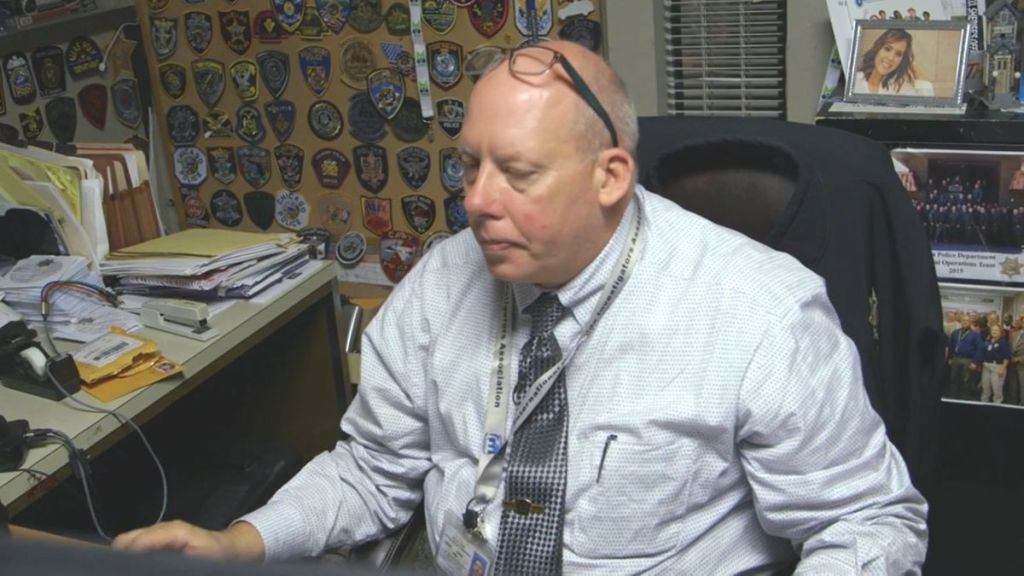
Anyone reading this article knows why Tulsa Homicide is so popular among The First 48 fans—and how important they are to the longevity of the series. There has not yet been a replacement for the painful departure of Mobile Homicide or a new department to fill out the roster. At this moment, this is truly the Tulsa Homicide show. (Anyone who needs more proof can look to the fact that A&E is airing another Homicide Squad Atlanta repeat marathon this Thursday instead of a new First 48 episode, less than a month into the new season.)
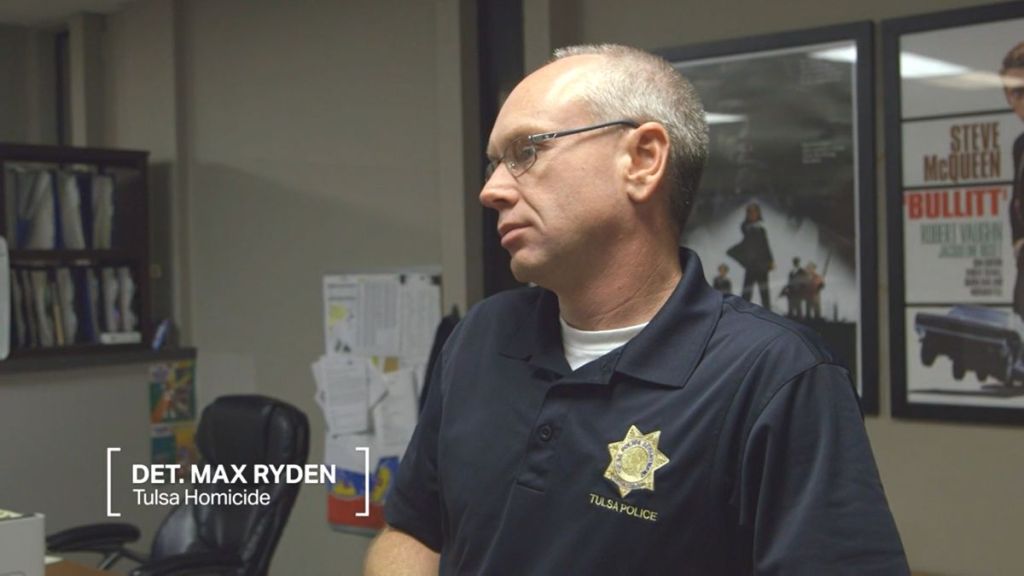
“Broken Youth” illustrates that it’s not just what Tulsa Homicide does that makes them so popular and so effective; it’s how they do it, and just as much, it’s who they are. This is another episode that spreads the screen time amongst the entire unit. That’s how Tulsa operates, but the show is wise to preserve that in the 42 minutes available. White is very much the leader, but this is a divide and conquer effort that throws some light on almost all the active members of the team. A special shoutout should be given to Detective Max Ryden—audiences first saw him as a Robbery detective in Season 19, Episode 3, “Monster,” and here he is almost eight years later, still thriving in Homicide.
Ryden and White are emblematic of the quality of Tulsa’s detectives, not just as professionals but as people. They’re just ordinary folks who work hard and wear their compassion on their sleeves. White says just about as much to camera in trying to process the senseless murder of high schooler Fedro Givens. And one could say the same about half the people on the squad: John Brown, Mark Kennedy, Nathan Schilling or Brandon Watkins, who’s gone from the “Angel of Darkness” in Season 21, Episode 13, “Brothers Down” to a more than worthy successor to Dave Walker (not to mention being promoted from Sergeant to Lieutenant). These are good people doing good work, and who they are on-camera is exactly who they are off-camera.
That unassuming attitude has given the show its personality. The entire series is taking its cue from Tulsa, and focusing on the work and what matters within that work rather than trying to grab attention or craft some sort of manufactured storyline. The detectives’ own personalities come through naturally because they’re given the room to breathe. There’s a respect that exists between the unit and the production team. And viewers keep coming back because they can trust and depend on the Tulsa crew, which is key to why the show resonates more now than it did in 2004.
WHAT THE FIRST 48 MEANS IN SEASON 28
The First 48 has an entirely different context in 2025 than it did in 2004. The increased competition is part of that. Almost every other series (save Cold Justice) needs a hook or a gimmick, and very few of them have any meaning beyond whether or not the good guys win in the end. That’s completely fine for folks who watch TV just for entertainment purposes. But when the subject is something as serious as homicide, when we’re talking about people’s lives and acts of violence, there should be at least one show that aspires to something more. And more is needed now than it was 20 years ago.
People are in need of heroes now. Whether it’s in television or wherever one may find them, we need proof that there are still good people out there and that good things happen. We are deluged constantly with stories of the worst that can happen and people who are victimized, heartbroken or just plain let down every single day. The overall tone of the way we interact with each other is more cynical and negative than it ought to be. The First 48 isn’t encouraging people to put homicide detectives on a pedestal, but it’s 42 minutes where even in the most senseless of situations, viewers can find a little bit of sense and hope.
“Broken Youth” features a case that makes no sense and it likely never will. Kaleb Pelton chooses not to speak to detectives; all viewers learn via postscript is that he claimed he shot Fedro in self-defense during trial. That is the fundamental torment of every homicide case. The why is what matters to everyone, because if they know why, they can attempt to process what happened. Without it (as is highlighted in a conversation between White and Fedro’s mother Sandra), it’s difficult to take those steps toward closure. Yet there is some solace in not only knowing justice is done, but seeing how Tulsa Homicide gets it done.
The episode touches on, to varying degrees, the qualities that make the Tulsa detectives worth looking up to. Whether it’s the compassionate way White interacts with Fedro’s loved ones, or the fact that this is another hour with teamwork throughout the unit, there are different aspects both large and small that are admirable. Ryden has become one of the most steady people in the unit, and “Broken Youth” shows him in a major support role. It is also nice to see Watkins, like Walker, out in the field instead of sitting behind a desk. Plus, Lacy Lansdown is continuing to carry the torch for female detectives on The First 48 as her partnership with White keeps growing. They might never reach White and Ronnie Leatherman levels of excitement, but that’s okay, because they’re a whole different thing.
None of these people are trying to make their own names. None of them are trying to play up being cool or witty or anything else for the cameras. They’re doing their jobs with a minimum of fanfare and a maximum of collaboration. And they are cognizant, as is the entire episode, of the fact that a homicide has effects beyond the victim and the suspect. “Broken Youth” is another installment that zeroes in on how a murder impacts the whole community. Sandra’s comments are some of the most timely and poignant as she discusses how parents have to be detectives when it comes to their kids. White also makes observations about how teenagers handle conflict far differently now. He’s not the first person to say that (Kevin Leonpacher hit that nail hard on the head in the classic episode “The Ties That Bind”), but it’s still very true.
Homicides don’t happen in a vacuum. They are devastating, confounding, often terrifying things—but for all of that, this show reminds the viewers that there are people out there working against that. There are people who are fighting the good fight with integrity, humility, empathy and a sense of teamwork. So much of true crime is focused on the worst things, but The First 48 has never lost sight of the best things and the best people who are standing in the face of tragedy. From detectives to family members to community members, the show provides something to believe in—which is worth more than just another true crime show.
The First 48 airs Thursdays at 8:00 p.m. ET/PT on A&E. Previous episodes from all 28 seasons are streaming on the A&E app, as well as on Disney+, Hulu, Peacock, Pluto TV and other platforms.
Article content is (c)2020-2026 Brittany Frederick and may not be excerpted or reproduced without express written permission by the author. Follow me on Twitter at @BFTVTwtr and on Instagram at @BFTVGram. For story pitches, contact me at tvbrittanyf@yahoo.com.
 TVBrittanyF.com