
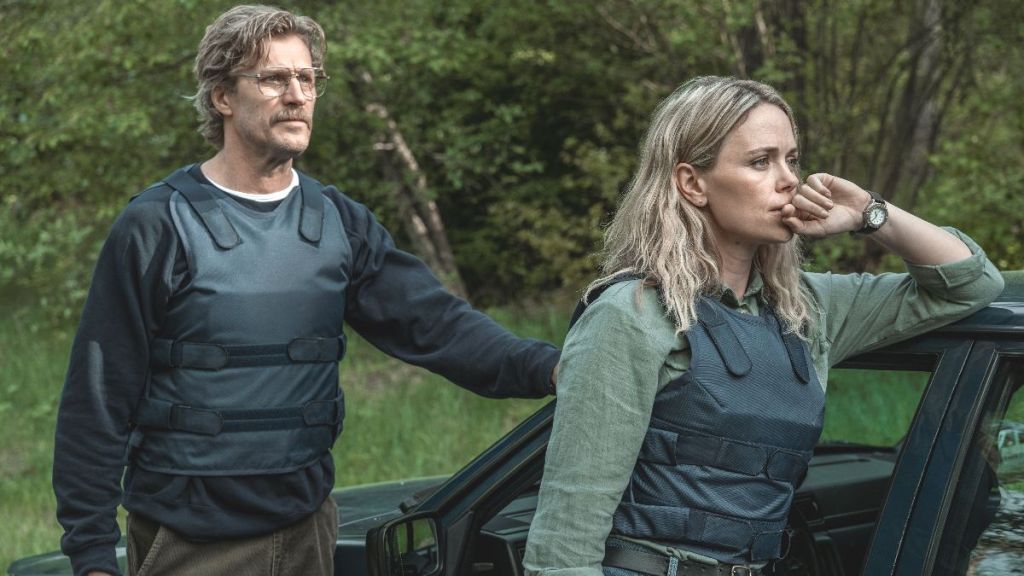
The streaming service Viaplay is bringing TV fans another intense crime drama in Mafia, the Swedish thriller led by Sleepy Hollow alum Katia Winter. It’s the Swedish equivalent to Underbelly, illustrating how organized crime took hold in Sweden in an unexpected way. The final three episodes of the season are helmed by director Tomas Jonsgården (Game of Thrones: Aftermath), who joined TVBrittanyF.com to discuss how such an intricate crime saga comes together.
Brittany Frederick: What was it about Mafia that interested you or stood out to you compared to other organized crime stories?
Tomas Jonsgården: I’ve grown up with with all these mafia movies, and when I read this script, I felt that this [was] something different… with so much happening in Sweden and also in Europe, with globalization and the open borders and the EU [European Union] that started. Sweden was back then a very peaceful country, and this was kind of the birth of organized crime.
I felt like it’s a story about the characters. It’s not so much about the violence. It’s more about the relationships and the desire for power. I was thrilled when I read the script about this—and also the political undercurrents about the war in Yugoslavia. That was what drew my attention to the project.
Are there things that you feel an American needs to know about the history or the cultural context to fully appreciate the events in Mafia?
it’s a kind of universal story, because it’s about this character Jakov. He’s a criminal entrepreneur, and the thing is in the beginning, we kind of root for him, because he starts from the bottom and works his way up. But then he gets obsessed by the power and he takes no prisoners. That’s kind of your universal story; you can really see that in leaders in the world today.
But when it comes to the Swedish aspect of it… this was kind of a new phenomenon. And there were certain people that found a way to to build a criminal career. And when it comes to smuggling cigarettes, the police force didn’t take it seriously. But there was so much money involved in this, and the profit from that financed the factions in the civil war in Yugoslavia too.
You directed the final three episodes of Mafia, which obviously feature some of the season’s biggest moments. How did you approach bringing the season to a satisfying conclusion when telling such an epic story?
I worked very tight with the other directors. We collaborated a lot. But the thing is, [the show] takes some years in between each episode… I got to do the things where our main character, he’s building his empire. We built it together, but it’s a bit different to do the end part of it.
It was a bit complicated, because we can’t have a cliffhanger. [The show] takes like a year to the next episode. It’s more like we are dropped into this world a year later, and then we start to realize what has happened. Life goes on and things have happened, and that’s something that we kind of catch up in the intro. But it was a little bit challenging, because you can’t really have that cliffhanger.
What did you love most about the show? Any scenes or aspects that you enjoyed being a part of?
The ending was quite complicated… I wanted to create the sense [that] the characters are not safe. You never know what’s going to happen with these characters, and I love that. We’re always, in every scene, trying to make turns and twists, and you have no idea where it’s going. That’s something that I am proud of.
We really focus on the characters and on the storytelling. Visually, it’s not this big action movie kind of esthetic. It’s much more gritty and much more authentic. And what I wanted to do is to tell the story very subjectively from our main character. It’s very much from his perspective all the time.
I think that people can still relate to this character that kind of starts from nothing and builds his way up, but then he just loses his moral compass completely. I thought that was kind of a challenge, because we still want the audience to root for him and follow him—but at the same time, he is a criminal. He’s a bad guy. He makes bad decisions and everything in his path is destruction.
But I hope that people will kind of relate to this and connect with him to see that this is still relevant today, and I hope it will be relevant to people outside of Sweden too. [It’s] a different take on the mafia genre because it’s more drama than it is a thriller.
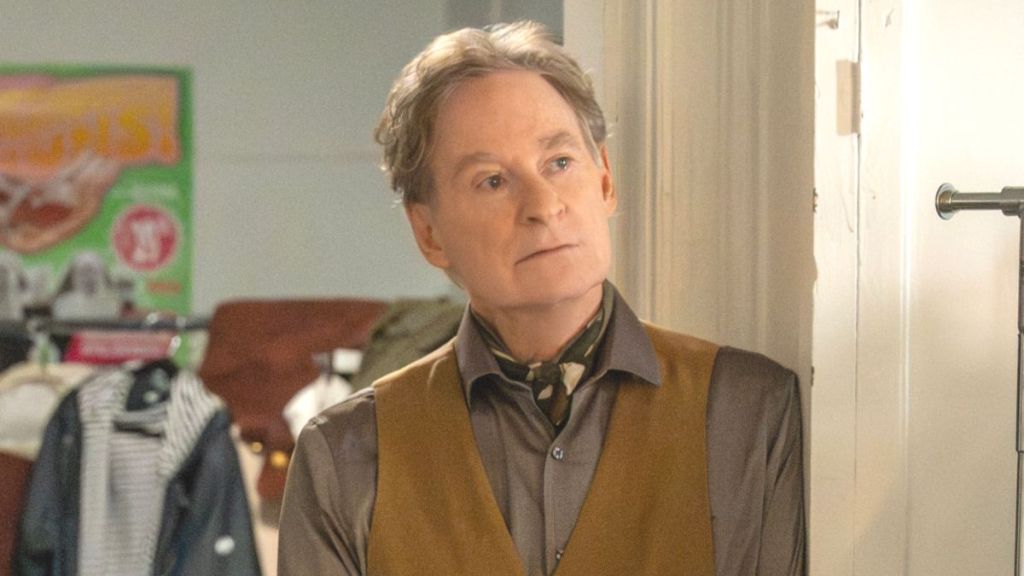
Mafia is now streaming on Viaplay, with new episodes premiering Thursdays through July 24. Photo Credit: Courtesy of Viaplay.
Article content is (c)2020-2026 Brittany Frederick and may not be excerpted or reproduced without express written permission by the author. Follow me on Twitter at @BFTVTwtr and on Instagram at @BFTVGram. For story pitches, contact me at tvbrittanyf@yahoo.com.
 TVBrittanyF.com