

It seems like a given that HISTORY Channel’s The Mega-Brands That Built America has an episode about brands devoted to building. In fact, it’s kind of surprising that it’s taken until Season 3 to get to the Lowe’s vs. Home Depot story. But what could have been the most dry episode of the season turns out to be one of the most surprising.
Season 3, Episode 4, “Hardware Warfare” details both the rise of Lowe’s and the development of Home Depot, and like previous episodes, explains how the brands ended up on a collision course and what happens at that intersection. What makes this installment different (and more unique) is that their stories do not necessarily run parallel. In previous hours, audiences have seen stories that take place around the same time, with folks who become natural rivals. In contrast, the Lowe’s story begins decades before Home Depot even exists.
That creates a quirk in The Mega-Brands That Built America‘s narrative storytelling. Instead of bouncing back and forth between two similar stories, the episode has to start at one point in time and stay in one place, then introduce the other half of its equation. There is still an obvious intersection—but staying with each brand a little longer lets viewers sink their teeth into each story a little bit more.
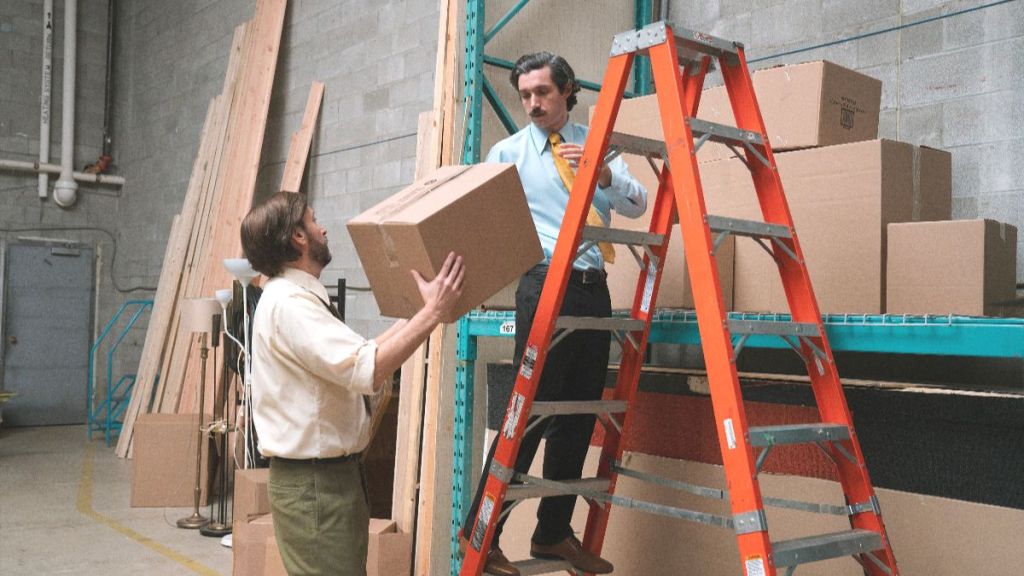
Another interesting aspect of “Hardware Warfare” is how it deviates from what’s expected. What can make some of these biopic-esque stories incredibly uninteresting is they’re always positioned with the same general idea: a lone wolf genius has a great idea and becomes a huge success in the face of skepticism and/or conflict with any of the people in their life. One only needs to look at the previous episode, “Rise of the Internet Empires,” for an example of that with the rise of Jeff Bezos and Amazon. That’s not a bad thing, but that episode found a way to spice up what so many other shows and even movies have done before.
In this episode, The Mega-Brands That Built America showcases how much success for both Home Depot and Lowe’s was a team effort. The most intriguing players in each story are not the people who came up with the idea. In fact, there are moments when the stories become about who’s not there as much as the people who are. And against all this is the backdrop of literally building and creating homes, which provides a convenient metaphor that thankfully, none of the contributors run into the ground. The thematic connection gives the topic some additional color—but this show doesn’t need to use it to make its point.
That point is really how these mega-brands and the competition they create can spring out of everywhere. When one considers the biggest brands in America, names like Amazon and Walmart are easy to think of. It’s not as obvious to recall Lowe’s and Home Depot. Most people aren’t familiar with hardware stores unless they work in the home improvement fields or have an interest in the subject.
“Hardware Warfare” explains why it was culturally (not just financially) important to have a centralized hardware store, and there are some details that will genuinely surprise; there’s a football connection beyond the presence of Peyton and Eli Manning. With this episode, The Mega-Brands That Built America Season 3 cracks a story that the audience didn’t even know ought to be told to a wider audience, and those are the best ones.
The Mega-Brands That Built America airs Sundays at 9:00 p.m. ET/PT on HISTORY. Episodes from all three seasons are also streaming on the HISTORY app, history.com and on demand. Photo Credit: A&E Television Networks/Lucky8, courtesy of the HISTORY Channel.
Article content is (c)2020-2026 Brittany Frederick and may not be excerpted or reproduced without express written permission by the author. Follow me on Twitter at @BFTVTwtr and on Instagram at @BFTVGram. For story pitches, contact me at tvbrittanyf@yahoo.com.




 TVBrittanyF.com