

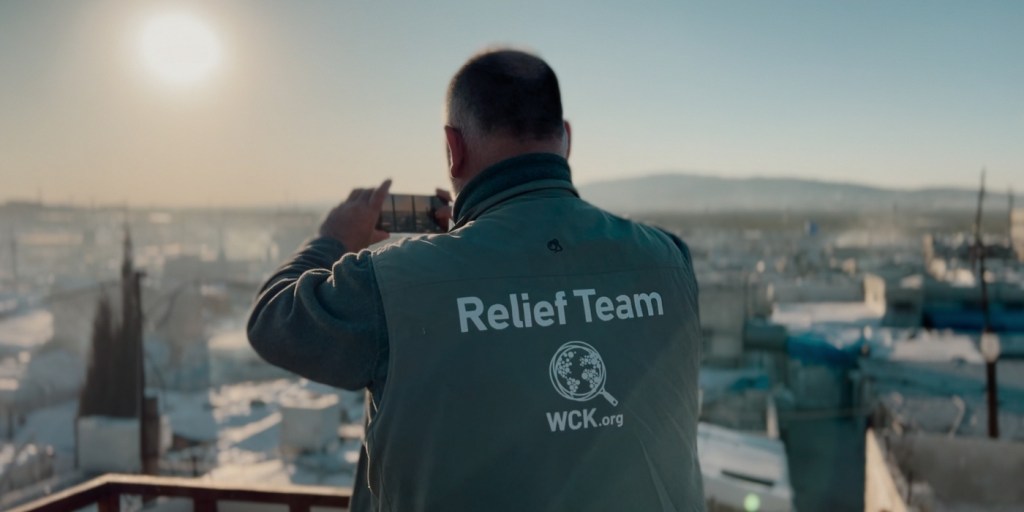
Chef’s Table: Legends is a compelling and often beautifully constructed documentary series that tells the stories of important chefs from around the world. One of the subjects is José Andrés, a gifted Spanish-American chef who has become more than just a globally recognized chef. Andrés also founded the World Central Kitchen, which has provided assistance to victims of natural disasters around the world.
Scoring the episode proved to be an interesting challenge for co-composers David Bertok and Duncan Thum, who combined many of their different skills to create a fusion dish of a score. During an interview with TVBrittanyF, David Bertok discussed the unique challenges of composing a score based on a real person, crafting a varied score, and replicating José Andrés’ approach to fusion cooking in Chef’s Table: Legends.

TVBrittanyF: It’s fascinating how composers can find so much personality and character in a character — but how does the process of scoring a fictional setting or character differ from your approach to a real person like José Andrés?
David Bertok: The first thing to consider is that we’re dealing with a documentary subject. It’s a real person. It’s not fictional. We have to be a little bit more realistic and a little bit more down to earth, as opposed to being in a fantasy world or in a drama where you have to create the character. If you’re in a fiction, you create the character by how they are scored with the music. I think in the documentary, we are leaning way more on what we see and what we get from the footage. We’re making up less, I would say.
I think one of the most interesting creative challenges we faced with Chef’s Table was capturing the full scope of José’s identity You have these different pillars in his story. You have him being this gifted, experimental chef that never rests and wants to discover new things, wants to try out new things, and do fusion kitchen, where he combines things from different cuisines. You have one pillar of him as a chef, and then you have a whole other pillar of him being the founder of World Central Kitchen.
He’s part of this humanitarian effort, going into these disaster zones and dealing with humanitarian crises all around the world. And the third pillar that we were bringing together in our storytelling was just his personal story. He reflects on his life, his career, and the challenge of trying to juggle those two things. It’s a subject in the episode several times, where he asks, ‘how long can I keep this up?’ It’s really tiring to be both chef José and humanitarian José Andrés, with all the responsibilities that come with both.
You definitely have the realism of it being a documentary subject, and that helps you kind of find a quick in into the story… plus, he’s just a very charismatic person. He has such warmth and personality. How can you not just latch on to that and let that inspire you and carry you into the story?

Your score mixes some Spanish guitar with more modern synth-inspired music. How did you find the perfect balance point between those two styles?
I was talking earlier about how this story was about his three pillars: José the chef, José the humanitarian, and José the person. When I started working with my co-composer, Duncan Thum, we just started riffing off all that. It was all given to us. The story, the dialogue, the footage, the way it was all shot. We just started collecting musical ideas, and we knew we wanted to cast a wide net. There’s so much story-wise that you want to tell. You have so many things you want to explore. Sometimes you’re in a very intimate setting, where he’s taking something very personal.
Then you have footage of him going into these disaster zones, and then there are these huge amounts of food they’re preparing in these stadiums. You have these amazing slo-mo shots of food, of discussion over this dish and this restaurant, how it combines two cuisines, stuff like that. There’s a lot to cover! And we kind of went into it with a very open approach, in terms of just finishing what sonic colors we were going to use. It wasn’t going to be humanitarian wholesale, that raises this instrument, and the chef side raises this other instrument. It wasn’t clean-cut; it was usually a mix, like the fusion cuisine.
With the synthaziers, we wanted to depict the modernity and the progression that José was striving for. He wanted the next thing. We then recorded the string orchestra live in Europe. It was a unifying element. With the strings, you have a very intimate sound; it can be very personal or it can express something grand. We see the impact of his humanitarian work, and that was very central to us. We wanted to express that with a big string orchestra, because it was very impactful work. He was literally impacting lives.
We wanted to have this all-encompassing, grand feeling of being connected to something larger. I think the string orchestra depicted that for us. But José is a Spanish chef. We didn’t want to be too on the nose about it, but we had to have a nylon string guitar. That is a sonic pillar as well. The piano is too. The piano feeds into that Chef’s Table tradition of having this neoclassical sound. A lot of times on the show, starting with the main title or piece in every episode, it has this neoclassical vibe.
Several chefs and several seasons and episodes of Chef’s Table have that sound. We definitely wanted this to not be that different. In that regard, we really had more elements than maybe we usually would have. I’m a pianist mainly, Duncan is a brilliant guitar player. We brought in the string orchestra, we had the synthesizers, we had a solo violinist who came in for special moments. When we needed this to go to 11, we brought it.
You’ve scored so many different kinds of shows and films over the years — what are the most important lessons you’ve brought from those experiences to Chef’s Table: Legends?
This was the culmination of many things that I have done over my career. I was able here to to bring them all in. That is one of the things that was very rewarding about this project. I started as a pianist, and I could totally bring that in here… there are moments of what I call real piano music in there. There’s the neoclassical. Now I’ve recorded string orchestras for numerous film projects and TV projects. I was actually just in Europe to record another project for full orchestra.
I try to go to these recording sessions, because you are just so much closer to it. I’m sure the technology is great these days, where you can zoom in and get a high-quality link, but being there with the musicians and seeing how it’s all coming together and conducted, that’s important. There’s always something to learn, because you have these many players, and every instrument has a different nuance. Even within the string section, there’s so much to learn in terms of orchestration.
That was something that was very useful for this episode. We had this wide sound from a small chamber sound to a big, grand string orchestra. So that was, of course, a fantastic thing. And I do have a lot of synthesizers [laughter]. I grew up with progressive rock, and I just love synthesizers. Maybe that’s just for me. It was all these kinds of sonic pillars that we tried to create here, and the story we tried to tell. I have been working in these worlds for a while, so all of these elements helped me. I found a nice, unique sonic blend, and that helped us find something that does justice to José.
Chef’s Table: Legends is now streaming on Netflix.
 TVBrittanyF.com