
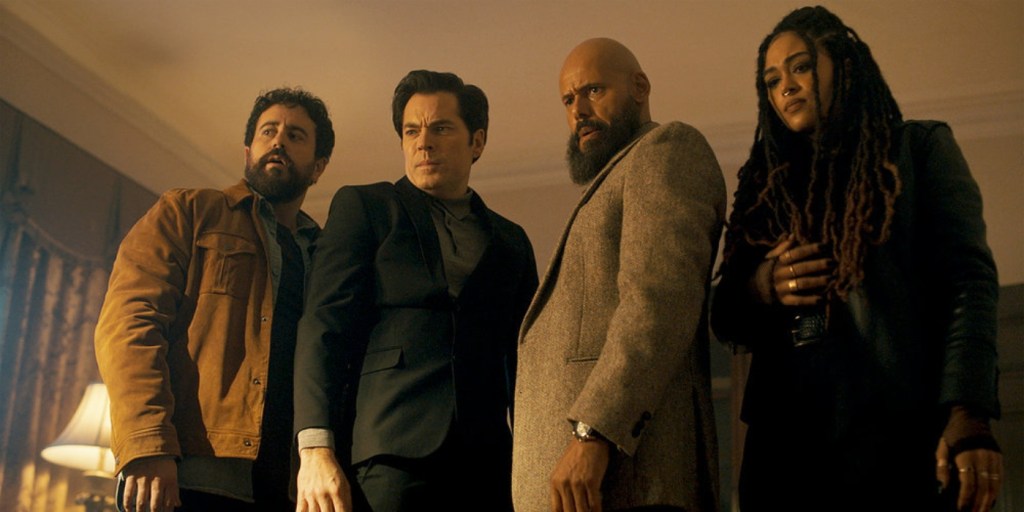
SurrealEstate is a fun genre-blending show on SyFy that benefits from a lot of strong elements, including an appropriately moody score by composer Spencer Creaghan. The supernatural show focuses on a group of house hunters who also have to deal with the supernatural elements that can complicate reselling a home. It’s a clever show that blends horror and melodrama with a touch of self-aware fantasy adventure.
The deceptively fluid tone of the show necessitates a soundtrack that can match that sense of fun, which is where Creaghan comes in. During an interview with TVBrittanyF, Spencer Creaghan discussed his inspirations and influences on the music for the past three seasons of SurrealEstate, the biggest surprises he’s discovered while scoring the show, and the trick to crafting music across genres and mediums.

TVBrittanyF: Congrats on the third season of SurrealEstate! What does it mean to you to still be here and composing this world three seasons in?
Spencer Creaghan: It’s a blessed feeling. It’s rare, in this day and age, where most TV shows don’t make it past Season 1, to work on the same show for a while. Sometimes you don’t make it to Season 2, so to make it to Season 3 [of SurrealEstate]… we’re just thankful to the Gods of TV that they let us get this far. It’s so rare. I love writing music in this way. You can repeat the themes, you can bring things back nd bring surprising things up. This season, we’ve brought some stuff from Season 1 that we haven’t heard in a bit. It was nice to bring back those melodies that weren’t around in Season 2. This is why I love working in TV, especially on a show like this.
What elements of the series have been the most fun to play with, especially in Season 3?
This season was actually a really interesting one with one theme in particular. In Season 1, we introduced a theme that kind of represented Luke and his past. We sort of called it “Luke’s Ghosts,” and it’s not so much actual ghosts but more for the mental and spiritual ghosts that haunt him. That theme appeared again in Season 2, because it was really more about him and his mother rekindling that haunted past. In Season 3, I figured we were never going to use that theme again. We’re done with that plotline. But over the course of the season, we realized the theme wasn’t really just about Luke.
It was about life and the regrets that everybody has. Now we have another character that is going through a similar sense of feeling like their life isn’t where they wanted to really be, and it seems like the things they thought they were going to have in life, they just aren’t getting them. That music can come back now in a different way… even though it was intended to originally just be about Luke, I love that in SurrealEstate the themes can become their own personalities. They can become their own characters. It allows us to take them away from just the characters they were originally written for and expand into something else.
The show’s score has a lot of influences and unique musical touches. What are some of the inspirations and influences on your music for SurrealEstate that would surprise audiences?
I think the biggest one would be the folk instruments. I think when you think about a real estate ghost show, I think you sort of have a sound in mind. Maybe some piano, maybe some strings, a sort of Gothic essence, but something a bit more modern. I knew that kind of going in, that we would certainly have to tip our hat to that style because it is part of the tone. But early in Season 1, I had this idea of just bringing in folk instruments, because it keeps a sense of anicent-ness, this sense of culture and of a long past history. A lot of these stories are about ghosts that have lasted for 1000s of years.
Some of them are demons, some of them are vampires, and some of them have specific evocative depth that I wanted to tip my hat to. We also try to connect the characters with their culture. We have episodes that dealt with characters from Hungary and from China, so we have music that is a part of the characters’ culture. Having those folk elements has helped the show get of just being supernatural TV. It sort of becomes its own thing.
There’s also the fact that they filmed the show in Newfoundland, which has this weird ethereal quality. Celtic instruments are a big part of that culture, and this feels like a tip of my hat to Newfoundland as well. It’s all about combining folk instruments from around the world with gothic elements. And I’m a metal guy, there’s a lot of metal leaning in there too. You get this blend of all the stuff that I love in music. It’s this mish-mash of sounds and styles, but it kind of became the sound of the show, and I’ve never heard it anywhere else. We’re doing something pretty different, and that’s exciting.
You’ve done music for film, television, anime, video games — how does the genre and medium of a story impact your approach to bringing music to it?
I think it helps to love art. I love movies, gaming, animation TV, I’m watching so much of it all and consuming as much of it as I can. I think being aware of what’s out there allows inspiration to come in from all these different angles. No matter what genre I’m working in, I can tap into the cliches of the genre and then think about what I can do differently. Sometimes it works. Sometimes you think about how you would do something, and you realize the classics are there for a reason. You learn really quickly why big, loud whacks work well for jump-scares. It really makes people jump out of their seats. [Laughter].
It’s about embracing it, but wondering how to do it differently. It’s sort of always the question I have. What is that works within the medium or the genre that you sort of expect, and how can you take it beyond that… That’s always a balance you have to find. I just wrapped up another show, a horror that’s coming out on AMC in June called Hell Motel. That has slasher stuff. Some things we didn’t do, we were like, ‘Well, this is what the genre expects.’ Some things are expected and some aren’t. Sometimes both happen in the same minute or moment. You’ll have something really scary, really humorous, and really heartwarming together. Feeling out that balance is really challenging with a show like SurrealEstate.
Thankfully, because I’m so aware of the medium, I’m able to go ‘If I do this for the comedy moment, I can bring out the humor without making it too much of a bump. I can put in a theramin and that’s enough to give us a bit of levity.’ Then, to keep us in the horror mood, add a little bit of something else, maybe a piano can pull us back into the horror. So much of it comes from my love for these mediums. So much of it comes from passion. If I were an audience member, what would I want to hear?
I get to be a nerd. You have to embrace being a nerd. I think so much of who I am as a composer — I love fantasy and science fiction. I love supernatural stuff, mythology, and folklore. The projects that I like to work on often connect with that, even if I don’t always find ways to insert it in through the music. What if the music could become another entity? How can we play with that? How can we make that happen? That is something I’ve resonated with while composing stories like this. How can music be a character and help build a world?
SurrealEstate is now airing on SyFy and available to steam on Hulu

 TVBrittanyF.com