
Warning: The following contains spoilers for The Amateur, now playing in theaters
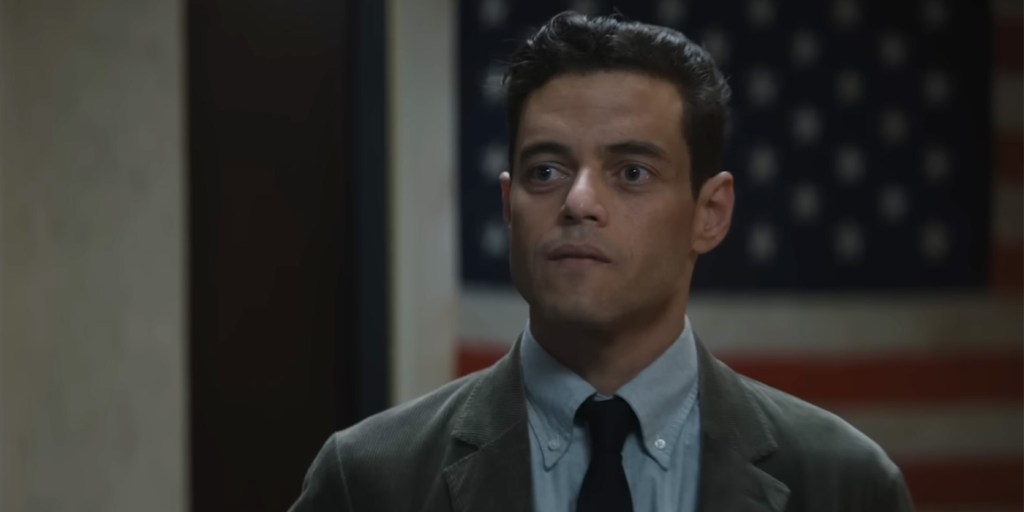
Starring Rami Malek and Laurence Fishburne, The Amateur is a gritty new take on the espionage-thriller genre. After Charlie Heller’s wife is killed, the CIA analyst decides to get justice even if he has to reveal the truth across the world and claim it himself.
Uncovering a conspiracy within the CIA in the process, Charlie’s mission for revenge ends up pushing him beyond some very big moral lines. During an interview with TVBrittanyF, The Amateur screenwriter Ken Nolan discussed the biggest lessons he’s picked up after decades in Hollywood, how the movie’s ending was originally different, and the biggest influences on the film.
You’ve got decades of experience as a screenwriter, with films like Black Hawk Down, The Company, and Transformers: The Last Knight under your belt. What would you say has been the most important lesson from those experiences that you brought to The Amateur?
Well, I started on The Amateur in 2014, so a big lesson is that these things take time. They’re glacial, and most of them don’t happen. That’s just the game you sign up for. It doesn’t mean it doesn’t hurt. This one, it was not going to happen, then it was, then it for sure wasn’t going to happen, and then it became maybe it was going to happen — until it did. I’ve learned of what I call ‘Fire and Forget.’ You’ve done your job; now it’s out of your hands. Don’t let it hurt that much, but it is a bit excruciating to paint these paintings and then have no one see them.
Another lesson I learned is that having another writer rewrite you isn’t always horrible. It can feel bad to not be the solo writer…. You want to be the sole writer. You want to be the novelist of the movie. You want to not be rewritten. But sometimes you don’t have the ability to do the things that other people are really good at. It’s tough.
There are different abilities, basically. But Scott Frank came in and basically wrote those Jon Bernthal scenes, and he wrote the thing with Charlie Heller having a plane. He wrote me an email, and he said, ‘Look, Ken, they offered me a ton of stuff. There was a stack of scripts. I saw yours. I know I can help you, and that’s all I’m going to do. I’m just going to do the surgical stuff.’ And I read it, and I said, “Oh, this is so good, I never would have thought of that!”
That’s the other big lesson I’ve learned. That was a great lesson. Don’t give up. Just do the best job you can. There was also constant rewriting. So toward the end, they were having trouble with the third act, and brought me back in and said, ‘Can you help?’ We cannot figure this out.’ Just be ready to write 15 versions of the same scene, even if they’re just little tweaks. Sometimes you go wild, and they rein you in and say, ‘You know, you’re onto something there.’

In a big departure from the original novel and the previous film version of The Amateur, Charlie doesn’t actually kill the man who murdered his wife. From your perspective, why is that how the film had to end?
I had Charlie always killing Schiller at the end and dealing with the moral guilt. Does he feel satisfied with his revenge? I don’t know the answer to that question. And I think it was through [The Amateur‘s other credited screenwriter] Gary Spinelli and Rami working together, I think they had conversations where they said, ‘What if we don’t kill Schiller? What if Schiller gets some kind of satisfaction from something else? That’s why that third-act conversation was so difficult and tricky.
You’ve got these two amazing actors just talking to each other, but how are you going to satisfy an audience when he doesn’t get that final revenge? It still needs to feel somehow complete, like he’s done his job. So Gary Spinelli came up with this idea of, okay, they’re on a boat. Charlie takes control of the boat, and he gets everyone arrested. He’s made Schiller talk to him for a while so they can get over the Finish border, and that seemed to be a satisfying third act. In all my versions, and in the original book, Charlie kills Schiller. That was something we discovered along the way… if I rewrote it, I’d probably have them fight and have Charlie accidentally kill him. But I am very happy with the way it turned out.
I mean, [having Jon Berthanl’s Jackson pop in and kill Schiller] is not a bad idea… I’ll write a bunch of bad versions. That’s another lesson. Don’t be afraid to write really crappy versions, because there’s going to be something in there that you’re going to use. You’re going to learn even from rewriting a scene over and over again. It’s a great lesson you’re going to learn. How long can the scene be? How much can they talk? They can’t have monologues. How fast is the patter of conversation? What are they saying without saying it? That’s the hardest part to write. How can I have the character say something without saying it on the nose? That’s the constant challenge.

A big core element of this film is the way someone like Charlie isn’t a killer and that he struggles with his actions even leading to death — but he does slowly become more accustomed to it. The fact that he spares the man he’s been hunting then takes a much more moral edge. Was that kind of thematic element present in the entire process, or did that develop over time?
In my original scripts and documents, I had Charlie not really questioning himself that much. It was really Rami and Gary working together, asking what happens to this guy’s moral compass on his mission. I didn’t have him feeling so guilty, so overwhelmed, which is why that first Gretchen Frank murder is so effective. Charlie is feeling tremendous guilt; he’s just discombobulated.
He’s not like Lawrence Fishburne’s character, who tells him he’s not a killer. That realistic reaction is something I didn’t really have in my drafts, and that was done through development, through the producer saying listen to Rami. That’s the thing that differentiates this movie from a Jason Bourne movie. The viewer never questions Bourne’s ability. That’s not our movie. Charlie can never fight, pull the trigger, or punch anything. So, what’s left?
What surprised you the most about The Amateur?
Seeing James Hawes’ direction and how gritty the film looked was such a pleasant surprise. I’ve really noticed a lot lately; these Netflix movies are really over-lit and bright. You can just eat them like candy. I really wanted this film to look how it turned out, like a 70s paranoid thriller. Stuff like Three Days Of The Condor, The Parallax View, The Conversation. This is a 70s movie, a thriller where your suspension of disbelief isn’t pushed so far. When Rami flinches at the explosion, people tap into that. That’s how you would react. The character is acting like how we would act. That was the kind of movie we were making.
The Amateur is now playing in theaters
 TVBrittanyF.com