
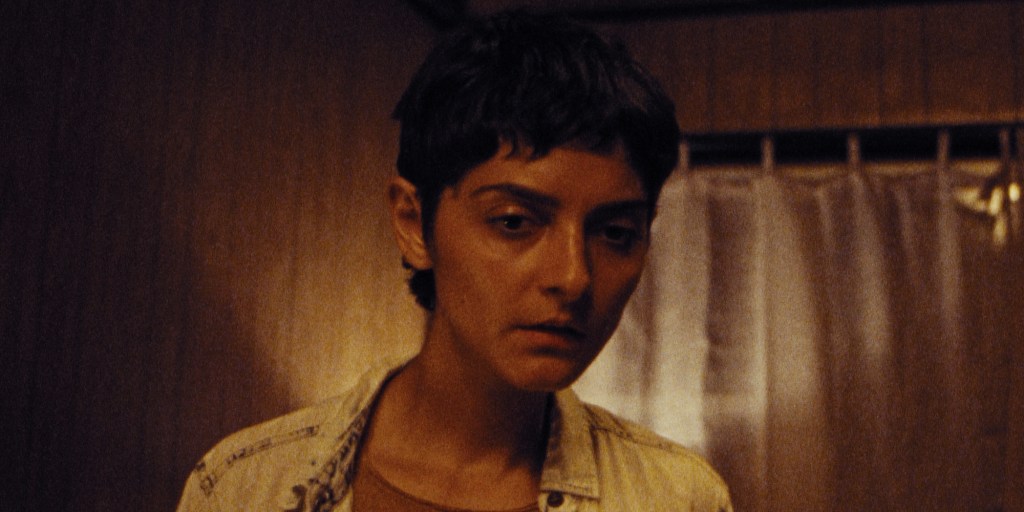
Gazer is an impressive piece of indie filmmaking, a confident feature-length debut for Director Ryan J. Sloan alongside producer/star Ariella Mastroianni. Mastroianni playus Frankie, a woman struggling with dyschronometria and desperate to be reunited with her daughter. Using a tape recorder to organize her thoughts, Frankie’s internal narration becomes a constant in her life. This noir touch soon extends to her entire life, with a mysterious woman and an unexplained murder dragging Frankie into a world of deception that may even extend to her own perception..
It’s an impressive film, especially in light of Sloan and Mastroianni working to bring the feature to life as a true independent production. During an interview with TVBRittanyF, Gazer Director Ryan J. Sloan and star Ariella Mastroianni discuss the inspirations behind the film, the freedoms afforded to the pair in making a truly indie production, and the biggest surprises they discovered during production.
RELATED: J.P. Karliak Talks X-Men ’97, Smurfs, And The Importance Of Turning Fandom Into Activism
TVBrittanyF: This is such a clear labor of love from both of you. What was it about this film and this story that really caught your attention?
Ryan J. Sloan: I think, more than anything, it was the amalgamation of the films that we love and that we wanted to see. It’s thinking about Brick, thinking about Lee Chang-dong’s Burning, Paul Schrader films like Taxi Driver to First Reformed — many of those films mix so many different genres into a character study. But all of those films also follow a male protagonist, and I am fortunate enough to know this incredible actress and be best friends with her.
It was kind of the perfect opportunity to tell the story from a female perspective in our current era where digital technology has taken over our lives. What happens when you have somebody that can’t participate in that, who is forced to live on the outskirts of society? That was the thing that excited me the most as a director.
Ariella Mastroianni: We were actually just talking about this… Films like The Conversation or Burning, and Dancer in the Dark, were a reference for us for Frankie. Frankie is a voyeur. She’s living her life as a ghost, with all this trauma that she’s carrying. But I love that. Through genre, we share her inner life. I love that dynamic of this outer persona and this inner life that she’s carrying with her. I think it was just the idea of doing a character study within the context of a noir, exploring a greater genre piece. That was challenging and fun for us to examine.
How does this compare to your previous experiences in filmmaking?
Ariella: Because this was our first feature, because we were entirely self-financed, because we were entirely self-produced — we weren’t doing it for any other reason other than to make the film that we wanted to see. The industry wouldn’t make a film like this, which is, I think you know why to us, it felt so special and felt so urgent. It’s why we really wanted to make it. We weren’t seeing the film being made.
Ryan: If the industry did want to make a film like this, it would end up being a limited series on Netflix. They don’t make something like this, unless it’s David Fincher or one of the other great directors.
Ariella: With Gazer, we had full creative freedom. Hopefully, this is not the first and last time we do, but when you have full creative freedom, you’re not doing it for any other purpose beyond really wanting to see this film. I think that was really our North Star.

Was there ever any consideration of approaching it in a different medium, like television?
Ryan: No, because I have no interest in directing television [Laughter]. I liked The Sopranos, I watched Game of Thrones until it got bad. I mean, Breaking Bad is probably the best television show because it never drops off. Lost falls apart.
Ariella: Succession was great.
Ryan: Succession was great, but some moments of that even waned. There are certain points where I’m like, ‘just make a fucking movie!’ I really like Severeance, and I love that idea. But there’s a part of me that thinks that could be a great two, three hour movie.
What really surprised you about this experience?
Ryan: Everything was storyboarded from beginning to end. Because we were shooting on film, we did a lot of rehearsals. We didn’t have a lot of money, sp we had to shoot very judiciously. We shot in a diner, and it was a pretty long scene where the camera is for the coverage. We only shot a specific line, then we cut, move the camera, pick it back up from that line… but there’s a beautiful moment in the diner that, where Renee Gagner, who was playing Paige, the way she was looking at Frankie while she is talking to the waiter.
It’s one of my favorite moments in the film. The other moment, there was this Cjolean film we saw in New York, I stole something from the movie because it was so cool. We walked out of the film and I said, “fuck, I’m putting that in Gazer.” It’s such a great effect and then I used that in the final nightmare sequence. I was also inspired by El gran movimiento.
Ariella: We definitely did put Frankie through the ringer. But what I love so much about Frankie is she is never like, ‘oh, woe is me.’ She’s a survivor. She wants to get to her daughter. She’s living as best as she can. She’s a very strong woman. Even though all this has happened to her, she is focused and determined to do what she needs to do to get back to her daughter. I love that so much about Frankie. I love that we’re taking this woman who is living like a ghost on the street. This could be anybody, and you just never know what they’re going through. She has such a rich, violent, chaotic internal life, but she keeps her head down and she focuses on on surviving. I love that so much about her.
Gazer opens in theaters April 4.
 TVBrittanyF.com