
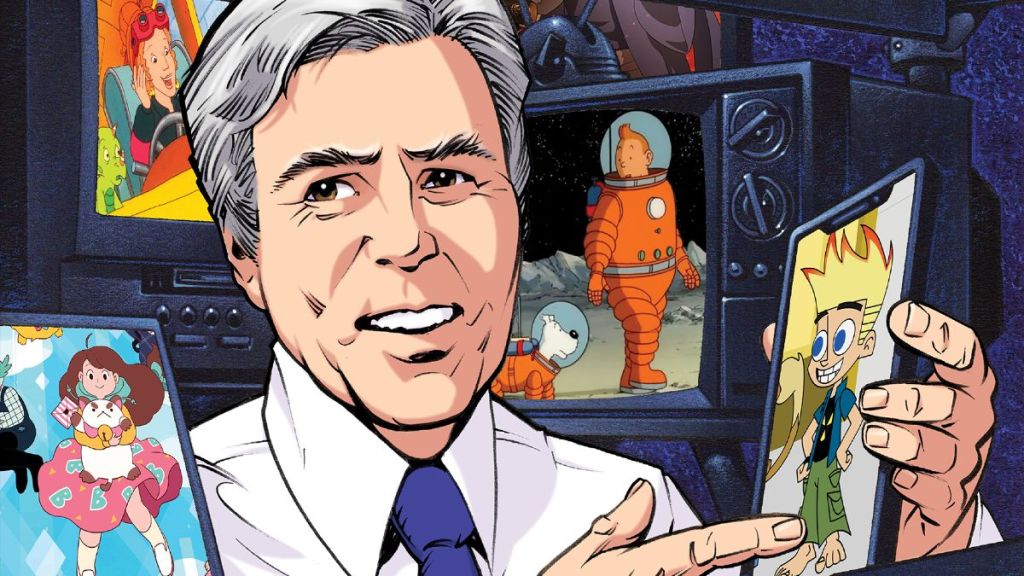
Most of Michael Hirsh’s life is wrapped up in children’s animation, and now the co-founder of legendary studio Nelvana is opening up about his love for the medium in Animation Nation: How We Built a Cartoon Empire. The book not only discusses how Michael and his colleagues worked with iconic properties such as Babar and The Magic School Bus, but goes into his own “transformative” experiences with storytelling growing up. It is a true love letter to animation, from someone who knows the medium better than most.
I spoke to Michael about what motivated him to write the book, how much the landscape of kids’ animated TV has changed since the 1970s, and the project that got away. Plus, he delves into his connection to the Star Wars franchise.
Brittany Frederick: What motivated you to write Animation Nation? Was it simply wanting to tell your story, or was there something more you wanted to talk about?
Michael Hirsh: I wanted to write this book in part because I have written and had books written recording the history of projects I’ve been involved in before, and I’ve done documentaries on how we made [our] shows… I think you need to record this kind of history or it gets lost.
You have an extensive career to cover; there’s half a century that could be talked about. What was your writing process once you sat down to put the book together?
I really wanted to begin [with] my story. My parents and my upbringing, because I’m the son of Holocaust survivors, and I think that growing up in that environment and hearing the stories of the Holocaust obviously influenced how I looked at things. And then I was a young immigrant moving from Europe to Toronto. I wanted to share the stories of being a young immigrant, because it also affected the types of shows I made.
I made a lot of shows co-producing with Europe. I did Babar, Tintin, Pippi Longstocking, Neverending Story and many more. I had a broader sense of children’s literature and things that appealed to kids, not just stuff that came out of the US, which would be more typical.
What is it about children’s animation that you love so much?
I think it’s really remembering as a kid, how transformational it was for me to sit [in the] public library [and] listen to the librarian on a Saturday read books to kids. She read Babar. She read Curious George… and it made me fall in love with children’s literature. I think that love for children’s literature kept me interested in the business. The other thing that has been fascinating and great is just growing with an industry that has never stopped changing since I came into it.

What are some of the most prominent shifts you’ve observed in the industry, as not only the medium has grown but also the way kids consume entertainment and even the kids themselves have changed?
When I started, there were three US networks that were the biggest part of the market globally—ABC, CBS and NBC. And there were more US networks than there were cable specialty channels, like Nickelodeon and Disney and Cartoon [Network]. They became global channels and all around the world, people started channels, so I’ve had the benefit of having a growing market through most of my career.
What I’ve seen evolve is the quality of production. When I was just breaking into the business, I was sitting here in Toronto, starting a company called Nelvana with two friends [Clive A. Smith and Patrick Loubert], and we had ten dollars between us. We really were a bootstrap company that we built ourselves.
The biggest market was the US, and there were three US networks that played Saturday morning shows. And that was the bulk of what people did for children’s entertainment. [But] the quality of animation had slipped from the theatrical shorts that I watched as a kid in a movie theater, like Bugs Bunny and the Disney shorts… For television, it had really come down to a very low quality
So at Nelvana, we made a decision that we would put an emphasis on quality, because we thought how else do we break in? People weren’t buying shows in Canada at that time. There was no industry here, but we felt if we made an artisanal product that had love and quality, that would help us break through. And that is in fact what happened.
Is there any particular story in Animation Nation that you’re excited for readers to discover in the book?
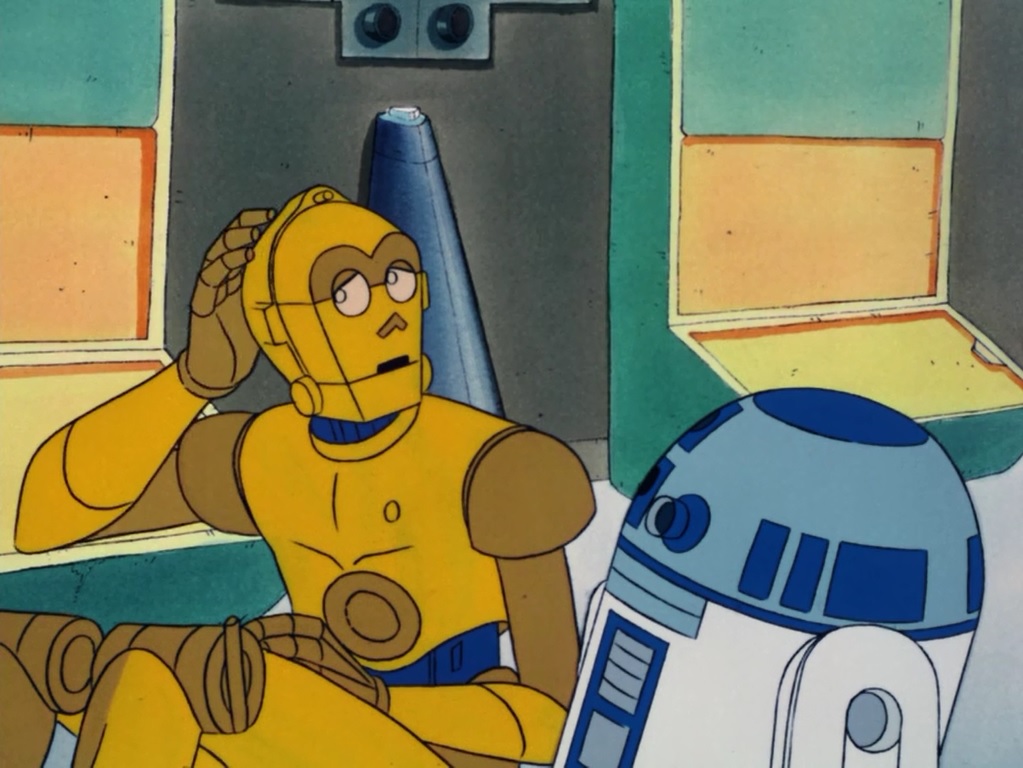
The book starts with a phone call that I get from Lucasfilm because they had just seen a TV special called A Cosmic Christmas. A Cosmic Christmas had been syndicated across the United States, which means it was hard to find… So it was kind of a shock that George [Lucas] had actually seen this and fallen in love enough with it to want to have us make his first animated cartoon of Star Wars. That section of the book brings back probably one of the most important, decisive moments in Nelvana’s history.
We were beginning to succeed, but all of a sudden we had an opportunity to work on the world’s biggest property, Star Wars. A cartoon called “The Faithful Wookie” was part of the [Star Wars Holiday Special] that aired on CBS at the time, and that catapulted us into a different league and made us a much better company.
Not just because we made the cartoon but working [with] Lucasfilm—we’ve worked with Ben Burtt, who did the sound design for the movies, and learned a lot about sound design from him. We learned from Joe Johnston about how to improve our design. We got input from all of George’s people, and it was that combination of being selected and working with the world’s best people in these different production categories that set us up to become the successful studio we became.
Whether it’s Star Wars or Babar, have you noticed anything that’s common to your successful projects? It’s not simply a matter of finding an established IP to develop; there has to be something that engages the TV audience.
What makes the show work and what makes the show stand out is when you can identify what’s going to be special about that show. What are you going to do with that character that you know other shows aren’t doing? What more do you need to do? There’s a lot of analytics that go into it. It’s not data analytics, it’s really creative analyzing of a property to understand, what’s the appeal?
We recognized that Babar was a family property—that there was Babar and Celeste, husband and wife, and his childhood, his backstory. He had his children and he had his relatives and he had his friends, and he was recognizing that community and building on that community. That made the Babar show work. We focused on the charm and warmth of the character. We didn’t do that same thing for other shows. We went through that process for every single show, to give it something that we felt would give it a good life beyond its first run.
Audiences know Nelvana for so many projects, but are there any that flew under the radar that you’d like Animation Nation to draw some more or renewed attention to?
One is George and Martha, which ran on HBO [Family] in the USA. It was based upon books by James Marshall and was executive produced by Maurice Sendak for us. And it’s a really special show; reaches families, not just kids.
One of the things I’d like to leave [readers] with is the thought that we’re living in a time where young animators have never had it so good, because they don’t have to go through a gatekeeper. They can make shows [and] put them on, YouTube, they can put them on TikTok, they can put them on Facebook, they can put them in lots of different places and new platforms are always being created. Their access to the actual viewer and the ability to build a business in their own time by themselves is unique. That’s a great opportunity that [readers] shouldn’t lose out on.
With all the characters and worlds you’ve gotten to play with over your career, is there anything you wanted to do it and it just didn’t come together?
We went after Curious George. I met with Margret Ray, who was the widow of Hans Ray—they created it [together]—and during the whole process of trying to get her to agree to give us the rights, she kept telling me George was real. I heard her, but I didn’t really understand what she meant by that. I kept thinking, we’ve got to make the drawings more realistic for George. It turned out what she really meant was George should be a live monkey, or it should be live-action. And she gave the rights to somebody who walked in and said they wanted to make a live-action movie. Of course, they ended up doing an animated project.
Another project that we actually had the rights for, but couldn’t get a network to agree to buy, was Rocky Horror Picture Show. I think we had captured the essence of the humor and the fun of Rocky Horror Picture Show. And it was probably ahead of its time to turn into an animated series.
Animation Nation: How We Built a Cartoon Empire is now available at Amazon.
Article content is (c)2020-2026 Brittany Frederick and may not be excerpted or reproduced without express written permission by the author. Follow me on Twitter at @BFTVTwtr and on Instagram at @BFTVGram. For story pitches, contact me at tvbrittanyf@yahoo.com.
 TVBrittanyF.com