

When the Mobile Police Department officially announced that it was leaving The First 48, fans were incredibly upset—but they shouldn’t be the only ones. Mobile’s exit is a huge blow to the A&E true crime series. However, it’s also a loss for the city of Mobile and for the bigger picture of law enforcement in the media.
Mobile’s departure had been discussed for months, but local news outlet NBC15 made it official in January 2024 with some highly critical remarks from police chief Paul Prine. Prine candidly admitted that “I was not a fan [of the series] when I became chief, and we worked through that,” suggesting that he’d made up his mind about the show before the city’s contract expired.
Prine is entitled to his opinion and to do what he feels is best for his department; he serves the people of Mobile and not a TV audience. But if one continues reading his comments about The First 48, they indicate a myopic view of what the show is and what it can accomplish. The series will go on and Mobile will move forward, but both will be affected by the end of their partnership. And it’s not just them; the loss of Mobile from The First 48 is a step backward for how law enforcement is perceived nationwide. Thoughts like those expressed by Prine keep great officers like the members of Mobile Homicide from doing even more good.
MOBILE HOMICIDE’S IMPACT ON THE FIRST 48

The social media uproar following the NBC15 report was a reflection of how much Mobile means to viewers of The First 48. Since their arrival with the appropriately titled “A Murder in Mobile” in 2017, the Mobile Homicide team had become the show’s second most popular department, and at one point they were getting even more attention than the stalwarts of Tulsa Homicide. Season 23 began with a two-hour Mobile episode, “Unforgotten: Mothers and Sons,” and new commercials that exclusively highlighted Mobile detectives. Mobile is also the only unit in The First 48 history to have an episode devoted to one of its officers; Corporal Jermaine Rogers was the focus of Season 22’s “The First 48 Presents Close to Home” special.
But that episode aired in January 2022—and just shy of two years later, the city is gone from the show (though previously filmed installments will continue to air for a while). It’s a massive swing for a department that was one of the pillars of the program. Mobile Homicide had the potential to last as long as Tulsa because of the high caliber of their officers. Both on the street and inside their unit, the detectives and supervisors of Mobile are not just effective investigators; they’re remarkable humans.
Corporal Julius Nettles is the example of what a police officer should be. He’s a sharp interviewer, principled, respectful, team-oriented but also conducts himself like a leader. In all likelihood, he’ll be in charge of a unit someday. Rogers has been the best proponent for community policing across the entire show; it’s a great story to see him improving the city he grew up in, and the way he interacts with people needs to be taught to every police officer. Not only does he engage with the community—the community also responds to him. Before his departure, Detective Glenn Barton wasn’t just solving crimes; he was actively trying to uplift people.
Mobile provided The First 48 with important growth at a time when the show could have stagnated. After the departure of Atlanta Homicide, the show relied mostly on Tulsa detectives John Brown and Reggie Warren for representation. Mobile gave viewers five new officers of color, including supervisor Lieutenant (now Captain) Charles Bagsby, Jr. and a woman in Detective Kenyada “KeeKee” Taylor. Taylor’s no-nonsense approach to her job likely reminded longtime fans of Sergeant Caroline Mason from Memphis Homicide—one of the people whose presence helped make The First 48 a success. There was further strong leadership at the top of the unit through Bagsby, Lieutenant Stan Ladnier and particularly Sergeant Kenneth Gillespie. They were people that audiences wanted to work for. And their team did things differently, though no less memorably, than Tulsa Homicide.
This representation was important because law enforcement is too often treated as a nameless, faceless institution. When people do think of police officers as individuals, what comes to mind is primarily white men. Mobile reminded the audience that there are officers of every background and showed officers of color who weren’t just included—they were getting promoted. It reinforced the message that policing doesn’t happen in a vacuum; there’s one system, but every city has different needs and every detective has their own personality. Viewers also got to live in a healthy workplace that set all of its members up for success, whether it was Gillespie quietly nudging the team, the way the detectives supported one another (see “The Deadliest Sin / Bloodlines”) or Barton’s boundless energy ensuring that there was never a dull moment in the squad room. Tulsa Homicide remains the gold standard for The First 48, but Mobile was their perfect counterpart: a unit that grew in front of viewers’ eyes and found its own unique voice.
WHAT THE FIRST 48 MEANS TO LAW ENFORCEMENT
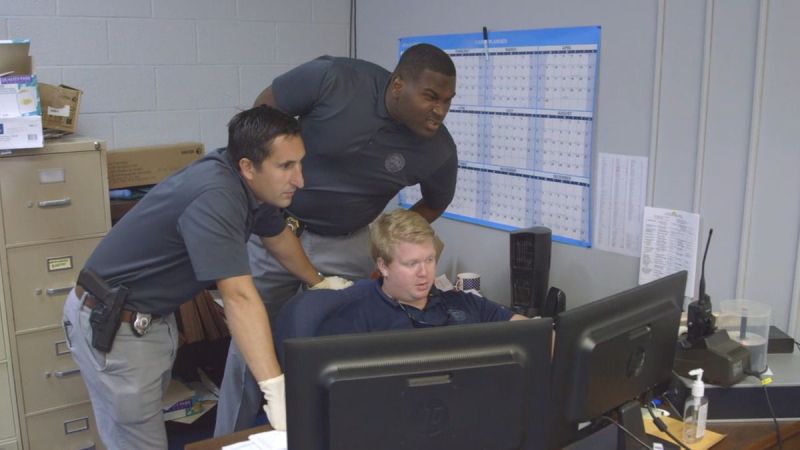
Law enforcement has always had a relationship with the media; many episodes of The First 48 have documented how departments work with local news outlets to disseminate information. But what gets overlooked is that the police have also always been connected to the entertainment side of the media. Police have long been a favorite subject for scripted stories, even before television became popular; the Dragnet radio drama premiered in 1949. In the unscripted arena, Cops most notably arrived 40 years later in 1989, and since then there have been dozens of reality TV shows that claim to explore the inner workings of law enforcement agencies. With the explosion of interest in true crime over the last decade, there’s currently an oversaturation on the subject.
The sore spot is that the broader category of entertainment puts documentary shows in the same basket as scripted crime dramas—and it doesn’t help that there are plenty of reality TV programs happy to blur the line between the two, creating their own misconceptions. The importance of The First 48, and a fundamental reason for its almost 20 years of success, is that it has learned to separate itself from all of that noise. Early episodes got too close by following detectives home; Season 2’s “Show Stopper / Silence in the Grove” was vastly uncomfortable when it included footage of Kevin Ruggiero finding out that his fiancee had left him. But the production has grown into its current form by stepping back and letting them speak for themselves, whether it’s through their work or their own words.
That is the most effective way to inform and educate about law enforcement. The perception of policing in the United States has been skewed negatively for a long time for a wide variety of reasons, and every day police deal with negative headlines—some of them earned and some of them not. If police chiefs like Prine don’t want to have “a negative image to the community,” then they need to present a better one. But it also has to be honest, without any melodrama or fanfare. The First 48 is the best tool that law enforcement has right now because of its ability to show police officers as individuals—not just a badge or a department—and the production getting out of their way. People need to understand who’s doing police work, why they’re doing it and that there are good outcomes.
The Tulsa Police Department has an incredible understanding of this. Tulsa became the show’s longest-running department in 2023, because Tulsa Homicide has every reason to be proud of not just their fantastic solve rate but the character of their detectives. Every single member of that unit is someone that people can look up to. They are ambassadors for the city of Tulsa and for law enforcement because of the fact that viewers see them every other week. People feel like they know them, which humanizes police officers as a whole. Fans also gain a better understanding of police work and they can carry that context with them instead of relying on a negative news cycle or the dramatic stereotypes they see in scripted shows. Of course The First 48 is very entertaining, but it’s not an entertainment show. And because Tulsa approached it positively—from the police leaders who keep renewing their contract to the detectives who let the cameras follow them around every day—they’re enjoying a positive outcome.

WHAT’S NEXT FOR MOBILE AND THE SHOW?
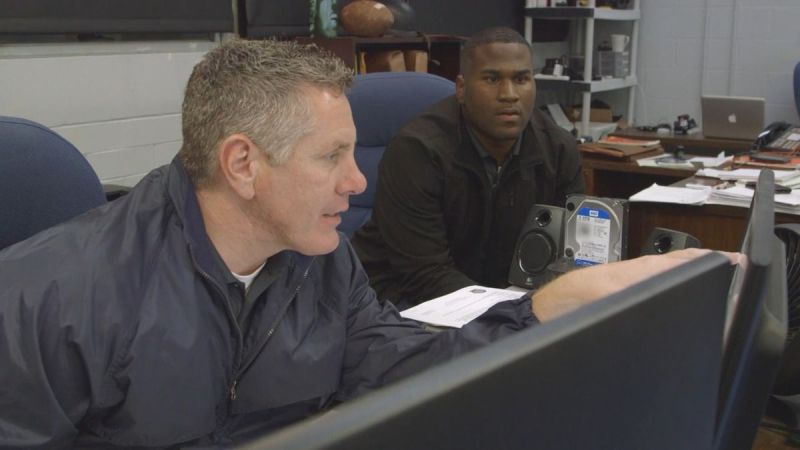
Mobile’s departure from The First 48 has an effect on both parties. Prine’s decision to exit the show sounds like it was influenced by negative headlines regarding cases featured on the series—in less than a month, the city saw two murder suspects acquitted after their arrests in the episodes “Final Celebration” and “Masked in Mobile” respectively. In the former, the suspect’s attorneys threatened to sue both Mobile and the series. “The overall image of the police department and the city of Mobile is my responsibility as chief of police,” Prine claimed, and he’s half right.
Having television programs document police work has been controversial before, and it’s become moreso since police have come under increased scrutiny and attorneys have seized upon the presence of TV cameras. Cops‘ legal issues date back to 1999 and Live PD was at the center of a shocking court case in 2020, after it came to light that footage related to the death of Javier Ambler had been destroyed. Then-Williamson County Sheriff Robert Chody, who had appeared on the program, was indicted as were two former sheriff’s deputies. The First 48 has not been immune to this concern, nor has it been perfect. The production history includes lawsuits and one criminal case. It’s completely understandable that Prine would want to avoid any more issues than those already publicized.
But the image that The First 48 presented of Mobile Homicide was a positive one, and neither Prine nor the show are responsible for anything beyond that. They can’t make murder look better or change the people who get involved in these cases. In fact, they’d be doing a disservice if they only showed the good parts or happy endings, because that’s not truthful. The way to improve is not to avoid the risk of negative headlines—it’s to provide positive examples. It’s to have the conversation, whatever it turns out to be. People’s opinions of the police will never change if the police aren’t willing to try and change them, and that means more than sound bites. It means not taking away the biggest opportunity to see what your department is really about.
The series, meanwhile, has a massive void to fill. Once the previously filmed Mobile episodes run out, there are only two departments left: Tulsa and Gwinnett County, Georgia. Tulsa has a strong fan base but it can’t carry the entire series, because the whole premise is to follow homicide units around the country. Gwinnett has yet to generate the same excitement. A new department is definitely needed yet it also has to be the right one: not simply one with an above-average closure rate, but one that is still diverse and has detectives worth following. The difference between this series and its dozens of competitors is the aforementioned human element, not treating the detectives as interchangeable parts.
Cities have come and gone from The First 48, and that’s completely fine, but Mobile’s exit stings because of the reasoning. Prine is seeing the negatives, and even in his few complimentary words about the show, he’s looking at it in the wrong way. It’s not about the cops becoming “local celebrities,” because it’s not about fame. Mobile isn’t just losing national exposure; it’s losing regular exposure. Every few weeks, people in the city of Mobile were reminded of the quality of their police department. Viewers outside of Mobile might have been inspired to visit by seeing good people there, whether it was the officers or A&E’s “What’s Good in Mobile” segments that highlighted local causes and businesses. Mobile Homicide’s detectives are upstanding enough that they had the chance to honestly change people’s perception of cops, and potentially even inspire someone to become a police officer themselves. It’d be a great thing if somebody followed after Jermaine Rogers or Glenn Barton.
That’s what makes Mobile leaving The First 48 such a disappointment. They are leaving so much untapped potential behind; they could have become a cornerstone of the series and an incredible asset in the ongoing dialogue about law enforcement. At least fans got to know them at all, and have six-plus years of episodes to look back on. But it’s also sad to think that Mobile Homicide won’t be getting national recognition anymore, because they deserve it. They’re among the best detectives that The First 48 has ever seen, and probably among the best in the country.
The First 48 airs Thursdays at 8:00 p.m. on A&E. Past episodes stream on the A&E app, Discovery+, Hulu, Peacock and Pluto TV.
Article content is (c)2020-2026 Brittany Frederick and may not be excerpted or reproduced without express written permission by the author. Follow me on Twitter at @BFTVTwtr and on Instagram at @BFTVGram. For story pitches, contact me at tvbrittanyf@yahoo.com.
 TVBrittanyF.com